Amber Urine During Pregnancy: When to Call Your Doctor
Quick Answer
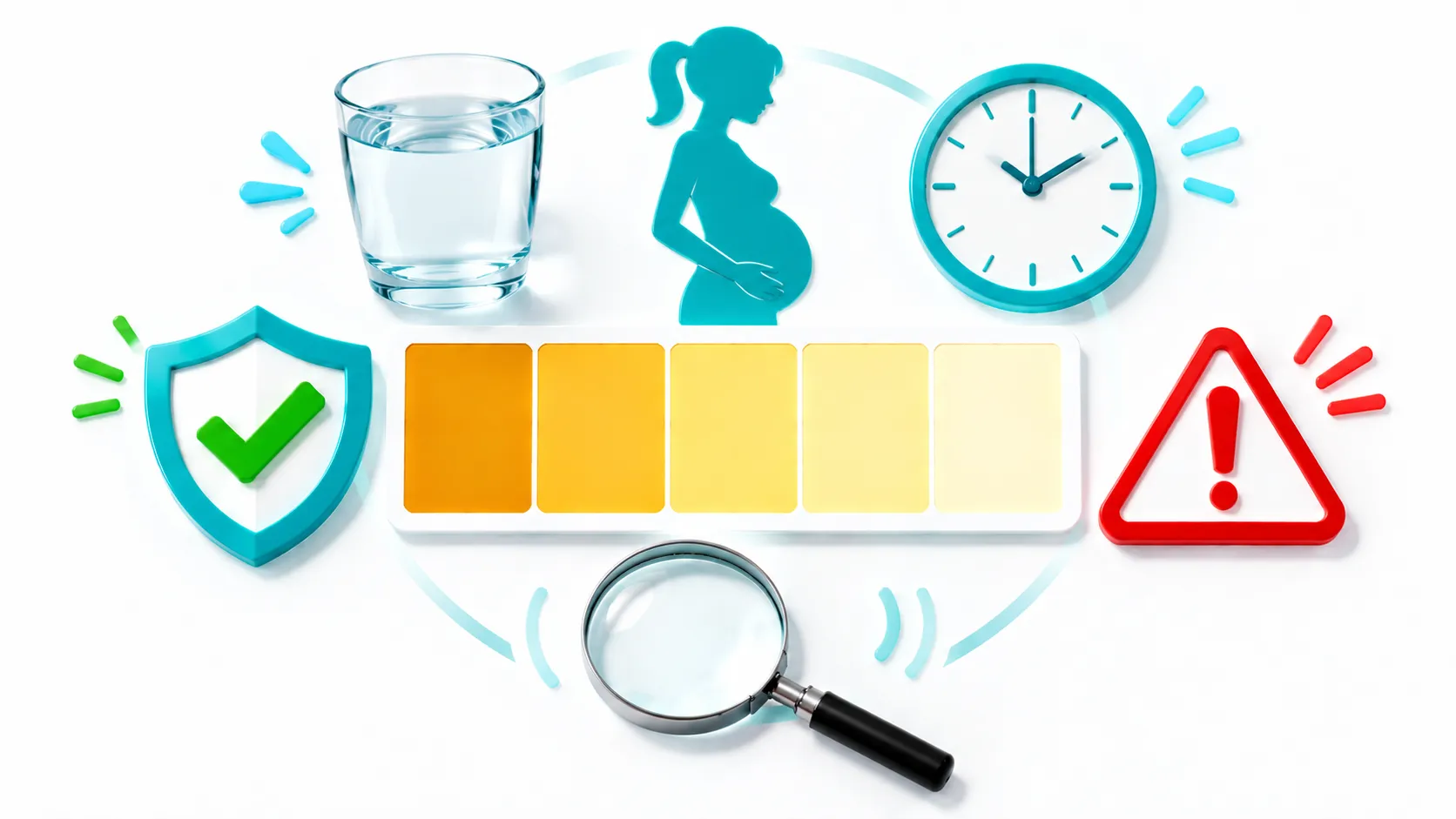
Amber urine during pregnancy usually means you are moderately dehydrated, and it should lighten toward pale yellow within a few hours of steady drinking. Pregnancy raises your fluid needs, and nausea, vomiting, heat, and frequent bathroom trips can all make it easier to fall behind. Amber is further along the dehydration scale than dark yellow, so it calls for a more deliberate approach: sip steadily over two to three hours rather than gulping a single glass.
The color becomes a reason to call your doctor when it stays amber past mid-morning despite fluids, comes with dizziness, a racing heart, very little urine output, or vomiting you cannot keep up with, or turns brown or tea-colored rather than amber. Those patterns go beyond simple dehydration and need evaluation. Use the amber urine guide to compare your shade, and read on for how to rehydrate safely in pregnancy and when to pick up the phone.
Why Amber Urine Is Common in Pregnancy
Urine gets its yellow tint from urochrome, a pigment produced when your body breaks down old red blood cells. Water dilutes that pigment. When fluid intake drops, the kidneys conserve water, and the same amount of pigment ends up in less urine—so the color deepens from pale yellow to dark yellow, amber, and occasionally deeper.
Pregnancy makes this easier to happen for several reasons:
- Fluid needs rise. Blood volume increases by roughly 40 to 50 percent, and the body needs more water to support the placenta, amniotic fluid, and the growing baby.
- Morning sickness reduces intake. Nausea and vomiting can make it hard to keep fluids down, especially in the first trimester.
- Frequent urination encourages less drinking. Some women drink less to avoid bathroom trips, which backfires by concentrating urine.
- Heat and activity increase sweat losses, especially in warmer months.
- Diuretics and some medications increase urine output and can contribute to fluid loss.
Amber urine is a hydration signal, not a diagnosis. The dehydration guide explains how fluid balance works and how quickly color should recover once you drink.
How to Rehydrate Safely in Pregnancy
The goal is to replace what you have lost without overdoing it. A practical plan:
- Sip steadily over two to three hours rather than drinking a large volume at once. Small amounts every 15 to 20 minutes are easier to absorb and less likely to trigger nausea.
- Add electrolytes if you have been vomiting or sweating heavily. An oral rehydration solution can help replace sodium and potassium that water alone does not.
- Recheck your urine every hour or so. If it is moving toward pale yellow, you are correcting course.
- Do not chase completely clear urine. Pale yellow is the target in pregnancy, not colorless. The pale yellow urine guide explains why.
- Ask your provider about a specific fluid target if you have kidney, heart, or blood pressure conditions, or if you take a diuretic.
Most pregnant women need roughly 8 to 12 cups of fluid per day, including water from food and other drinks, adjusted for body size, activity, climate, and illness. Thirst and urine color are better day-to-day guides than a fixed number.
When Amber Urine Is Not Just Dehydration
Most amber urine in pregnancy is simple dehydration. But some causes are not, and they are the reason to pay attention when the color does not correct.
Urinary Tract Infection
UTIs are more common in pregnancy and can make urine cloudy or dark, sometimes with visible blood. Unlike simple dehydration, a UTI usually comes with burning, urgency, frequency, pelvic pressure, or fever. Untreated UTIs in pregnancy can lead to kidney infection and are associated with preterm labor, so they need prompt testing and treatment. The UTI symptom guide covers the infection pattern in more detail.
Liver or Bile Duct Problems
Rare but serious liver conditions in pregnancy can cause dark brown or tea-colored urine, often with itching, pale stools, or jaundice. A pregnancy-specific liver condition called obstetric cholestasis can cause itching and dark urine, and it needs prompt medical attention. This is not the same as dehydration-related amber, which lightens with fluids.
Gestational Diabetes
High blood sugar can produce large volumes of dilute urine and increased thirst. Amber urine alone is not the typical pattern—constant thirst, heavy urination, and fatigue are the clues that warrant blood sugar testing. Gestational diabetes screening usually happens between 24 and 28 weeks.
When to Call Your Doctor
Contact your healthcare provider if any of the following applies:
- Amber urine persists past mid-morning despite drinking adequate fluids.
- Brown or tea-colored urine appears, especially with itching, pale stools, or yellowing eyes.
- You have burning, urgency, fever, or flank pain alongside a color change.
- Vomiting prevents you from keeping fluids down.
- You feel dizzy, weak, lightheaded, or confused, or you are passing very little urine.
- You notice swelling in the legs or face, or a sudden change in urination frequency.
- You have constant thirst and heavy urination that is not explained by fluids.
- Red or pink urine that is not clearly from food or medication.
A simple urinalysis can check for infection, bilirubin, protein, and glucose, and turn a color question into an answer. If you are unsure whether your shade is concerning, compare it against a urine color chart and bring the pattern—color, timing, fluid intake, and symptoms—to your provider.
The Bottom Line
Amber urine during pregnancy is usually dehydration, and it should lighten toward pale yellow within a few hours of steady drinking. Pregnancy raises fluid needs, and nausea, heat, and frequent bathroom trips can all make it easier to fall behind. Sip steadily, add electrolytes if you have been vomiting or sweating, and recheck as you go. Call your doctor when the color stays amber despite fluids, comes with dizziness, vomiting, fever, or very low urine output, or turns brown or tea-colored. Pregnancy is not the time to wait out an unexplained color change—a simple urine test can settle the question quickly.