Cimetidine in Pregnancy: Blue-Green Urine and Safety
Quick Answer
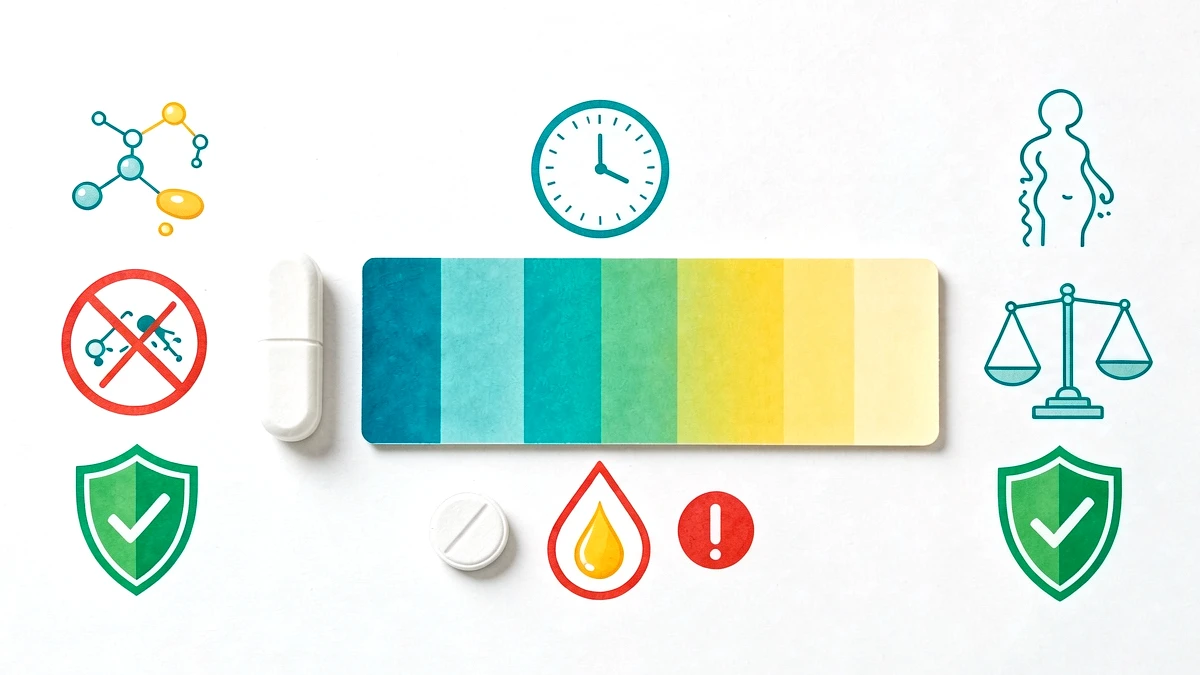
Cimetidine can turn urine blue-green, and that color is a harmless drug effect—not a sign of infection or kidney damage. The medication’s phenolic metabolites are excreted in urine, where they produce a blue-green tint. The color appears while you take the drug and fades after you stop. It does not come with burning, urgency, or fever, which is how it differs from the blue-green urine of a rare Pseudomonas urinary tract infection.
In pregnancy, cimetidine is classified as FDA Pregnancy Category B and Australian TGA Category B1. Animal studies at doses up to 40 times the human dose have shown no evidence of impaired fertility or fetal harm. Human data are limited, but controlled data suggest a low risk profile. The standard guidance is to use it only if clearly needed and the benefit outweighs the risk. It is not a first-line choice for every pregnant woman, but it is not a medication that must be avoided outright when an H2 blocker is appropriate.
The practical position: the blue-green urine is not the concern—the medication decision is. If you are pregnant and taking cimetidine, do not stop it on your own. Use the cimetidine urine guide to understand the color effect, and read on for how to tell the color from infection and what the pregnancy evidence actually shows.
Why Cimetidine Turns Urine Blue-Green
Cimetidine is an H2 blocker used to reduce stomach acid in conditions like GERD and peptic ulcer disease. It contains a phenol group in its chemical structure. When the liver metabolizes the drug, phenolic metabolites are produced and then excreted by the kidneys. Those metabolites carry a blue-green pigment that mixes with the normal yellow of urine, producing a green or blue-green shade.
This is a direct chemical effect of drug excretion, not a sign of kidney damage or infection. It is uncommon but well documented. The intensity of the green color is dose-related—higher doses produce more pigment, and the color is more noticeable when urine is concentrated.
The color may persist for as long as you take the medication and fades after you stop. It does not come with pain, fever, or a change in urination habits. The blue or green urine guide covers the full range of causes for this shade.
How to Tell Cimetidine Color From a UTI
Blue-green urine has two main explanations that matter here: the medication and a rare Pseudomonas aeruginosa urinary tract infection. They are told apart by symptoms, not by the shade.
Cimetidine-related blue-green urine:
- No burning or stinging when you urinate.
- No urgency or frequency beyond your baseline.
- No fever, chills, or flank pain.
- The color tracks your medication—present while you take it, absent when you stop.
- You feel well apart from the color change.
Pseudomonas UTI:
- Burning or stinging when you urinate.
- A sudden, strong urge to pee, or passing frequent, small amounts.
- Lower abdominal or pelvic pressure.
- Fever, chills, or pain in your back or side, which can signal a kidney infection.
- Cloudy urine or a strong foul odor alongside the blue-green tint.
The practical rule is simple: blue-green urine without urinary symptoms is almost always the medication. Blue-green urine with urinary symptoms is an infection until proven otherwise. The UTI symptom guide covers the infection pattern in more detail.
The Pregnancy Safety Evidence
The data on cimetidine in pregnancy are more reassuring than for many other medications, but they are not unlimited.
Animal Data: No Fetal Harm at High Doses
Reproductive studies have been performed in rats, rabbits, and mice at doses up to 40 times the normal human dose. These studies revealed no evidence of impaired fertility or harm to the fetus due to cimetidine. A separate analysis noted no impairment of mating performance or fertility, and no harm to the fetus, at doses 8 to 48 times the full therapeutic dose.
One animal study did report behavioral teratogenic effects in rat offspring—effects on memory, performance ability, and birth weight—after maternal cimetidine exposure. This is a signal worth noting, but it is a single line of preclinical evidence and has not been replicated in humans. The weight of the animal data supports a low teratogenic risk.
Human Data: Limited but Reassuring
There are no adequate, well-controlled studies of cimetidine in pregnant women. However, the available controlled data have been characterized as indicating a low risk profile. Cimetidine is known to cross the placenta, so the fetus is exposed, but the human evidence has not shown a pattern of malformations attributable to the drug.
Clinical guidance for gastrointestinal medications in pregnancy lists cimetidine as Category B with “controlled data: low risk” for pregnancy. That is a more favorable characterization than the “limited data” or “paucity of safety data” labels applied to some other H2 blockers.
What the Guidance Says
The standard prescribing guidance is consistent: use during pregnancy only if clearly needed. The drug should be used when the benefit to the mother outweighs the potential risk to the fetus. That is not a prohibition—it is a requirement for individualized medical judgment. For a pregnant woman with significant reflux or ulcer disease that is not controlled by safer first-line measures, cimetidine may be an appropriate choice.
Breastfeeding Considerations
Cimetidine is excreted into human milk. The estimated infant dose from a mother taking 1,000 to 1,200 mg daily is much less than the reported neonatal therapeutic dosage of 5 to 10 mg/kg daily. At these levels, cimetidine would not be expected to cause adverse effects in a breastfed infant, especially if the infant is older than 2 months.
Two caveats are worth knowing. First, cimetidine can inhibit hepatic enzymes, and other H2 blockers may be preferred in some breastfeeding situations for that reason. Second, cimetidine can increase serum prolactin, and it has been used—though not validated—as a galactagogue. The American Academy of Pediatrics considers cimetidine compatible with breastfeeding, while some other sources take a more cautious position. The decision should be individualized with your provider.
What to Do If You Are Pregnant and Taking Cimetidine
Do not stop cimetidine on your own. Stopping abruptly can cause acid rebound and worsen your symptoms.
What to do instead:
- Contact your prescriber as soon as you know you are pregnant or are planning pregnancy, so the medication can be reviewed.
- Discuss whether cimetidine is still appropriate for your symptoms, or whether a different approach—dietary measures, antacids, or another H2 blocker—would be preferred.
- If you remain on cimetidine, take it at the lowest effective dose for the shortest duration that controls your symptoms.
- Mention the blue-green urine at a routine visit so it is documented, but it is not a reason for urgent concern when it appears in isolation.
The pregnancy urine guide covers the broader range of color changes across trimesters.
When to Call Your Provider
Contact your OB, midwife, or prescriber if any of the following applies:
- You are pregnant or planning pregnancy and taking cimetidine—call to review the medication before any change.
- Blue-green urine comes with burning, urgency, fever, or flank pain—possible UTI, not just a medication effect.
- Blue-green urine persists for more than a week after stopping cimetidine.
- You develop confusion, severe drowsiness, or a racing heart—possible medication toxicity, especially in older adults or people with kidney problems.
- You notice unusual bruising or bleeding—cimetidine can interact with blood thinners.
- Abdominal cramping, pelvic pressure, or low backache that comes in a regular pattern—possible preterm labor.
- Vaginal bleeding or fluid leakage.
A simple urinalysis can check for infection, blood, and other markers, and turn a color question into an answer. If you are unsure whether your shade is concerning, compare it against a urine color chart and bring the pattern—medication timing, color, and symptoms—to your provider.
The Bottom Line
Cimetidine turns urine blue-green through a harmless metabolite effect, and the color is told apart from a Pseudomonas UTI by the absence of urinary symptoms. In pregnancy, cimetidine is FDA Category B and TGA Category B1, with animal data at high doses showing no fetal harm and controlled human data suggesting a low-risk profile. It is used only if clearly needed, but it is not a medication that must be avoided outright when an H2 blocker is appropriate. The blue-green urine is not the concern—the medication decision is. If you are pregnant and taking cimetidine, do not stop it on your own; call your prescriber and review the plan.