Turmeric in Pregnancy: Yellow Urine and Safety
Quick Answer
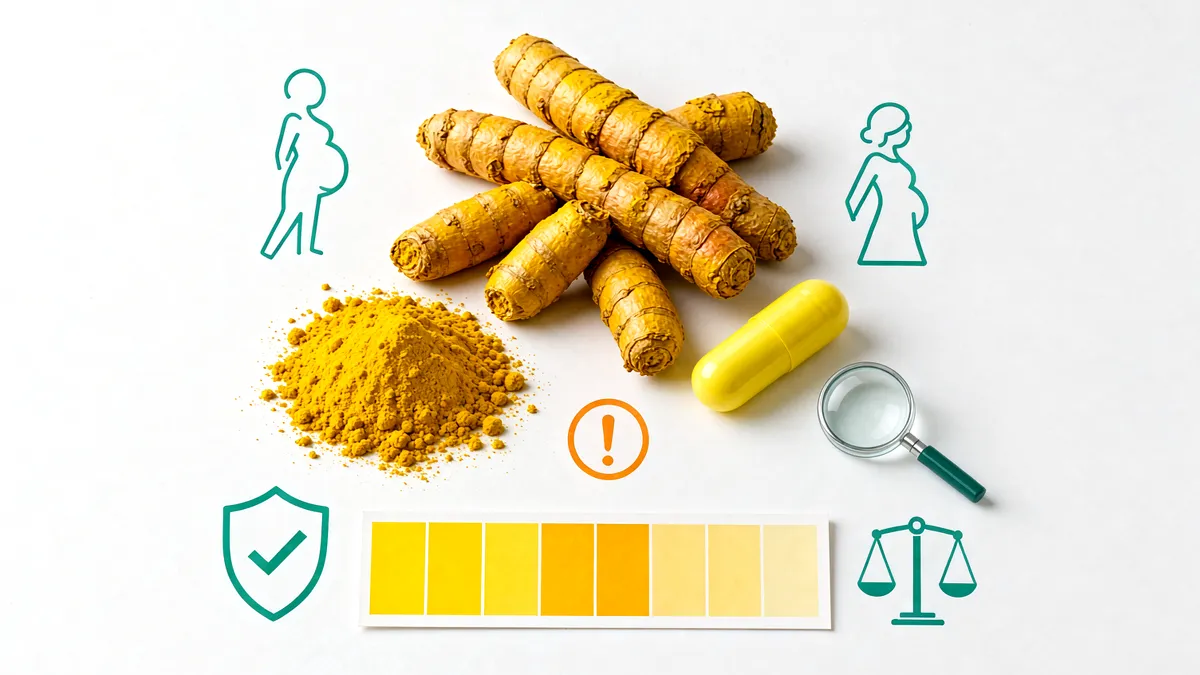
Turmeric used as a cooking spice is generally considered safe during pregnancy, and it can turn urine bright yellow through its main active compound, curcumin. Curcumin is the pigment responsible for turmeric’s golden color. When you eat turmeric in food, a small amount is absorbed and excreted in urine, producing a harmless yellow tint that fades within hours to a day.
Turmeric supplements and concentrated curcumin extracts are a different matter. The safety of curcumin supplementation during pregnancy has not been established, and several clinical references advise avoiding medicinal amounts because of potential uterine-stimulating effects. One source categorizes medicinal-dose turmeric as “likely unsafe” in pregnancy, citing possible uterine bleeding or contractions, while noting that the small amounts found in spices and foods are “likely safe.”
The practical distinction is straightforward: a teaspoon of turmeric in a curry is not the same as a 1,000 mg curcumin capsule. The yellow urine is a harmless pigment effect in either case, but the safety question depends entirely on the dose and the form. Use the turmeric urine guide to compare the color effect, and read on for what the evidence says about both.
Why Turmeric Turns Urine Yellow
Curcumin is a fat-soluble pigment responsible for turmeric’s deep yellow color. It is poorly absorbed on its own, but some of what you eat or supplement does enter the bloodstream and is processed by the liver and kidneys. A portion is excreted in urine, where its natural yellow color becomes visible.
The fraction excreted unchanged is small, but curcumin is intensely colored, so even a little can tint urine a noticeable yellow. The color is a direct effect of the pigment leaving the body, not a sign that turmeric is harming your kidneys. It appears within a few hours of intake and fades as the pigment is cleared.
Other factors can make the yellow more pronounced during pregnancy. Prenatal vitamins containing riboflavin (vitamin B2) also turn urine bright yellow, and the combination of a prenatal vitamin and a turmeric-rich meal can produce a more vivid shade than either alone. Dehydration concentrates urine and makes any pigment more visible. The dark yellow urine guide explains how to tell this fluorescent yellow from the dark amber of dehydration.
Culinary Turmeric vs. Supplements: The Safety Divide
The evidence on turmeric in pregnancy separates into two distinct categories, and conflating them is the main source of confusion.
Culinary Turmeric: Generally Considered Safe
Turmeric used as a spice in normal food amounts is widely regarded as safe during pregnancy. One clinical reference states plainly that turmeric is “likely safe during pregnancy when used in the small amounts that are found in spices or foods.” Another notes that “using turmeric as a food ingredient during pregnancy is generally considered safe.”
The amounts involved are small. A typical curry or golden milk recipe uses a teaspoon or less of ground turmeric, delivering a modest dose of curcumin—far below the concentrated doses used in supplements. At these levels, there is no established evidence of harm, and the yellow urine that may follow is a harmless pigment effect.
Supplements and Concentrated Extracts: Advised Against
The picture changes with supplements. The safety of curcumin supplementation during pregnancy and lactation has not been established, and one evidence-based resource states that “avoidance may be warranted” because preclinical studies have inconsistently reported potential harms during pregnancy.
The specific concern is uterine stimulation. Turmeric has been described as having emmenagogue (menstruation-inducing) and uterine stimulant effects, and one clinical reference advises avoiding turmeric during pregnancy and lactation for this reason. Another source categorizes medicinal-dose turmeric as “likely unsafe” and warns that it “could cause uterine bleeding or contractions.”
These cautions are based largely on traditional use, animal data, and theoretical mechanisms rather than on large human trials. There is no proven causal link between turmeric supplements and pregnancy loss in humans. But the absence of safety data, combined with the plausibility of uterine effects, is why most providers take a conservative position.
What the Evidence Actually Shows
The research on curcumin in pregnancy is mixed and largely preclinical.
Some animal studies have not found toxicity. A 2023 safety assessment of an activated curcumin complex found no abnormal reproductive or developmental parameters in animal studies. A 2020 study of curcumin-loaded nanocapsules found no toxicological effects in mothers or fetuses. A 2019 study suggested curcumin could reduce the toxic and teratogenic effects of retinoic acid in mouse embryos.
Other research has explored potential benefits. Curcumin has been studied for its effects on inflammation in uterine decidual cells, with one paper suggesting it may have therapeutic potential for preventing inflammation-mediated preterm birth and other gestational disorders. Test-tube studies have suggested curcumin may reduce inflammatory markers in preeclampsia.
But these are not human trials in pregnant women, and they do not establish safety for supplementation. One review notes that evidence-based human studies of turmeric’s medicinal benefits during pregnancy are lacking. The gap between “promising in a lab dish” and “safe to take in pregnancy” is wide.
Other Considerations During Pregnancy
A few additional points are worth knowing.
Bleeding risk. Curcumin may increase bleeding risk when combined with antiplatelet or anticoagulant medications. If you take a blood thinner or have a bleeding disorder, discuss turmeric supplementation with your provider.
Oxalate content. Turmeric is high in oxalates, which can contribute to kidney stone formation in susceptible people. If you have a history of calcium oxalate stones, moderation matters.
Drug interactions. Curcumin interacts with enzymes involved in drug metabolism and can affect how other medications are processed. This is relevant if you take any prescription medications during pregnancy.
Iron absorption. Curcumin may bind to iron in the intestines and reduce its absorption, which is a consideration if you are anemic or at risk of iron deficiency during pregnancy.
When to Call Your Provider
Contact your OB or midwife if any of the following applies:
- Yellow urine persists for more than two to three days after stopping turmeric or curcumin supplements.
- Dark brown or tea-colored urine appears, especially with pale stools, itching, or yellowing eyes—signs of a liver or bile duct problem.
- You have pain, fever, burning, or urgency when you urinate.
- Abdominal cramping, pelvic pressure, or low backache that comes in a regular pattern—possible uterine irritation or preterm labor.
- Vaginal bleeding occurs.
- You are taking a turmeric or curcumin supplement and want to know whether it is appropriate for you.
- You take blood thinners, diabetes medications, or other prescription drugs and are considering curcumin.
A simple urinalysis can check for bilirubin, blood, and other markers, and turn a color question into an answer. If you are unsure whether your shade is concerning, compare it against a urine color chart and bring the pattern—color, timing, turmeric intake, and any symptoms—to your provider. The pregnancy urine guide covers the broader range of color changes across trimesters.
The Bottom Line
Turmeric in pregnancy comes down to a simple distinction. Culinary turmeric—the amount in a curry or a cup of golden milk—is generally considered safe and can turn urine yellow through curcumin, a harmless pigment effect. Turmeric supplements and concentrated curcumin extracts are not recommended because their safety in pregnancy has not been established, and they carry a theoretical risk of uterine stimulation and bleeding. The yellow urine is not the concern in either case; the dose and the form are what matter. If you use turmeric as a spice and notice yellow urine, there is nothing to fix. If you are considering a supplement, talk to your provider first—and if you develop cramping, bleeding, or dark brown urine, call right away.