Urine Color and Hydration Chart: What Each Level Means
Quick Answer
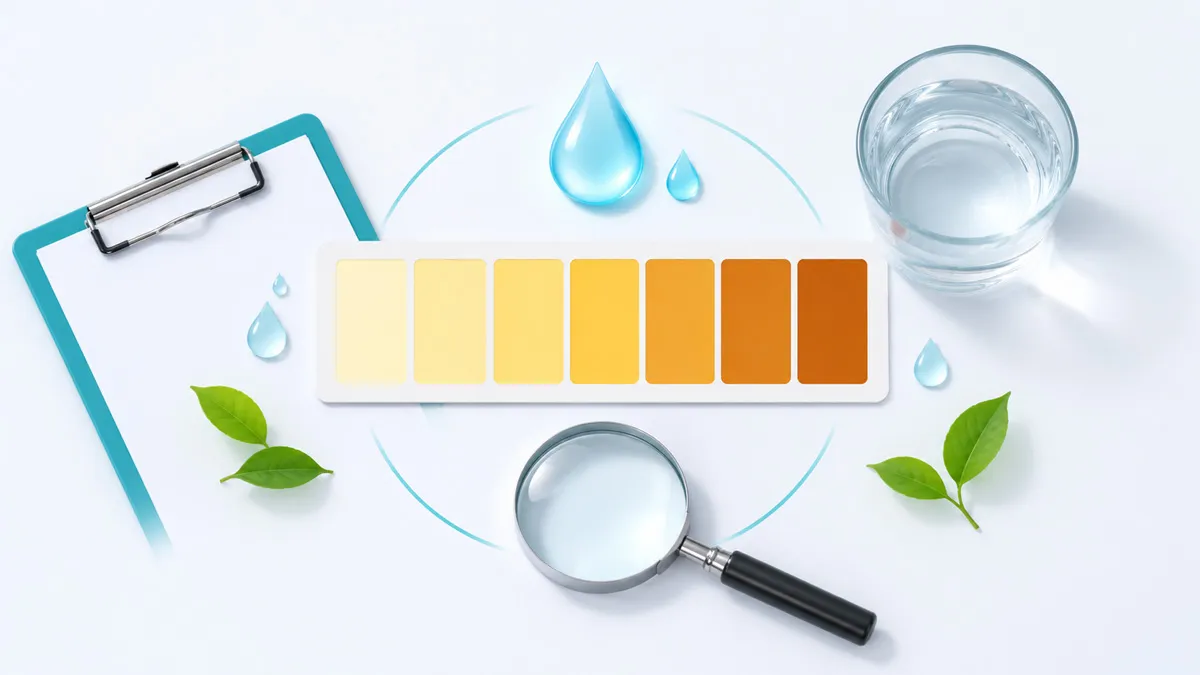
A urine color and hydration chart maps shades of urine to fluid status. The core message is simple: pale yellow to light straw means you are well hydrated. Dark yellow means mild dehydration and a glass of water. Amber or honey means moderate dehydration and steady rehydration over a few hours. Colors beyond that—brown, red, or persistently cloudy—are not hydration levels at all. They are the group that deserves a doctor’s look.
Use the chart as a practical guide, not a diagnosis. It helps you spot dehydration early and correct it before symptoms appear. It cannot tell you whether red urine is blood or food pigment, or whether cloudy urine is infection or diet. Use the urine color chart by shade to compare what you are seeing, and read on for what each hydration level means and when to stop checking and get tested.
Why Urine Color Tracks Hydration
Urine gets its yellow tint from urochrome, a pigment produced when your body breaks down old red blood cells. Water dilutes that pigment. When fluid intake matches your body’s needs, the pigment is diluted to a pale straw tone. When intake drops, the kidneys conserve water by reabsorbing more of it, so the same amount of pigment ends up in less water—and the color deepens.
That relationship is the basis of every hydration chart. It is not perfect: food, medications, vitamins, and some medical conditions can override the signal. But for most people, most of the time, the color tracks fluid status closely enough to be useful. The dehydration guide explains how fluid balance works and how quickly color should recover once you drink.
The Hydration Levels, Shade by Shade
Level 1: Clear or Colorless
Clear urine usually means you are drinking more fluid than your body needs at that moment. It is common after a large glass of water, in hot weather, or while taking a diuretic. It is not the target to chase. Persistent clear urine without a matching fluid intake can occasionally reflect a kidney concentrating problem or diabetes, but the ordinary explanation is simple overhydration. The clear urine guide covers the full range of explanations.
Level 2: Pale Yellow to Light Straw
This is the target zone. It means your kidneys are filtering waste efficiently and your fluid balance is in a healthy range. Day-to-day variation within this band is normal. A mild odor is also normal; a strong smell alongside pale color is more often dietary—coffee, asparagus, or garlic—than a hydration issue.
Level 3: Dark Yellow
Dark yellow urine is the classic sign of mild dehydration. It commonly appears after sweating, a hard workout, a long flight, or a stretch of low fluid intake. The fix is straightforward: drink water and recheck in an hour. If dark yellow urine persists despite adequate drinking, it is worth mentioning to a clinician.
Level 4: Amber or Honey
Amber urine sits further along the dehydration scale. It often shows up first thing in the morning, when you have gone hours without fluids, or after illness with vomiting or diarrhea. Rehydrate steadily over a few hours and watch whether the color lightens. Amber urine that comes with dizziness, a racing heart, or very little urine output is a reason to seek care.
Beyond the Hydration Scale: Orange, Brown, Red, and Cloudy
These shades are not simple hydration levels. They can reflect concentration, food, medication, or medical conditions, and they need their own explanations. Orange urine can come from vitamins, laxatives, or liver problems. Brown urine can reflect severe dehydration, liver disease, or muscle breakdown. Red or pink urine may be food pigment or blood. Cloudy urine may be diet, dehydration, or infection. The chart flags these as “check-in” colors rather than “drink more water” colors.
What Can Override the Hydration Signal
A hydration chart is only as good as the context you bring to it. Several factors can make urine darker or lighter without reflecting fluid status:
- Foods and supplements. Carrots, pumpkin, and B-complex vitamins can brighten urine; beets, blackberries, and fava beans can darken it.
- Medications. Rifampin, phenazopyridine, senna, and some antimalarials change urine color directly.
- Medical conditions. Liver problems can darken urine through bilirubin; kidney conditions can affect concentration; diabetes can produce large volumes of dilute urine.
- Time of day. Morning urine is often darker after hours without fluids, even if you are well hydrated overall.
Because of these factors, color is best read as a trend rather than a single sample. If your urine lightens after drinking and you feel well, hydration was the likely explanation. If it stays dark despite fluids, something else may be going on. If you are trying to match your pattern to a cause, the urine color by cause section groups explanations by food, medication, and medical conditions.
When to See a Doctor
Contact a healthcare provider if any of the following applies:
- Dark yellow or amber urine persists for more than a day despite drinking adequate fluids.
- Brown or tea-colored urine appears and does not clear with hydration.
- Red, pink, or smoky urine that is not clearly from food or medication, even if it happens once.
- Cloudy urine with pain, fever, burning, or urgency, which may point to infection.
- Ongoing clear urine without excess fluid intake, especially with constant thirst or heavy urination.
- Foamy urine that persists, particularly with swelling in the legs or face.
- You feel dizzy, weak, lightheaded, or confused, or you are passing very little urine.
- You are pregnant, older, or managing kidney or heart disease and notice a persistent change.
A simple urinalysis can detect blood, protein, glucose, and infection markers, and turn a color question into an answer. If you are unsure whether your shade is concerning, compare it against a urine color chart and bring the pattern to your doctor.
The Bottom Line
A urine color and hydration chart is a practical tool for spotting dehydration early. Pale yellow means you are on track, dark yellow means drink water, and amber means rehydrate steadily over a few hours. Colors beyond amber—orange, brown, red, or persistently cloudy—are not hydration levels and deserve their own evaluation. Drink to thirst, check your urine after your first drink of the morning, and treat persistent dark, red, brown, or symptomatic color changes as reasons to get tested. When in doubt, a urinalysis settles the question quickly.