Asparagus and Urine Color in Children: What Parents Notice
Quick Answer
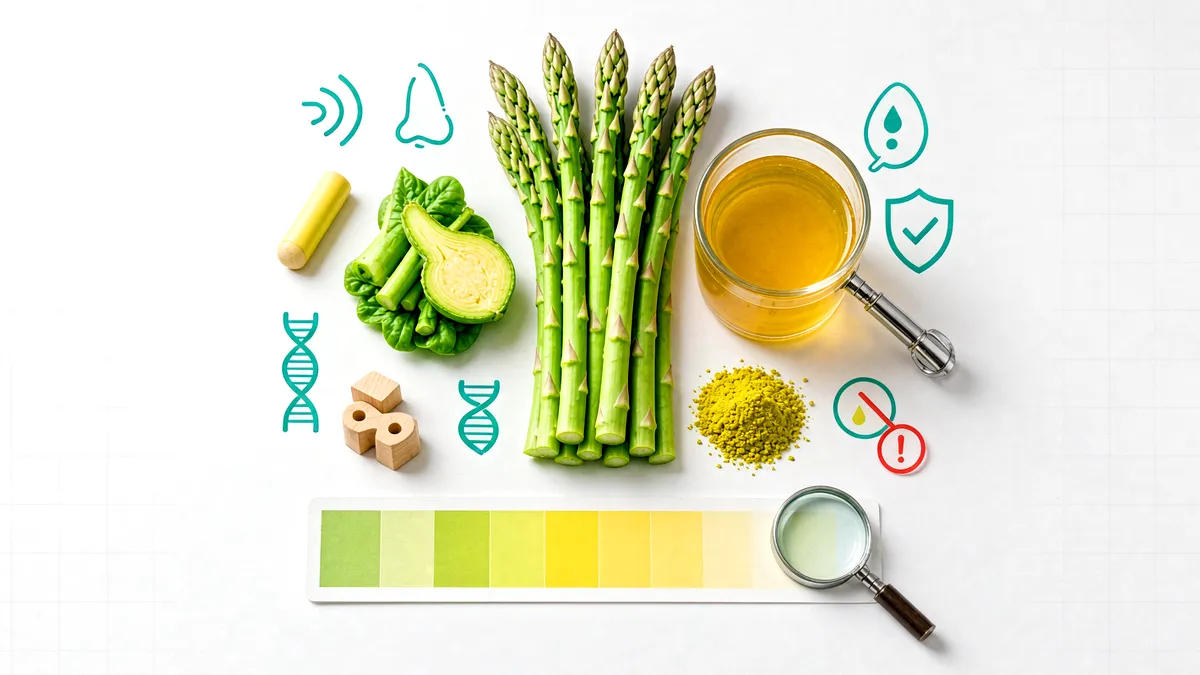
Asparagus affects urine in two ways, but in children the smell is far more noticeable than the color. The sulfur compounds produced when the body breaks down asparagusic acid give urine a distinctive odor within 15 to 30 minutes of eating asparagus. A faint green tint is possible but is subtle and inconsistent. Most parents notice the smell, not a color change.
Whether a child produces the odor compounds and whether anyone can smell them are two separate genetic traits. Many children produce the compounds but cannot detect the smell themselves, which is why a parent may notice it while the child notices nothing. The color change, when it happens, is a faint greenish-yellow rather than a bright green, and it clears within hours.
Neither effect is dangerous. The pattern that deserves a doctor's look is green urine that persists beyond a day without asparagus, comes with pain, fever, or burning, or appears in a child who seems unwell. Use the asparagus urine guide to compare the color and odor effects, and read on for what parents actually notice and when to check in.
What Parents Usually Notice First: The Smell
The asparagus urine effect is famous for its odor, and that is the change most parents detect. Asparagus contains asparagusic acid, a sulfur-rich compound found in few other foods. When a child digests asparagus, that compound breaks down into volatile sulfur metabolites, including methanethiol and dimethyl sulfide. These are absorbed into the bloodstream, filtered by the kidneys, and excreted in urine.
The timeline is fast. The smell typically appears within 15 to 30 minutes of eating asparagus, is strongest in the first few hours, and fades within 4 to 12 hours. A large serving can extend it closer to a day. Drinking water and urinating regularly help clear the compounds faster.
Two genetic traits explain why the smell is a family disagreement. Most people produce the odor compounds, so their urine does carry the smell. But only some people can detect it. A child who cannot smell asparagus pee is not immune to the effect—they simply cannot perceive the compounds. That is why one parent may notice a strong smell while the child and the other parent notice nothing. The asparagus urine guide covers the genetics in more detail.
What About Color? The Faint Green Tint
Asparagus can produce a faint green tint in urine, but it is much less consistent than the smell and much easier to miss. The color likely comes from a combination of the sulfur metabolites and natural plant pigments, seen against the yellow background of normal urine. The result is a greenish-yellow shade, not a vivid green.
In children, the color effect is often too subtle to notice at all. If a parent does see it, it usually appears within a few hours of eating asparagus and fades within a few hours to a day. Concentrated urine makes any color more visible, so a child who has drunk less water may show a slightly stronger tint.
The green tint is not a sign of infection or liver disease. It is a food effect. The blue or green urine guide covers the full range of causes for green urine, including medications, dyes, and rare infections, so you can compare if the color does not fit asparagus.
Why Children May Notice Less Than Adults
Children are not simply small adults when it comes to asparagus urine. Two practical differences stand out.
Portion size. A child typically eats fewer spears than an adult, so the dose of asparagusic acid is smaller. A smaller dose produces fewer sulfur metabolites and a weaker smell—or none at all.
Detection ability. The ability to smell asparagus urine is genetic and does not depend on age, but a child who cannot detect the compounds will not report a smell. A parent who can detect it may notice it on the child's behalf. That is why the smell is often a parent's observation rather than a child's complaint.
The color effect, similarly, depends on how much asparagus was eaten and how hydrated the child is. A small serving in a well-hydrated child may produce no visible change at all.
How to Tell Asparagus Effects From Something Else
Asparagus-related odor and color are usually easy to connect to the food, but it is worth knowing when to look further.
Clues that point to asparagus:
- The smell or color appeared within hours of eating asparagus.
- The urine is faintly green or greenish-yellow, not bright or cloudy green.
- Your child feels well—no fever, pain, or burning.
- The effects clear within a few hours to a day once the asparagus is stopped.
Clues that point to something else:
- Green urine appears without eating asparagus, or persists beyond a day.
- Your child has pain, fever, burning, or urgency when urinating.
- The urine is cloudy, foamy, or has a strong foul odor beyond the asparagus smell.
- The color recurs without eating asparagus again.
- Your child seems very tired, irritable, or unwell.
Most asparagus-related changes are harmless and clear on their own. If the color or odor persists without asparagus, or comes with other symptoms, a urine test is the right next step. The children's urine guide covers the broader range of color changes in kids.
When to Call the Pediatrician
Contact a pediatrician or healthcare provider if any of the following applies:
- Green urine persists for more than a day and your child has not eaten asparagus again.
- A strong, foul urine odor persists for more than a day after you stop offering asparagus.
- Your child has pain, fever, chills, burning, or urgency when urinating.
- The urine is cloudy, foamy, or has a strong foul odor beyond the asparagus smell.
- You see blood clots or smoky-brown urine.
- Your child seems very tired, irritable, or unwell.
- Your child has fewer wet diapers, no urination for many hours, or other signs of dehydration.
- You are unsure whether the color or odor is food-related—trust your instinct and check in.
A simple urine test can detect infection, blood, and other markers, and turn a question about color or odor into an answer. If you are unsure whether your child's urine is concerning, compare it against a urine color chart and bring the pattern—color, timing, asparagus intake, and any symptoms—to the pediatrician.
The Bottom Line
Asparagus and urine color in children is mostly a story about smell, not color. The sulfur compounds from asparagusic acid produce a distinctive odor within minutes of eating, and that is what parents usually notice. A faint green tint is possible but subtle and inconsistent. Children may notice less than adults because they eat smaller portions and because the ability to detect the smell is genetic. Neither effect is dangerous, and both clear within hours to a day. If the color or odor persists without asparagus, or comes with pain, fever, or burning, call the pediatrician. Otherwise, expect the smell, watch for the faint tint if it appears, and move on.