B Vitamins in Pregnancy: Bright Yellow Urine and Safety
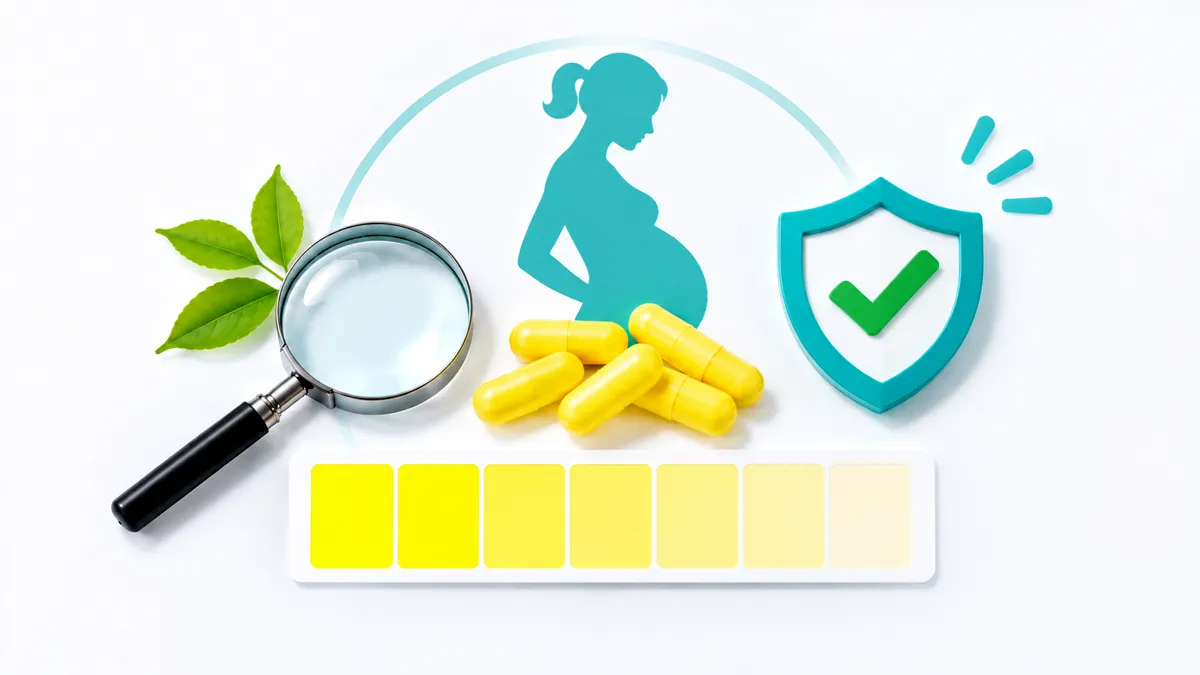
Quick Answer
Bright yellow urine during pregnancy is almost always caused by riboflavin (vitamin B2) in your prenatal vitamin, and it is normal. Riboflavin is water-soluble, so your body absorbs what it needs and excretes the excess in urine. The vitamin has a natural yellow-green fluorescence, which is why the color can look almost neon. It is not a sign of dehydration, overdose, or kidney damage.
Mayo Clinic states plainly that riboflavin may cause urine to be “more yellow than normal, especially if large doses are taken,” and that this is “to be expected and is no cause for alarm”. NHS patient information makes the same point: certain vitamin supplements can change urine to a particularly bright color, and these changes are harmless. The color fades within hours of the dose and does not require any change in your prenatal vitamin.
The safety question is separate. The B vitamins in prenatal supplements are generally safe at recommended doses, but the dose matters for B6 and B12, and some B vitamins should not be taken in excess. Use the vitamin B urine guide to compare the color effect, and read on for which B vitamins matter, what doses are safe in pregnancy, and when a change in urine color deserves a call to your provider.
Which B Vitamin Turns Urine Bright Yellow?
Riboflavin—vitamin B2—is the B vitamin responsible for bright yellow urine. It is the most consistently linked to this effect, and most prenatal vitamins contain it. Riboflavin is water-soluble, so it is not stored in large amounts; whatever your body does not use is filtered by the kidneys and excreted.
Other B vitamins can contribute to urine color in smaller ways, but riboflavin is the dominant one:
- Riboflavin (B2): Bright, fluorescent yellow or yellow-green urine. The main culprit.
- Niacin (B3): Can occasionally tint urine yellow-orange at high doses, but far less consistently than riboflavin.
- Pyridoxine (B6): Generally does not change urine color on its own at typical doses.
- Cobalamin (B12): Can rarely give urine a pink or red tint with certain formulations, but this is uncommon.
- Folate (B9): Does not typically change urine color at standard doses.
Most prenatal vitamins contain 1.7 to 2 mg of riboflavin, which is close to the recommended intake for pregnancy. That is more than enough to produce the bright yellow effect in many women. The dark yellow urine guide explains how this fluorescent yellow differs from the dark amber of dehydration.
Is Bright Yellow Urine a Sign of a Problem?
No. Isolated bright yellow urine from prenatal vitamins is not a sign of a problem. It is a predictable effect of a water-soluble vitamin being excreted. The key distinction is between this vitamin-driven fluorescent yellow and the dark amber of dehydration.
Vitamin B2 color:
- Bright, neon, or fluorescent yellow, sometimes yellow-green.
- Appears within hours of taking the prenatal vitamin and fades over the day.
- Does not lighten much with water alone, because the color comes from the vitamin, not concentration.
- You feel well—no dizziness, no dry mouth, no reduced urine output.
Dehydration color:
- Dark yellow, golden, or amber, not fluorescent.
- Lightens within an hour or two of drinking water.
- Often accompanied by thirst, headache, or lightheadedness.
If you are unsure which you are seeing, drink 1 to 2 cups of water and recheck in an hour. Dehydration color improves; riboflavin color does not change much until the vitamin is cleared. The pregnancy urine guide covers the broader range of normal color changes across trimesters.
B Vitamin Safety in Pregnancy: What the Doses Mean
Bright yellow urine is harmless, but the safety of B vitamins in pregnancy depends on the specific vitamin and the dose. Here is what the evidence supports.
Riboflavin (B2)
Riboflavin is considered safe in pregnancy at recommended doses. The recommended intake is about 1.4 mg per day, and prenatal supplements typically provide 1.7 to 2 mg. No tolerable upper limit has been established for riboflavin, because excess is excreted in urine and toxicity is very low. Very high doses may cause itching, numbness, or light sensitivity, but these are uncommon at supplement doses.
Pyridoxine (B6)
B6 is often included in prenatal vitamins and is also used to treat nausea and vomiting of pregnancy. The recommended intake in pregnancy is about 1.9 to 2.2 mg per day, and prenatal supplements typically contain 2.5 to 2.6 mg. The tolerable upper limit for pregnant women is 100 mg per day.
For nausea, a typical effective dose is 10 to 25 mg, three or four times a day, which stays within the upper limit. Doses above 100 mg per day should not be taken without medical supervision, and some evidence suggests that very high doses in early pregnancy may carry risks. If you are using B6 for morning sickness, confirm the dose with your provider.
Cobalamin (B12)
B12 is essential for fetal neural tube formation and brain development. The recommended intake in pregnancy is about 2.6 mcg per day, and prenatal supplements often contain 4 to 25 mcg. No tolerable upper limit has been established for B12, because it is water-soluble and excess is excreted. B12 deficiency during pregnancy can cause maternal and infant anemia and may increase the risk of neural tube defects, so adequate intake matters—especially for women on vegetarian or vegan diets.
Folate (B9)
Folic acid is the one B vitamin with a clear, well-established recommendation in pregnancy: 400 to 800 mcg per day to reduce the risk of neural tube defects. The tolerable upper limit is 1,000 mcg per day from supplements and fortified foods. This is a standard part of prenatal care and is separate from the color effect.
What to Do About Bright Yellow Urine
There is nothing to fix. The color is expected, harmless, and temporary. A few practical points:
- Keep taking your prenatal vitamin as directed. Do not skip doses to avoid the color.
- Do not chase completely clear urine. Pale yellow is the target, not colorless, and the vitamin color is not a hydration signal.
- Check hydration separately. Look at your urine before you take the vitamin, or after it has faded, to judge fluid status.
- Mention the color at a routine visit so it is documented, but you do not need an urgent call for isolated bright yellow urine.
When to Call Your Provider
Contact your healthcare provider if any of the following applies:
- Bright yellow urine persists all day despite normal fluid intake and is not explained by your prenatal vitamin timing.
- Dark yellow or amber urine does not lighten with fluids, especially with dizziness or very low urine output.
- Orange or brown urine appears, especially with pale stools, itching, or yellowing eyes—signs that point away from a vitamin effect and toward a liver or bile duct problem.
- Red or pink urine that is not clearly from food or medication.
- Cloudy urine with burning, urgency, fever, or flank pain, which may point to a urinary tract infection.
- You feel dizzy, weak, or lightheaded, or you are passing much less urine than usual.
- You are taking high-dose B6 (above 100 mg per day) without medical supervision, or you have questions about the dose of any B vitamin in your prenatal supplement.
A simple urinalysis can check for infection, bilirubin, and other markers, and turn a color question into an answer. If you are unsure whether your shade is concerning, compare it against a urine color chart and bring the pattern—color, timing, prenatal vitamin use, and fluid intake—to your provider.
The Bottom Line
Bright yellow urine from prenatal B vitamins is normal, harmless, and almost always caused by riboflavin (B2). It is a sign of excretion, not overdose or kidney damage, and it fades within hours of the dose. The B vitamins in prenatal supplements are generally safe at recommended doses; the dose that matters most for safety is B6, where the upper limit in pregnancy is 100 mg per day. B12 has no established upper limit, and folate is recommended at 400–800 mcg per day. Keep taking your prenatal vitamin, judge hydration separately, and call your provider only if the color does not fit the vitamin explanation or comes with other symptoms.