Dark Yellow Urine Even After Drinking Water: Why?
Quick Answer
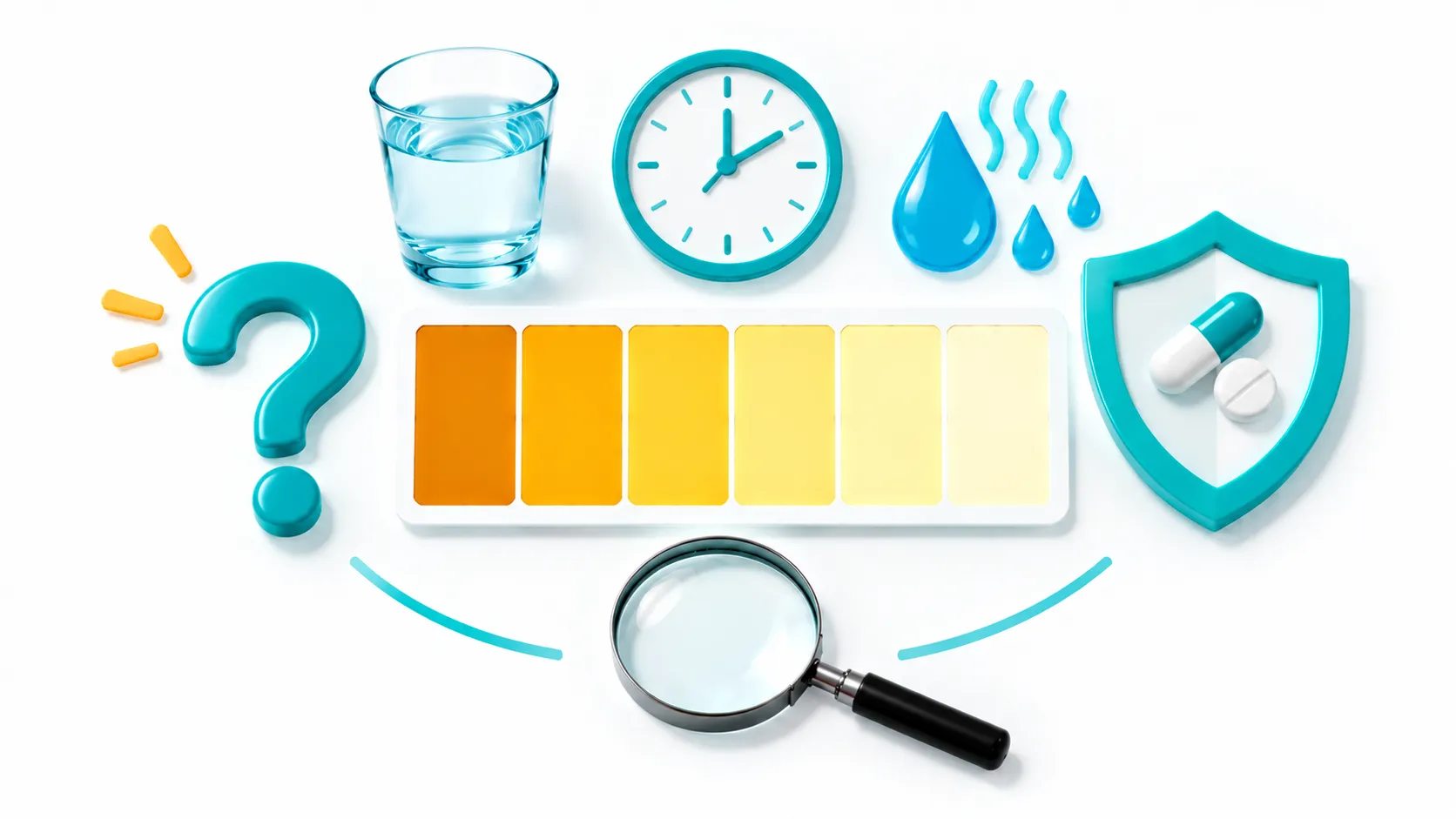
Dark yellow urine that does not lighten after drinking water usually means one of three things: the water has not reached your urine yet, you are losing fluid faster than you are replacing it, or something other than dehydration is coloring the urine.
The first two are the most common. Water takes time to be absorbed, enter the bloodstream, and reach the kidneys. If you check your urine five minutes after a glass of water, it may still be dark. And if you are sweating heavily, exercising in heat, or ill with fever or diarrhea, you can be replacing fluid while still losing more than you take in. The third possibility—a non-hydration cause—is the one worth testing for if the color persists despite genuine, sustained fluid intake. That category includes B vitamins and supplements, certain medications, food pigments, and liver or kidney conditions that change urine color independently of fluid balance.
The practical test is to drink steadily, wait, and recheck. Color that lightens confirms dehydration. Color that stays dark despite adequate, sustained fluids is the pattern that needs a closer look. Use the dark yellow urine guide to compare your shade, and read on for the reasons hydration sometimes fails to change the color.
Reason 1: The Water Hasn't Arrived Yet
Urine color does not change the instant you swallow water. The water must be absorbed from the gut, enter the bloodstream, and be filtered by the kidneys before it can dilute urine. That process takes time.
For most healthy adults, urine begins to lighten within 30 to 60 minutes of drinking, and reaches its lightest shade for that round within 1 to 2 hours. If you check too soon, you are seeing the old, concentrated urine, not the effect of the water you just drank. Checking a sample immediately after drinking is one of the most common reasons people think hydration “does not work.”
The fix is simple: drink 1 to 2 cups of water, wait at least an hour, and recheck a fresh sample. If the color is moving toward pale yellow, the water is working. The dehydration guide explains the full timeline in more detail.
Reason 2: You Are Still Losing More Than You Take In
Hydration is a balance, not just an intake. If you are losing fluid faster than you are replacing it, urine can stay concentrated even though you are drinking.
Common situations where this happens include:
- Heavy sweating from heat, exercise, or physical work. You may need more fluid than you realize, plus electrolytes.
- Fever, vomiting, or diarrhea. Fluid losses are high, and intake often falls at the same time.
- Diuretics. Water pills increase urine output and can keep you behind even when you drink.
- High-altitude or dry environments, where you lose more water through breathing and skin.
In these situations, the answer is not necessarily “drink more water”—it is replace what you are losing, which may include electrolytes such as sodium and potassium. Plain water alone may not correct the deficit if you are sweating heavily or ill. If dark urine persists with dizziness, a racing heart, or very little urine output, seek care rather than continuing to self-treat.
Reason 3: Something Other Than Dehydration Is Coloring the Urine
If you have genuinely replaced your fluid losses and the urine stays dark yellow or amber, the color may not be coming from concentration. Several factors change urine color independently of hydration.
Vitamins and Supplements
B vitamins, especially riboflavin (B2), are a leading cause of bright yellow urine that does not respond to water. Riboflavin is water-soluble, and the excess is excreted with its natural yellow-green fluorescence. The color tracks the supplement dose, not your fluid status. High-dose vitamin C can also deepen urine toward yellow-orange. The vitamin B urine guide explains the mechanism.
Medications
Several drugs tint urine directly. Rifampin produces orange-red urine. Phenazopyridine produces bright orange. Senna and other anthraquinone laxatives can produce yellow-brown to reddish urine. Metronidazole and some antibiotics can darken urine. If you started a new medication and the color appeared within a day or two, the drug is a reasonable first suspect.
Foods and Dyes
Carrots, pumpkin, sweet potato, and papaya are rich in beta-carotene, which can tint urine orange-yellow. Artificial food dyes can do the same. These colors appear within hours of eating and clear within a day or two once you stop the food.
Liver and Bile Duct Conditions
When the liver or bile ducts are not working properly, bilirubin can build up and spill into urine, producing a dark yellow, amber, or tea-colored appearance. This is the explanation that deserves the most attention when it persists, because it is not a hydration issue and it can be an early sign of liver disease. The pattern to watch for is dark urine with pale stools, yellowing eyes or skin, itching, or upper abdominal pain. A simple urinalysis can detect bilirubin. The brown urine guide covers bilirubin-related color in more detail.
Kidney Concentrating Problems
Some kidney conditions impair the kidney’s ability to concentrate or dilute urine appropriately. In these cases, urine color may not respond to fluid intake as expected. If dark urine persists alongside swelling, fatigue, or changes in urination frequency, kidney function should be checked.
How to Test Whether Hydration Is the Cause
A structured home test can separate the reasons above.
- Start with a baseline sample in good light against a white background.
- Drink 1 to 2 cups of water steadily, not all at once.
- Wait at least an hour, then recheck a fresh sample. Do not check immediately.
- If the color lightens toward pale yellow, dehydration was the driver, and the water was simply taking time to work.
- If the color stays dark despite good hydration for a day, the cause is likely non-hydration—review your supplements, medications, and recent foods.
- If the color is brown or tea-colored rather than yellow, or comes with jaundice, pale stools, or abdominal pain, skip the home test and see a doctor.
If you take a diuretic or have kidney or heart conditions, follow your clinician’s fluid advice rather than a general home test. The pale yellow urine guide explains what the target shade looks like.
When to See a Doctor
Contact a healthcare provider if any of the following applies:
- Dark yellow or amber urine persists for more than a day despite drinking adequate fluids.
- The color is brown or tea-colored rather than yellow, especially with pale stools, itching, or yellowing eyes.
- You have pain, fever, chills, burning, or urgency when you urinate.
- You see blood clots or a smoky tint.
- You feel dizzy, weak, lightheaded, or confused, or you are passing very little urine.
- You have vomiting or diarrhea and cannot keep fluids down.
- You are pregnant, older, or managing kidney or liver disease and notice persistent dark urine.
A simple urinalysis can check for bilirubin, blood, glucose, and other markers, and blood tests can assess liver and kidney function. If you are unsure whether your shade is concerning, compare it against a urine color chart and bring the pattern—color, fluid intake, medications, and symptoms—to your doctor.
The Bottom Line
Dark yellow urine that does not lighten after water usually comes down to timing, ongoing fluid loss, or a non-hydration cause. Water takes an hour or more to change urine color, so checking too soon can be misleading. If you are sweating heavily or ill, you may be losing fluid faster than you replace it. If you have genuinely rehydrated and the color persists, review your supplements, medications, and recent foods—and if the color is brown or comes with liver-related symptoms, get it checked. A simple urine test can settle the question quickly.