Dehydration, Headache, Dizziness: When Urine Color Confirms
Quick Answer
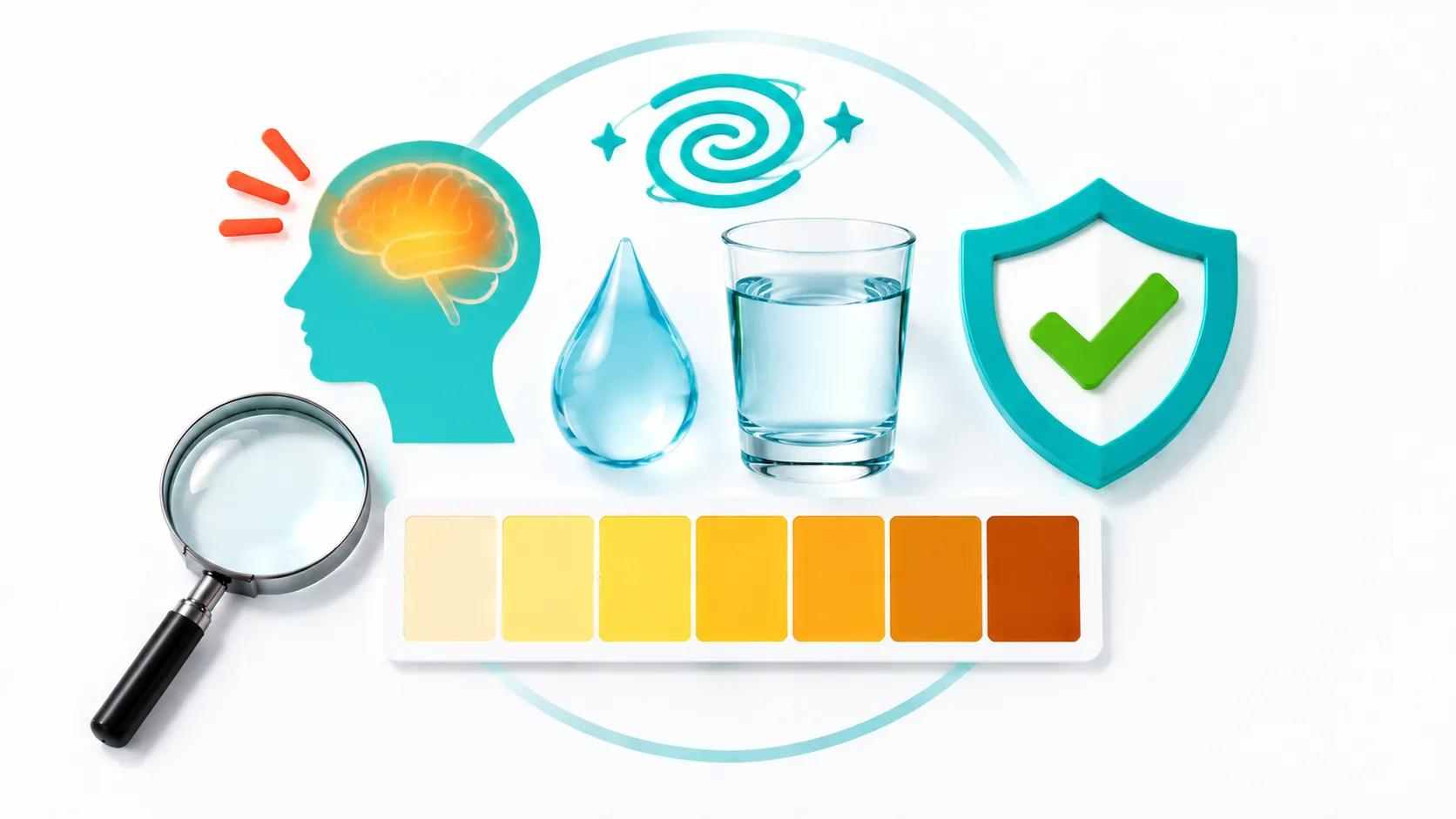
When a headache and dizziness come together with dark yellow or amber urine, dehydration is the most likely explanation. The three findings line up because they share the same cause: fluid loss that concentrates your blood, reduces blood flow to the brain, and concentrates your urine. Pale yellow urine makes dehydration unlikely; dark urine makes it probable.
The urine color test is simple and useful, but it is not a diagnosis on its own. The pattern to look for is dark urine plus thirst, headache, or dizziness that improves after drinking fluids. If the symptoms ease and the color lightens within a few hours, dehydration was the driver. If they do not, or if the headache is severe or the dizziness is disabling, something else may be going on. Use the dehydration guide to understand how fluid balance works, and read on for how to use urine color as confirmation.
Why Dehydration Causes Headache and Dizziness
Dehydration reduces blood volume. When you lose more fluid than you take in, your blood becomes more concentrated and your blood pressure can drop, especially when you stand up. The brain is sensitive to both changes.
The headache of dehydration is thought to come from several mechanisms: reduced blood flow to the brain, a drop in blood pressure, and changes in the concentration of electrolytes and other substances in the blood. The dizziness comes from the same underlying problem—less blood reaching the brain, particularly on standing, which is why dehydration-related dizziness often feels worse when you get up quickly.
Other symptoms often travel with the headache and dizziness: thirst, dry mouth, fatigue, dark urine, and reduced urine output. When several of these appear together, the picture is more convincing than any single symptom alone. The dehydration guide explains how fluid loss progresses and how quickly symptoms should improve with fluids.
How Urine Color Confirms Dehydration
Urine color is a practical confirmation tool because it reflects how concentrated your urine is. The yellow pigment urochrome is diluted by water. When you are well hydrated, urine is pale yellow. When you are dehydrated, the kidneys conserve water, the pigment becomes more concentrated, and the color deepens toward dark yellow, amber, and occasionally deeper.
The confirmation works best when you read it alongside symptoms:
- Headache plus dark yellow or amber urine is a consistent dehydration picture.
- Dizziness on standing plus dark urine is another consistent picture, especially after heat, exercise, or illness.
- Thirst plus dark urine plus reduced urination is the strongest combination of all.
If you drink fluids and the headache eases and the urine lightens within a few hours, dehydration is confirmed. If the color stays dark and the symptoms persist, the urine test has failed—and that is useful information. The dark yellow urine guide explains where this shade sits on the hydration spectrum.
What the Color Cannot Confirm
Urine color is a guide, not a diagnosis. Several factors can darken urine without dehydration, and several can lighten it while you are still dehydrated.
- Foods and supplements. Beets, blackberries, carrots, and B vitamins can change urine color without any fluid deficit.
- Medications. Rifampin, phenazopyridine, senna, and some other drugs tint urine directly.
- Morning urine. First-morning urine is often darker for reasons that have nothing to do with illness.
- Diuretics. Water pills increase urine output and can lighten color while contributing to fluid loss.
- Kidney concentrating problems. Some conditions impair the kidney’s ability to concentrate urine, so a dehydrated person can still pass pale urine.
Because of these factors, color is best read as a trend and alongside symptoms, not as a single snapshot. If the color does not fit the clinical picture, it should not override the symptoms. The urine color by cause section groups food, medication, and medical explanations.
How to Rehydrate and Confirm the Diagnosis
The practical test is also the treatment: drink fluids and see whether the symptoms and the color improve together.
- Drink water steadily rather than gulping a large volume at once. Small amounts every 15 to 20 minutes are easier to absorb.
- Add electrolytes if you have been sweating heavily, exercising in heat, or ill with vomiting or diarrhea. An oral rehydration solution or a sports drink replaces sodium and potassium that water alone does not.
- Recheck your urine after an hour or two. If it is moving toward pale yellow, you are correcting the deficit.
- Reassess the headache and dizziness. If they ease as the color lightens, dehydration was the likely cause.
- Do not chase completely clear urine. Pale yellow is the target, not colorless. The pale yellow urine guide explains why that shade is the goal.
If the symptoms do not improve after several hours of adequate drinking, or if they worsen, the diagnosis needs to be reconsidered. Persistent headache and dizziness despite fluids can point to other causes, including migraine, inner ear problems, low blood sugar, medication effects, or a more serious condition.
When to See a Doctor
Contact a healthcare provider if any of the following applies:
- Headache and dizziness persist after several hours of drinking adequate fluids.
- Dark yellow or amber urine persists for more than a day despite drinking.
- The headache is severe, sudden, or the worst you have ever had.
- Dizziness is disabling, or you faint or nearly faint.
- You have confusion, unusual drowsiness, or difficulty staying awake.
- You are passing very little urine, or you have not urinated in many hours.
- You have vomiting or diarrhea and cannot keep fluids down.
- You are pregnant, older, or managing kidney or heart disease and notice persistent symptoms.
- You develop fever, neck stiffness, vision changes, or weakness on one side, which are red flags for other conditions.
A simple urinalysis and basic blood tests can check hydration, electrolytes, kidney function, and other causes, and turn a clinical question into an answer. If you are unsure whether your shade is concerning, compare it against a urine color chart and bring the pattern—symptoms, fluid intake, urine color, and medications—to your doctor.
The Bottom Line
Dehydration, headache, and dizziness fit together, and urine color is a useful confirmation: dark yellow or amber urine alongside those symptoms makes dehydration the most likely explanation. The practical test is to drink fluids and see whether the color lightens and the symptoms ease within a few hours. If they do, dehydration was the cause. If the headache or dizziness persists despite fluids, or if either is severe, the diagnosis needs to be reconsidered—and that is the point to seek medical advice. A simple urine test can settle the question quickly.