Food Dyes That Turn Urine Blue or Green
Quick Answer
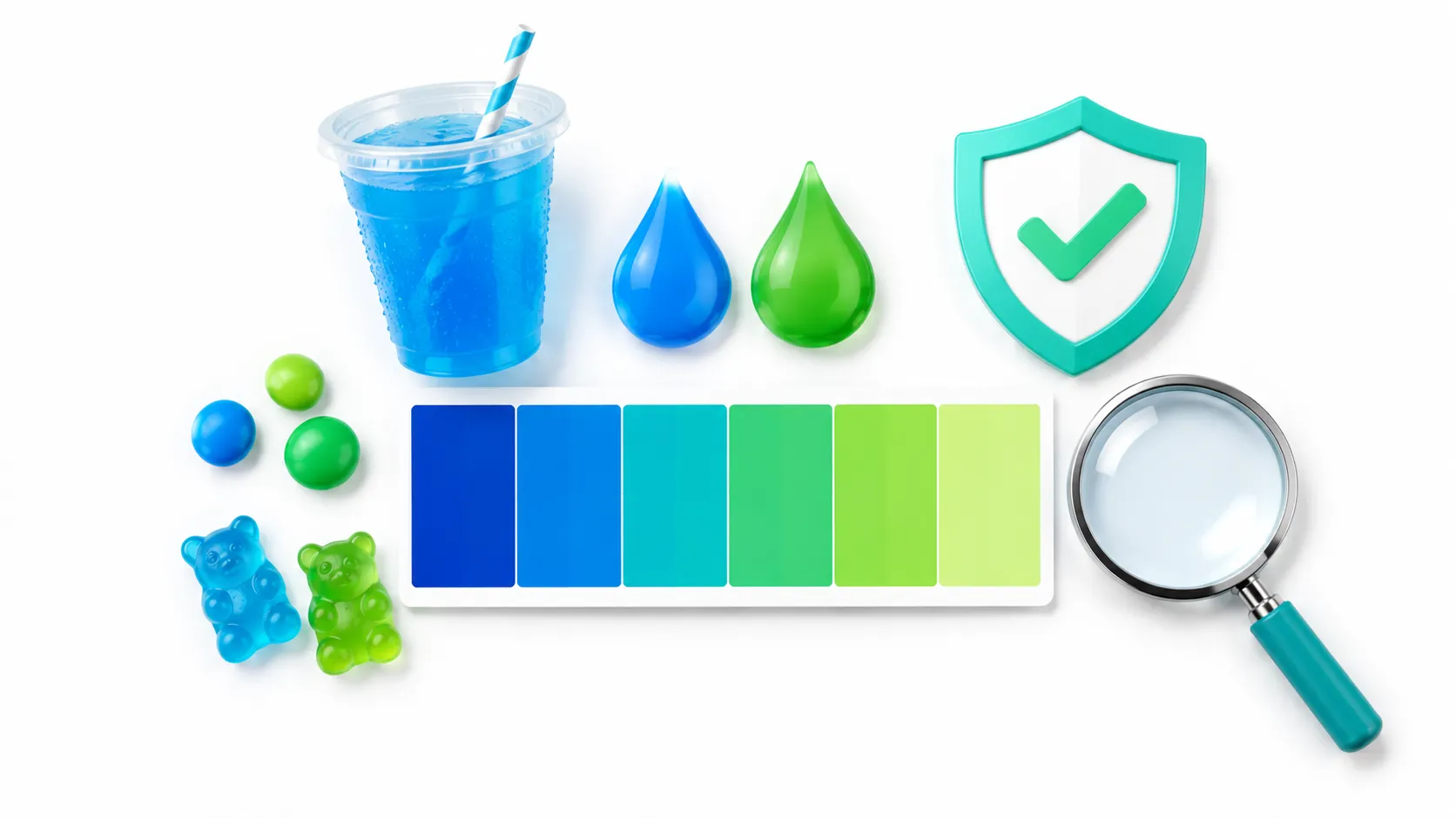
Artificial food dyes are the most common cause of blue or green urine. The main culprits are Blue 1 (Brilliant Blue), Blue 2 (Indigotine), and Green 3 (Fast Green). These water-soluble dyes are used in candies, breakfast cereals, gelatin desserts, ice cream, frostings, sports drinks, and some medications. A portion of the dye is absorbed, filtered by the kidneys, and excreted in urine with its color intact.
Green urine often results from a mix of blue and yellow dyes, or from blue dye mixing with the natural yellow of urine. The color typically appears within a few hours of eating or drinking the dyed product and clears within 24 to 48 hours. It is not a sign of kidney damage or infection. It becomes worth a doctor's look when the color persists beyond two to three days without a dye explanation, or when it comes with pain, fever, or burning. Use the blue or green urine guide to compare your shade, and read on for which dyes and foods are responsible and when to check in.
Which Food Dyes Turn Urine Blue or Green?
Three synthetic dyes are most commonly linked to blue or green urine. They are approved for use in food in the United States and many other countries, though regulatory reviews are ongoing.
Blue 1 (Brilliant Blue FCF)
Blue 1 is a vivid, water-soluble dye produced from petroleum. It is one of the most widely used blue dyes and a frequent cause of both blue and green urine. The green appearance occurs because blue dye mixes with the natural yellow pigment of urine. Blue 1 is found in candies, sports drinks, ice pops, gelatin desserts, frostings, and some processed foods. It is also used in certain medications.
Blue 2 (Indigotine)
Blue 2, also known as Indigo Carmine, is a darker blue dye. It is used in breakfast cereals, beverages, ice cream, candy, and baked goods. Like Blue 1, it can tint urine blue or green, especially when consumed in larger amounts or in concentrated forms like juice or syrup. It is also used as a dye in some medical procedures, which can produce a more intense color.
Green 3 (Fast Green FCF)
Green 3 is a triphenylmethane dye used in puddings, desserts, ice cream, gelatin, cotton candy, candy, sweetened drinks, canned peas, processed vegetables, and even some processed fish. It can directly tint urine green. In April 2025, the US Food and Drug Administration announced a plan to eliminate both Green 3 and Blue 2 from the food supply by the end of 2026, though they remain in use during the transition period.
Which Foods and Products Contain These Dyes?
Blue and green dyes are common in processed foods and drinks, especially those marketed to children. Products that frequently contain them include:
- Candies and cotton candy, especially brightly colored blue and green varieties.
- Breakfast cereals, particularly those with colored pieces or coatings.
- Gelatin desserts, ice pops, and ice cream.
- Frostings and cake decorations.
- Sports drinks, sodas, and sweetened beverages.
- Puddings and desserts.
- Canned peas and some processed vegetables.
- Certain medications, including some capsules, tablets, liquids, and gummy products that use dyes to identify the drug or match a flavor.
Children are more likely to show dye-related color changes because they consume more brightly colored foods and drinks relative to their body size. The children's urine guide covers this pattern in more detail.
How Long the Color Lasts
The timeline is predictable for a water-soluble food dye.
- Within 2 to 8 hours: the blue or green tint begins to appear in urine as the dye is absorbed and filtered.
- 24 to 48 hours: the color fades as the dye is cleared, provided you are drinking normally and urinating regularly.
- Up to 72 hours: a very large serving or concentrated drink may leave a faint tint into the third day.
Drinking water and urinating regularly help clear the dye faster. If you are dehydrated, the color may be more noticeable because concentrated urine makes any pigment more visible. If the color persists beyond 48 to 72 hours after you stop consuming the dyed product, the dye is unlikely to be the whole explanation.
How to Tell Food Dye From Infection or Medication
Blue and green urine have several possible causes, and the context usually tells them apart.
Clues that point to food dye:
- The color appeared within hours of eating or drinking a brightly colored blue or green product.
- You feel well—no burning, urgency, fever, or flank pain.
- The urine is uniformly tinted, without clots or cloudiness.
- The color clears within 24 to 48 hours once you stop the dyed product.
Clues that point to medication or a medical test dye:
- You started a medication known to cause blue-green urine, such as amitriptyline, cimetidine, propofol, indomethacin, or triamterene.
- You had a medical test using methylene blue or indigo carmine.
Clues that point to infection or another problem:
- Blue-green urine comes with burning, urgency, frequency, fever, or flank pain. A Pseudomonas aeruginosa urinary tract infection is a rare bacterial cause of green-blue urine, and it almost always comes with urinary symptoms. The UTI symptom guide covers the infection pattern.
- The color appears without a food, medication, or test-dye explanation and persists.
- You see blood clots, cloudy urine, or a strong foul odor.
- You have yellowing eyes or skin, pale stools, or abdominal pain, which can point to a liver or bile duct problem rather than a dye effect.
Most food dye–related blue or green urine is harmless. Rare inherited and metabolic conditions can also cause these colors, but they are uncommon and usually present with other symptoms. If the color does not fit a simple food explanation, a urinalysis can help sort it out.
When to See a Doctor
Contact a healthcare provider if any of the following applies:
- Blue or green urine lasts more than two to three days and you have not consumed dyed food or drink again.
- You have pain, fever, chills, burning, or urgency when you urinate.
- You see cloudy urine, blood clots, or a strong foul odor.
- You feel dizzy, weak, or lightheaded, or you are passing much less urine than usual.
- The color appears in a child without an obvious dyed food or drink explanation.
- You are pregnant and have blue or green urine that is not explained by food or medication.
- The color recurs without a food explanation, even if each episode clears on its own.
A simple urinalysis can detect infection, blood, and other markers, and turn a color question into an answer. If you are unsure whether your blue or green urine is dye-related, compare it against a urine color chart and bring the pattern—color, timing, and what you ate or drank—to your doctor. The urine color by cause section groups food, medication, and medical explanations.
The Bottom Line
Blue and green food dyes are the most common cause of blue or green urine. Blue 1, Blue 2, and Green 3 are the main dyes responsible, and they are found in candies, cereals, desserts, drinks, and some medications. The color appears within hours, clears within 24 to 48 hours, and is not a sign of kidney damage or infection. It is a harmless food effect. If the color persists without a dye explanation, or comes with urinary symptoms, fever, or blood, get it checked. A urinalysis can settle the question quickly.