Orange Urine and Pale Stool: When to Check Your Liver
Quick Answer
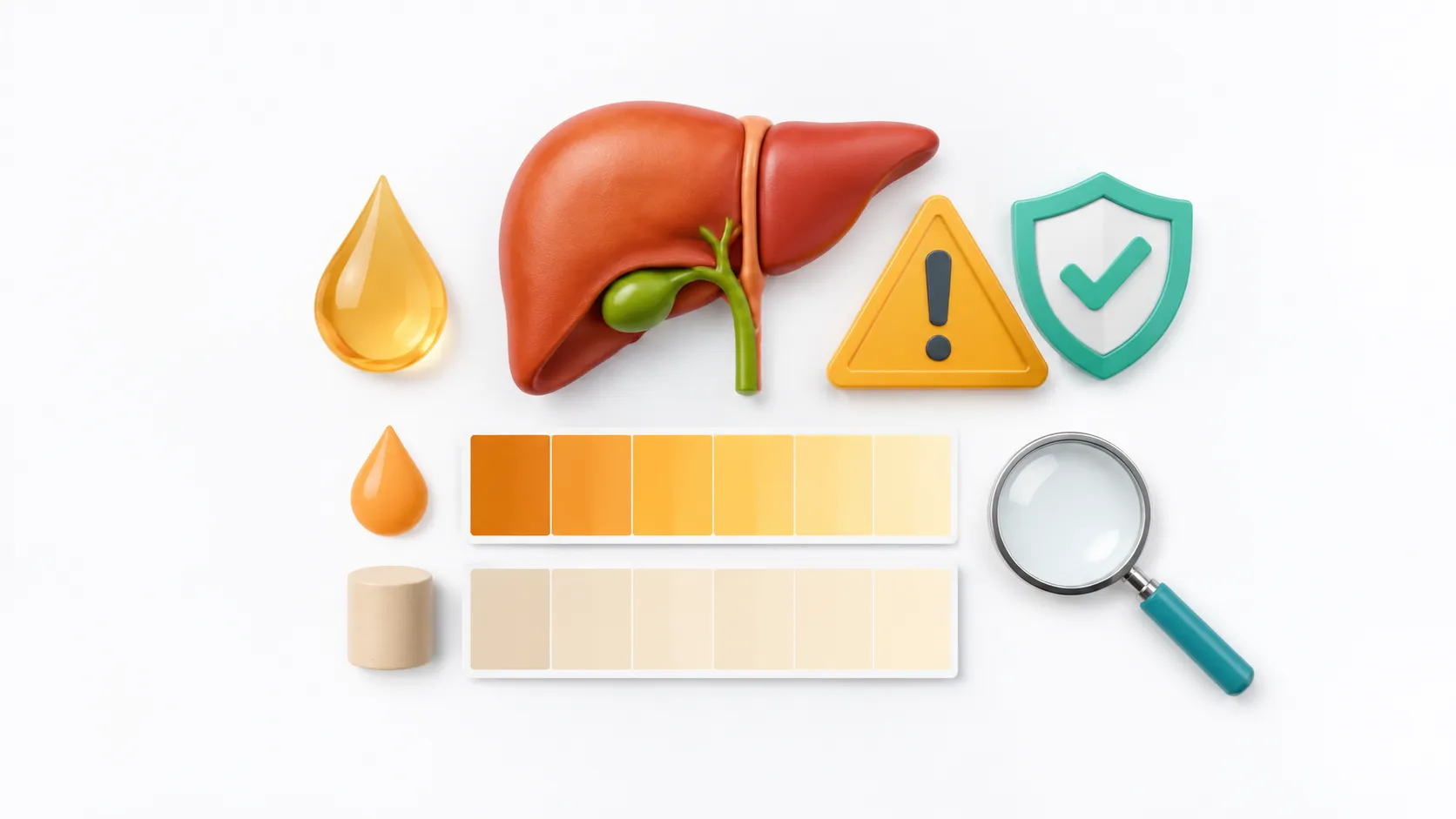
Orange or dark urine combined with pale, clay-colored stools is a pattern that points toward the liver and bile ducts, not simple dehydration. The two findings share one cause: bilirubin, the yellow-brown pigment produced when old red blood cells break down. A healthy liver processes bilirubin and sends it into bile, which drains into the intestine and gives stool its normal brown color.
When the liver is inflamed or bile flow is blocked, bilirubin backs up into the bloodstream instead. The kidneys filter the excess into urine, turning it dark orange, amber, or tea-colored. At the same time, less bilirubin reaches the intestine, so stool loses its brown pigment and becomes pale, clay-colored, or putty-like. That combination—dark urine plus pale stool—is the classic signature of cholestasis, or impaired bile flow.
This is not a color to wait out. If orange or dark urine comes with pale stools, especially alongside yellowing eyes, itching, or abdominal pain, contact a healthcare provider promptly. Use the orange urine guide to compare your shade, and read on for how bilirubin works, what else can cause the pairing, and when to get your liver checked.
Why Bilirubin Turns Urine Orange and Stool Pale
Bilirubin exists in two forms. Unconjugated bilirubin is not water-soluble and cannot be excreted in urine. Conjugated bilirubin is water-soluble, which means that when it builds up in the blood, the kidneys can filter it into urine.
In a healthy person, conjugated bilirubin is excreted through bile, not urine. That is why bilirubin is normally not detectable in urine at all. When it does appear—a finding called bilirubinuria—it is a marker of conjugated hyperbilirubinemia and can be the earliest sign of a liver or biliary problem.
The same mechanism explains the stool change. Bilirubin in the intestine is converted by bacteria into pigments that give stool its brown color. When bile flow is reduced, less bilirubin reaches the intestine, and stool becomes pale, clay-colored, or putty-like. The two findings are two sides of the same coin: bilirubin is going into the urine because it is not going into the stool.
This is why the pairing matters more than either finding alone. Dark urine by itself can be dehydration or a food effect. Pale stool by itself can be dietary. Together, they point toward the liver and biliary system.
What Causes the Pairing
The conditions that produce dark urine plus pale stools fall into two broad groups: liver cell injury and bile duct obstruction.
Liver Cell Injury
When liver cells are damaged, they cannot process bilirubin efficiently, and conjugated bilirubin backs up into the blood. Causes include viral hepatitis (hepatitis A, B, and C), alcohol-related liver disease, drug-induced liver injury, autoimmune hepatitis, and fatty liver disease. In acute hepatitis, dark urine often appears during the prodromal phase, days before jaundice becomes visible, which is why it is such a useful early clue.
Bile Duct Obstruction
When a bile duct is blocked, bile cannot drain from the liver into the intestine. Causes include gallstones, strictures, tumors of the bile duct or pancreas, and inflammation of the bile ducts. This is the pattern of cholestasis—impaired bile flow—and it characteristically produces dark urine, pale stools, jaundice, and itching.
Medications and Other Causes
Some medications can cause cholestatic liver injury. Certain antibiotics, anabolic steroids, and some herbal supplements are recognized causes. Rarely, pregnancy-specific liver conditions such as obstetric cholestasis produce the same pattern, with itching as a prominent feature.
Foods and dyes can cause orange urine but do not cause pale stools. That is a useful distinction: if your stool color is normal, a food or medication effect on urine is more likely. If the stool is pale, the liver and bile ducts deserve attention. The brown urine guide covers bilirubin-related color in more detail.
How Long It Lasts and What It Means
The timeline depends on the cause, but the pattern itself is not something that resolves with hydration.
- Dehydration-related orange urine lightens within an hour or two of drinking water. The stool color does not change.
- Food-related orange urine clears within 24 to 48 hours once you stop the food. The stool color does not change.
- Bilirubin-related orange urine does not lighten with fluids. It persists until the underlying liver or bile duct problem is treated, and it may deepen over time.
That difference is the practical test. If drinking water does not change the urine color, and the stool is pale, the cause is not hydration. The dehydration guide explains how quickly ordinary dehydration color should recover.
Other Symptoms That Travel With This Pattern
Dark urine and pale stools rarely appear alone when the liver or bile ducts are involved. The accompanying symptoms help confirm the picture:
- Jaundice—yellowing of the eyes or skin. Dark urine often precedes visible jaundice by days.
- Itching, which can be generalized and worse at night, especially with cholestasis.
- Upper right abdominal pain or tenderness.
- Nausea, vomiting, or loss of appetite.
- Fatigue and a general feeling of being unwell.
- Low-grade fever, especially with hepatitis or cholangitis.
- Dark urine that persists or deepens despite normal fluid intake.
If any of these accompany the color changes, the case for prompt medical evaluation is strong. The urine color by cause section groups food, medication, and medical explanations so you can compare your pattern.
When to See a Doctor
Contact a healthcare provider promptly if any of the following applies:
- Orange or dark urine with pale, clay-colored stools—the combination itself warrants evaluation.
- Yellowing of the eyes or skin (jaundice).
- Itching that appears with the color changes.
- Upper abdominal pain, nausea, or loss of appetite.
- Fever, chills, or shaking alongside the color changes, which can signal cholangitis—a bile duct infection that needs urgent care.
- Dark urine that persists despite drinking fluids, especially if it deepens.
- You have risk factors for liver disease: heavy alcohol use, obesity, diabetes, a family history of liver disease, or exposure to hepatitis.
- You are pregnant and notice dark urine with itching or pale stools.
A simple urinalysis can detect bilirubin directly, often before jaundice is obvious. Blood tests—liver function tests, viral hepatitis panels, and imaging if needed—can identify the cause and guide treatment. If you are unsure whether your shade is concerning, compare it against a urine color chart and bring the full pattern—urine color, stool color, itching, and any pain—to your doctor.
The Bottom Line
Orange urine plus pale stools is a liver-and-bile-duct pattern, not a hydration problem. Both findings trace back to bilirubin: it spills into urine because it is not reaching the intestine, and stool loses its brown color for the same reason. This combination can be an early sign of hepatitis or bile duct obstruction, sometimes appearing before jaundice. Foods and dehydration can turn urine orange, but they do not turn stool pale—that distinction is the practical clue. If you have both findings, or either one with jaundice, itching, abdominal pain, or fever, get your liver checked. A urinalysis and liver tests can turn a worrying color into a clear answer.