Pink Urine During Pregnancy: When to Call Your OB
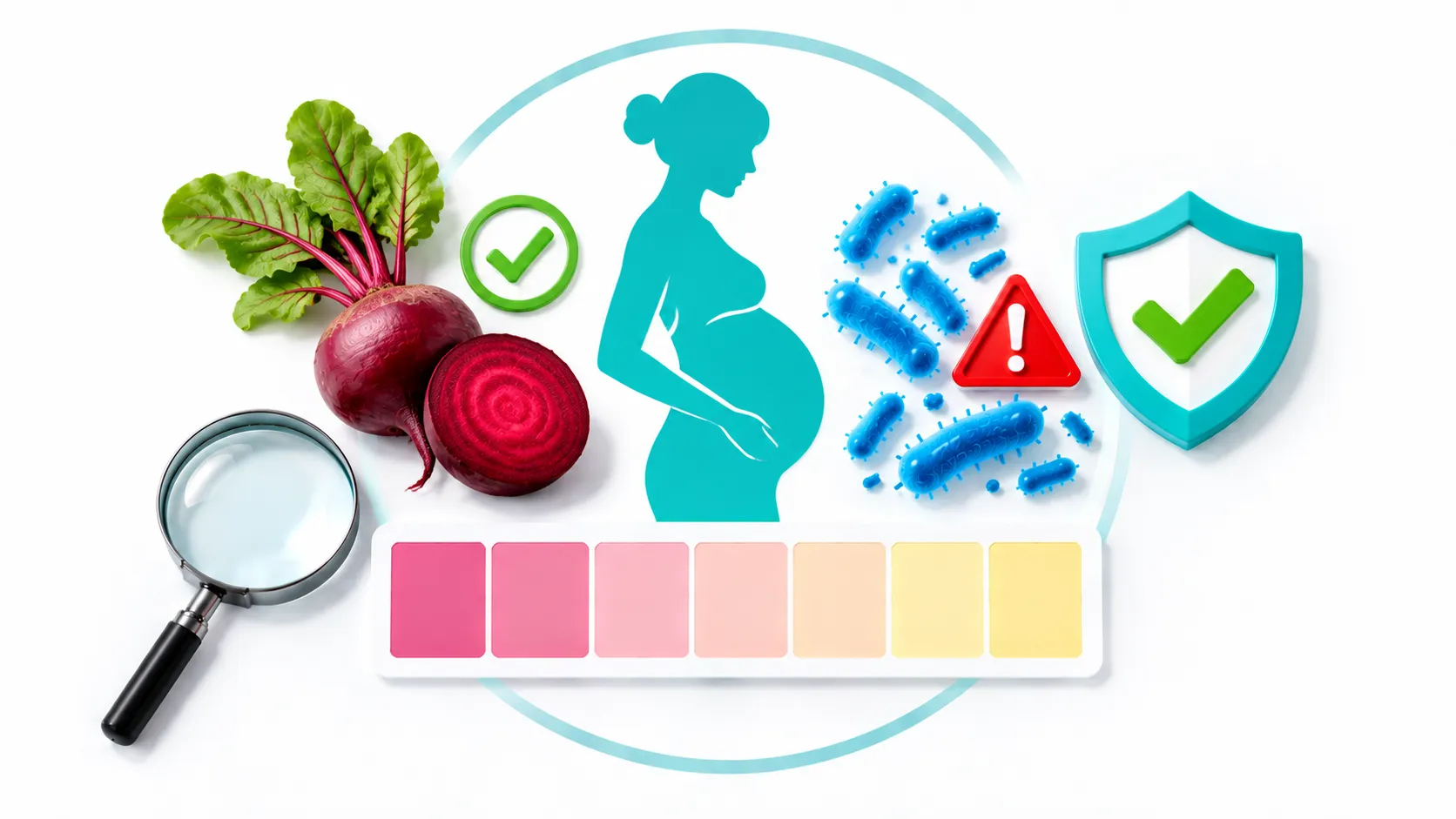
Quick Answer
Pink urine during pregnancy is not something to ignore, but it is not automatically an emergency. The most common explanations are harmless food pigments (beets, blackberries, red dyes) and urinary tract infections (UTIs). UTIs are more common in pregnancy and can cause small amounts of blood in urine, and they need treatment with pregnancy-safe antibiotics.
The red flags that mean call your OB or midwife right away are: pink urine with fever, chills, back or side pain, burning when you pee, or a strong foul smell; pink urine with abdominal cramping, pelvic pressure, or low backache; any pink-tinged fluid leaking from the vagina; or pink urine that persists or recurs without a clear food explanation. Those patterns can point to a kidney infection, preterm labor, or a placental problem—and pregnancy is not the time to wait and see. Use the pregnancy urine guide to compare what you are seeing, and read on for how to sort a harmless tint from a signal that needs your provider.
Harmless Causes: Food, Dyes, and Vitamins
Before you worry, consider the most common and innocent explanations. Deeply pigmented foods are a frequent cause of pink or red urine, and they are harmless.
- Beets contain betanin, a pigment that can turn urine pink or red—an effect called beeturia. It is harmless and clears within a day.
- Blackberries, raspberries, and rhubarb can also tint urine red or pink.
- Red food dyes in processed foods, drinks, and candy are a common cause.
Prenatal vitamins and some medications can change urine color, though they more often turn it bright yellow or orange than pink. If the color appeared after a meal featuring one of these foods and you feel well, food is the likely explanation. The color should clear within 24 to 48 hours once you stop eating the culprit.
The key distinction is symptoms. Food-related pink urine does not come with burning, urgency, fever, or cramping. If you have any of those, the color is no longer a simple food effect. The beetroot urine guide explains the food-pigment mechanism in more detail.
UTIs: The Most Common Medical Cause
Urinary tract infections are one of the more common complications of pregnancy, affecting roughly 8% of pregnancies. Pregnancy makes it easier for bacteria to get into the bladder, and hormonal changes and the growing uterus can trap bacteria and make it harder to fully empty the bladder. Blood in the urine is a key symptom of a UTI.
The UTI pattern to watch for includes:
- Burning or stinging when you urinate.
- A strong, persistent urge to pee, or passing frequent, small amounts.
- Pelvic pressure or lower abdominal pain.
- Cloudy urine or a strong, unpleasant smell.
- Pink, red, or brown urine from infection-related bleeding.
UTIs in pregnancy need prompt treatment with pregnancy-safe antibiotics. Untreated infection can spread upward to the kidneys—pyelonephritis—which is a serious complication. The warning signs that the infection has reached the kidneys are a high or very low temperature, blood in your urine, lower tummy or back pain, or feeling dizzy or drowsy. Those symptoms mean urgent contact with your provider. The UTI symptom guide covers the full pattern in more detail.
When Pink Urine Is a Red Flag in Pregnancy
Some patterns of pink urine are not explained by food or a simple bladder infection, and they need immediate attention. The distinction between blood coming from the urinary tract and blood coming from the vagina can be difficult to make on your own, and that is one reason medical review matters.
Call your OB or midwife right away if pink urine comes with any of the following:
- Fever, chills, or a high or very low temperature—possible kidney infection.
- Back or side pain, nausea, or vomiting—possible kidney infection or a stone.
- Burning, urgency, or foul-smelling urine that is worsening.
- Abdominal cramping, pelvic pressure, or a low backache that comes in a regular pattern—possible preterm labor.
- Any pink-tinged, watery, or bloody fluid leaking from the vagina—possible membrane rupture or placental problem.
- Dizziness, drowsiness, or feeling very unwell.
- Pink urine that persists or recurs without a clear food explanation, even if you feel well.
Some of these combinations are obstetric emergencies, not urological ones. Preterm labor and placental problems can cause bleeding that mixes with urine, and they need to be ruled out. If you are unsure whether the blood is coming from your urine or your vagina, treat it as a reason to call. The pregnancy urine guide covers the broader range of color changes across trimesters.
Kidney Stones: Painful but Less Common
Kidney stones can also cause pink or red urine in pregnancy. A stone scraping the urinary tract lining can cause bleeding, and the pain is often severe—described as one of the most intense pains a person can experience, typically in the flank or back and coming in waves.
Stones in pregnancy are less common than UTIs, but they are not rare. The combination of pink urine with severe, wave-like flank or back pain is the pattern to recognize. This warrants prompt medical assessment, because pain management and monitoring in pregnancy require special consideration.
What to Do While You Wait to Hear Back
If you have called your provider and are waiting for a response, a few practical steps can help:
- Note the color and timing. When did the pink appear? Was it after a specific food? Is it constant or intermittent?
- Note any other symptoms. Fever, pain, burning, cramping, or fluid leakage all change the urgency.
- Drink water steadily unless your provider has told you to restrict fluids. Dehydration can concentrate urine and make any color look more dramatic, but it does not cause true pink urine.
- Do not self-treat with antibiotics or assume the color is food if you have any of the red-flag symptoms.
A simple urinalysis can distinguish blood from food pigment and identify infection. If you are unsure whether your shade is concerning, compare it against a urine color chart and bring the pattern—color, timing, symptoms, and what you ate—to your appointment.
When to Call Your OB: The Bottom Line
Pink urine in pregnancy has a wide range of causes. Food pigments and UTIs are the most common. The patterns that mean call now are pink urine with fever, back or side pain, burning, cramping, pelvic pressure, fluid leakage, dizziness, or persistent recurrence without a food explanation. Those combinations can point to kidney infection, preterm labor, or a placental problem, and they need prompt evaluation. If the color is explained by beets or berries and you feel completely well, it is likely harmless and will clear within a day or two. When in doubt, call. Your OB or midwife would rather hear from you than have you wait out a signal that matters.