Sulfasalazine Orange Urine vs. Liver Warning Signs
Quick Answer
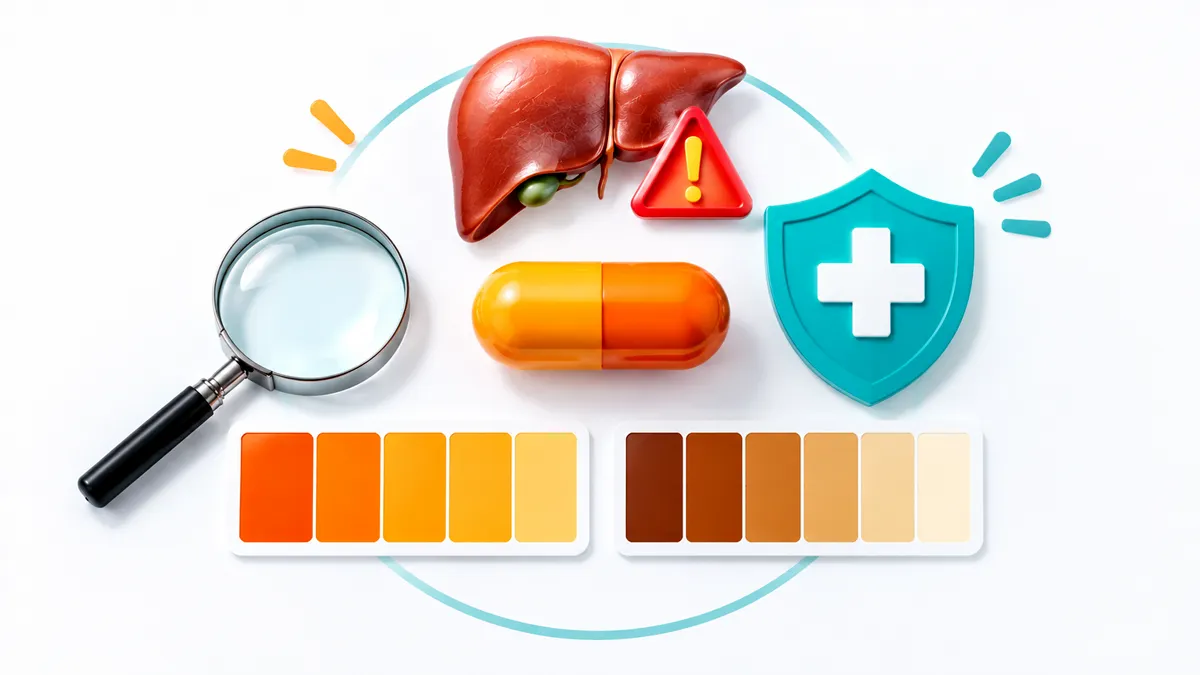
Sulfasalazine turning urine orange-yellow is a normal, expected effect of the drug—not a liver warning sign on its own. The medication and its breakdown products carry a yellow-orange color that is excreted in urine. NHS guidance states plainly that sulfasalazine “can turn your pee orange. This is harmless and nothing to worry about”. Mayo Clinic makes the same distinction: orange or yellow urine while taking the drug is “normal and nothing to worry about”.
The liver warning signs are different. Sulfasalazine can rarely cause drug-induced liver injury, and when it does, the urine may be dark (tea-colored or brown) rather than simple orange—and it comes with jaundice, pale stools, upper abdominal pain, nausea, or itching. The task is not to fear the orange; it is to recognize when the orange is accompanied by the pattern that signals liver trouble. Use the sulfasalazine urine guide to compare what you are seeing, and read on for the symptom-by-symptom distinction.
Why Sulfasalazine Turns Urine Orange
Sulfasalazine is a prodrug used for inflammatory bowel disease (IBD) and rheumatoid arthritis. In the colon, gut bacteria split it into 5-aminosalicylic acid (5-ASA) and sulfapyridine. The sulfapyridine portion is absorbed, metabolized by the liver, and excreted by the kidneys—carrying a yellow-orange tint with it.
The color is a direct consequence of the drug leaving the body. It is not bilirubin, and it is not a sign that the liver is injured. It may be more noticeable when urine is concentrated, and it can also tint sweat, tears, and saliva. The orange urine guide explains where this shade sits on the full color spectrum.
The key point: isolated orange-yellow urine, without other symptoms, is expected. It is not a reason to stop the medication.
The Liver Risk: Real but Rare
Sulfasalazine can cause hepatotoxicity, and the risk is well documented in the prescribing information. FDA labeling warns that jaundice may be an indication of serious hepatotoxicity and that liver damage is among the reported serious adverse reactions. The drug label lists hepatitis, hepatic necrosis, cholestasis, and hepatic failure among reported reactions, and notes that some cases have been fatal.
That sounds alarming, and it should be taken seriously—but the frequency matters. Serious hepatotoxicity with sulfasalazine has been estimated at approximately 0.4% of treated patients in a case series of inflammatory arthritis patients. Older reports cite hepatic toxicity in 2–5% of 200 adult rheumatoid arthritis patients, often mild. In other words, liver problems are uncommon, and most people who take sulfasalazine never develop them.
The timing is also characteristic. Sulfasalazine-induced liver injury most commonly presents 2 to 4 weeks after starting therapy, and the great majority of events occur within the first 6 weeks of treatment. That is why monitoring is concentrated early: liver function tests are recommended before starting and at regular intervals during the first months of therapy.
Symptom-by-Symptom: Orange Urine vs. Liver Warning Signs
The distinction is not the orange color itself—it is what travels with it.
Expected, harmless orange urine
- Color: yellow-orange, orange, or orange-yellow, often uniform.
- Associated symptoms: none beyond the color change.
- How you feel: well; no jaundice, no itching, no upper abdominal pain.
- Timing: appears after starting the drug and persists while you take it.
- What to do: no action needed. Mention it at your next routine visit so it is documented.
Liver warning signs
Mayo Clinic advises contacting a doctor right away if you develop pain or tenderness in the upper stomach, pale stools, dark urine, loss of appetite, nausea, vomiting, or yellow eyes or skin—symptoms of a serious liver problem. NHS patient information lists the liver warning pattern as yellow skin or eyes, itching, dark urine, pale bowel motions, and abdominal pain.
The distinctions that matter:
- Dark urine, not simple orange. Liver-related urine is often described as dark, tea-colored, or brown, reflecting bilirubin rather than the drug’s yellow-orange dye. The brown urine guide covers bilirubin-related color in more detail.
- Pale or clay-colored stools. This is a cholestatic pattern: bilirubin is not reaching the intestine, so stool loses its normal brown pigment. It rarely accompanies harmless drug-related orange urine.
- Jaundice. Yellowing of the eyes or skin is a systemic sign of liver dysfunction, not a urine-color side effect.
- Itching. Cholestasis can cause generalized itching, often worsening at night.
- Upper abdominal pain, nausea, or loss of appetite. These suggest liver inflammation rather than a benign pigment effect.
If orange urine is the only finding and you feel well, the liver is not the concern. If orange or dark urine comes with any of the symptoms above, it deserves prompt medical attention.
What Else Can Orange Urine Mean on Sulfasalazine?
Sulfasalazine is not the only reason urine can look orange while you are taking it. Other contributors include:
- Dehydration, which concentrates normal yellow pigment toward amber or orange. It lightens with fluids.
- Other medications, such as rifampin or phenazopyridine, if they are part of your regimen.
- B vitamins or beta-carotene from supplements, which can add a yellow-orange tint.
- Food dyes in colored drinks or foods.
The context usually sorts these out. A simple urinalysis can distinguish drug pigment from bilirubin and blood, and liver function tests can confirm whether the liver is involved. The urine color by cause section groups medication, food, and medical explanations.
When to Call Your Doctor
Contact your healthcare provider if any of the following applies while taking sulfasalazine:
- Dark brown or tea-colored urine, rather than simple orange-yellow.
- Pale or clay-colored stools alongside a change in urine color.
- Yellowing of the eyes or skin (jaundice).
- Itching that appears with the color change.
- Upper abdominal pain, nausea, vomiting, or loss of appetite.
- Fever, sore throat, unusual bruising or bleeding, or severe fatigue, which can signal a blood disorder or a systemic drug reaction.
- A rash with fever or swelling, which may indicate a serious hypersensitivity reaction.
Do not stop sulfasalazine on your own without talking to your prescriber. If you stopped it because of side effects, your clinician needs to know so they can decide whether to adjust the dose, switch medications, or investigate further. Monitoring blood counts and liver function is routine during the first months of treatment, and it is what catches problems early.
The Bottom Line
Sulfasalazine orange urine is expected and harmless. It comes from the drug’s yellow-orange metabolites being excreted, not from liver injury. The liver warning signs are a different pattern: dark tea-colored urine plus jaundice, pale stools, itching, upper abdominal pain, nausea, or loss of appetite. Those symptoms—not the orange color alone—are what require prompt medical attention. Serious hepatotoxicity is rare (on the order of 0.4% in reported series) and typically appears within the first 6 weeks of treatment, which is why early monitoring matters. If your urine is orange but you feel well, there is nothing to fix. If the color turns dark or comes with any of the liver warning signs, call your doctor.