Urine Color After Drinking Water: How Fast It Changes
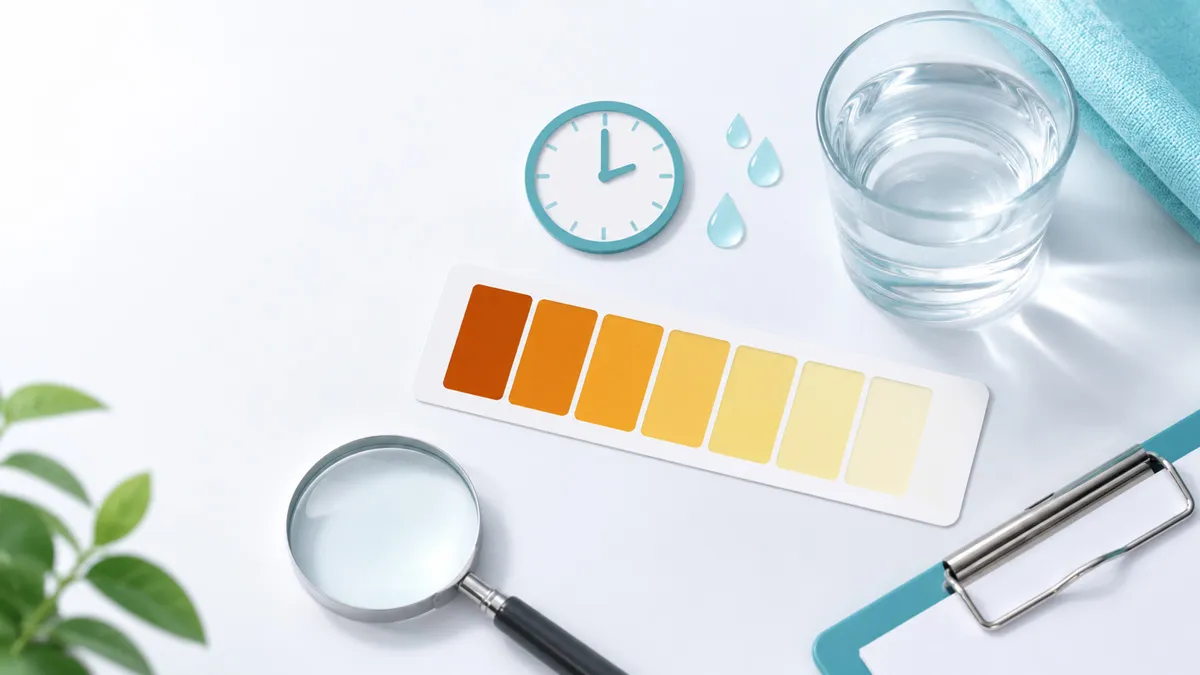
Quick Answer
Urine color usually begins to lighten within 30 to 60 minutes of drinking water, and it typically reaches its lightest shade within 1 to 2 hours. The exact speed depends on how dehydrated you were, how much you drank, your body size, the temperature, and whether you have been sweating. If you were only mildly dehydrated, one or two glasses can shift the color noticeably within an hour. If you were more dehydrated, it may take several hours of steady drinking.
The key is to drink steadily and recheck. Color that lightens toward pale yellow after water confirms that dehydration was the driver. Color that does not change despite good hydration points to something else. Use the dark yellow urine guide to compare where you started, and read on for the full timeline and what affects it.
Why Water Changes Urine Color
Urine gets its yellow tint from urochrome, a pigment produced when your body breaks down old red blood cells. Water dilutes that pigment. When fluid intake drops, the kidneys conserve water by reabsorbing more of it, so the same amount of pigment ends up in less urine—and the color deepens. When you drink water, the opposite happens: the kidneys release more water, the pigment is diluted, and the color lightens.
That process is not instant. The water you drink has to be absorbed from the gut, enter the bloodstream, and reach the kidneys before it can affect urine concentration. That is why the color does not change the moment you swallow.
The Timeline: How Fast It Changes
For a healthy adult, the sequence is fairly predictable.
- Within 15 to 30 minutes: water begins to be absorbed, and the kidneys start to dilute urine. You may notice the first subtle lightening.
- 30 to 60 minutes: the color usually changes noticeably if you were only mildly dehydrated. A dark yellow sample often moves toward a lighter yellow.
- 1 to 2 hours: the color typically reaches its lightest shade for that round of drinking. If you were moderately dehydrated, this is when you see clear progress.
- 2 to 4 hours: if you started from amber or deeper, it may take this long of steady sipping to move clearly toward pale yellow. The dehydration guide explains how the stages of fluid loss affect recovery time.
After that, the color depends on whether you keep drinking. If you stop, urine will slowly concentrate again as your body uses and loses water. If you keep sipping to thirst, it should stay in the pale yellow range.
What Speeds It Up or Slows It Down
Several factors change how quickly your urine color responds to water.
- How dehydrated you were. Mild dehydration corrects quickly; moderate dehydration takes longer. Starting from dark amber means more fluid is needed to dilute the pigment.
- How much you drank. A large glass changes color faster than a few sips. But drinking too much at once can cause stomach upset without speeding absorption much.
- Body size. A smaller body responds to a given amount of water more quickly than a larger one.
- Heat and sweating. If you are losing fluid through sweat, you may need more water to see the same color change.
- Food, medications, and vitamins. B vitamins, beta-carotene, and some drugs can keep urine bright or dark regardless of hydration. The urine color by cause section groups these explanations.
- Kidney function and medications. Diuretics increase urine output and can change both color and volume. Reduced kidney function can slow the response.
None of these factors are cause for alarm on their own. They simply change how quickly the color shifts and how much water it takes.
How to Test It at Home
A simple home check can tell you whether dehydration is the explanation.
- Start with a baseline sample. Look at fresh urine in good light against a white background.
- Drink 1 to 2 cups of water steadily, not all at once.
- Recheck in about an hour. If the color has lightened toward pale yellow, dehydration was the driver.
- Keep sipping to thirst and recheck again in another hour if the first check was inconclusive.
- Do not chase completely clear urine. Pale yellow is the target, not colorless. The pale yellow urine guide explains why that shade is the goal.
If the color does not lighten after several hours of adequate drinking, the water test has failed—and that is useful information. It means something other than simple dehydration may be involved.
When to See a Doctor
Contact a healthcare provider if any of the following applies:
- Dark yellow or amber urine persists for more than a day despite drinking adequate fluids.
- Brown or tea-colored urine does not clear with water.
- Red, pink, or smoky urine that is not clearly from food or medication.
- Cloudy urine with pain, fever, burning, or urgency.
- Ongoing clear urine without excess fluid intake, especially with constant thirst or heavy urination.
- You feel dizzy, weak, lightheaded, or confused, or you are passing very little urine.
- You are pregnant, older, or managing kidney or heart disease and notice a persistent change.
A simple urinalysis can check for infection, blood, glucose, and other markers, and turn a color question into an answer. If you are unsure whether your shade is concerning, compare it against a urine color chart and bring the pattern—starting color, how much you drank, and how long it took to change—to your doctor.
The Bottom Line
After drinking water, urine color usually starts to lighten within 30 to 60 minutes and reaches its lightest within 1 to 2 hours. If you were more dehydrated, it can take several hours of steady drinking. The home test is simple: drink, wait an hour, and recheck. Color that lightens toward pale yellow confirms dehydration; color that does not change despite fluids points to another cause. When in doubt, a urinalysis settles the question quickly.