Urine Color After the Gym: What Your Workout Does to You
Quick Answer
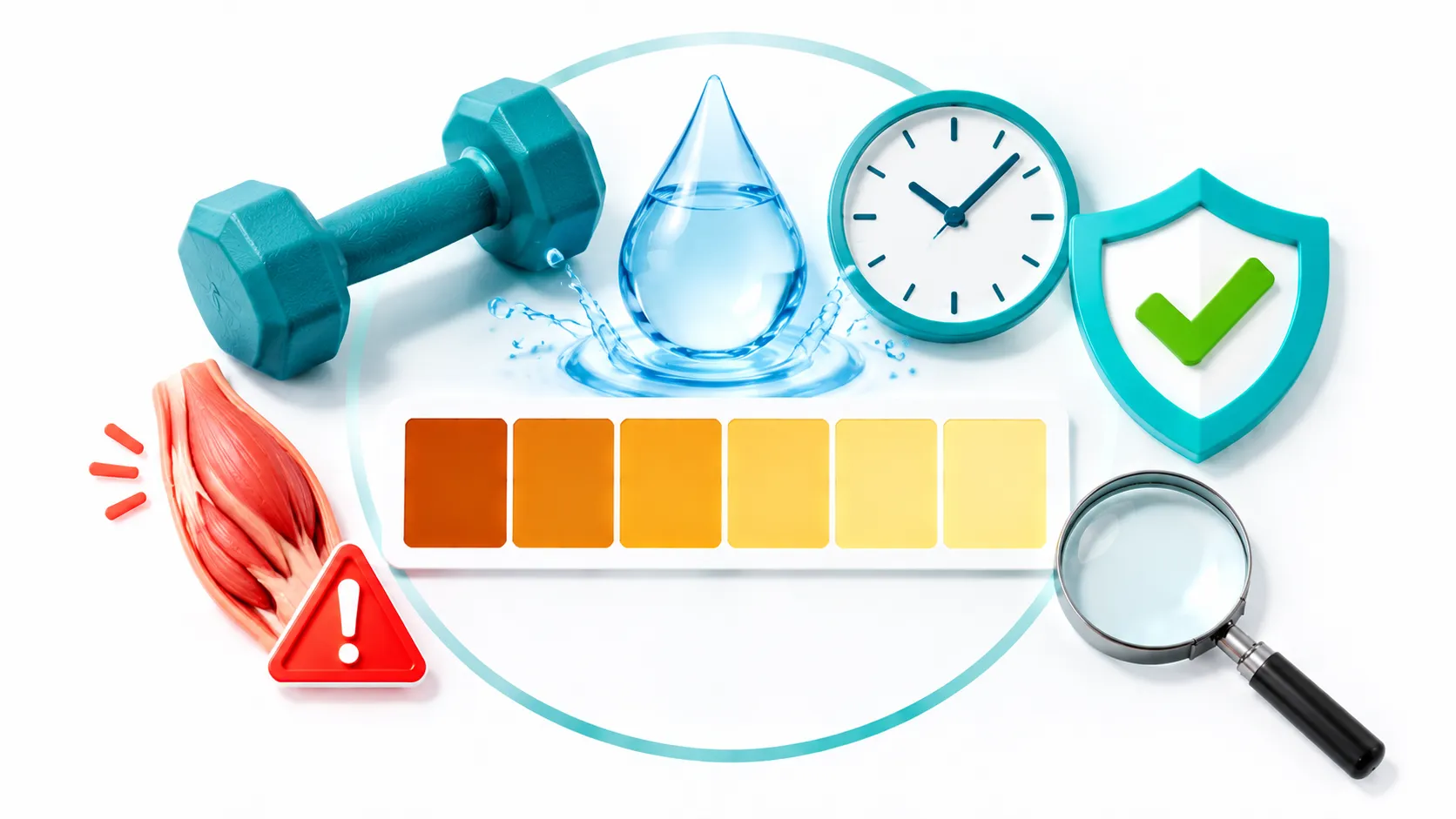
After a hard workout, urine often turns darker—usually dark yellow or amber—because you lost fluid through sweat and have not replaced it yet. That is ordinary dehydration, and it corrects within a few hours of drinking water. The color to take seriously is dark brown or cola-colored urine, especially with muscle pain, weakness, or swelling, because that pattern can signal rhabdomyolysis—a muscle breakdown that needs urgent care.
Most post-gym color changes are a hydration signal, not a health problem. The practical test is simple: drink water steadily, recheck in a couple of hours, and see whether the color moves back toward pale yellow. If it does, you were dehydrated. If it does not, or if the color is brown rather than yellow, that is the point to stop guessing. Use the after-exercise urine guide to compare your pattern, and read on for what your workout actually does to urine color.
Why Workouts Turn Urine Dark
Exercise changes urine color through three main mechanisms, and they often overlap.
1. Sweat Loss and Concentrated Urine
When you sweat, you lose water and electrolytes. If you do not replace that fluid, your blood volume drops slightly, and your kidneys respond by conserving water. They reabsorb more water back into the bloodstream, which leaves less water in urine. The yellow pigment urochrome becomes more concentrated, and the color deepens from pale yellow toward dark yellow and amber. This is the most common and most ordinary explanation for dark post-workout urine.
2. Fluid Shifts During Exercise
During intense exercise, blood flow is redirected toward working muscles and away from the kidneys. That can temporarily reduce urine production, so the urine that does appear is more concentrated. After the workout, as blood flow returns to normal, the kidneys release the retained fluid, and urine output increases again.
3. Red Blood Cells and Hemoglobin (Less Common)
Strenuous exercise can cause a small amount of red blood cells to enter urine—a harmless phenomenon called exercise-induced hematuria, more common in endurance athletes and after activities that jostle the bladder. Repeated foot impact can also damage red blood cells and release hemoglobin. These effects are usually transient and resolve within a day or two of rest. The pink or red urine guide covers the full range of causes for red-colored urine.
What Each Post-Gym Color Usually Means
The color you see after a workout tells you how far behind you are on fluids—and, in some cases, whether something else is going on.
Dark yellow or amber: mild to moderate dehydration. This is the most common post-workout shade, especially after sweaty or hot exercise. Drink water and recheck in a couple of hours. The dark yellow urine guide explains where this shade sits on the hydration spectrum.
Pale yellow: you replaced your fluids well. This is the target shade after rehydration.
Clear or colorless: you may have drunk more than you sweated. It is not dangerous on its own, but it is not a goal to chase. Drinking far beyond thirst can dilute sodium.
Pink or red: could be exercise-induced hematuria, but it could also be blood from a urinary tract problem. If it does not clear within a day or two of rest, or comes with pain, fever, or burning, get it checked.
Dark brown or cola-colored: this is the shade that warrants urgent attention, especially with muscle pain or weakness. It can signal rhabdomyolysis, which is a medical emergency. The brown urine guide covers the full range of causes for cola-colored urine.
Dehydration vs. Rhabdomyolysis: The Critical Difference
This is the distinction that matters most after a workout, because one is routine and the other is an emergency.
Dehydration:
- Color: dark yellow or amber, still within the yellow family.
- Timing: appears during or after the workout and improves within 1 to 3 hours of drinking fluids.
- Symptoms: thirst, maybe mild fatigue or headache, but no muscle pain, weakness, or swelling.
- Urine output: reduced but not absent, and it returns to normal as you rehydrate.
Rhabdomyolysis:
- Color: dark brown, cola-colored, or tea-colored—outside the yellow family.
- Timing: often appears one to three days after an extreme or unaccustomed workout.
- Symptoms: muscle pain, tenderness, weakness, or swelling, sometimes with nausea or fever.
- Urine output: may be very low, and the color does not correct with fluids.
The practical rule: dark yellow that lightens with water is dehydration. Dark brown that does not lighten, especially with muscle symptoms, is rhabdomyolysis until proven otherwise. If you have the second pattern, seek urgent care rather than waiting to see if it clears.
How to Rehydrate After a Workout
The goal is to replace what you lost, not to drink as much as possible.
- Drink to thirst rather than forcing a fixed volume.
- Use sweat rate as a guide. Weigh yourself before and after a workout. Each pound lost is roughly 16 ounces of fluid to replace.
- Add electrolytes for long or hot workouts. If you exercise for more than an hour in heat, or you sweat heavily, choose a drink with sodium and potassium rather than plain water alone.
- Recheck your urine after an hour or two. If it is moving toward pale yellow, you are correcting the deficit. The dehydration guide explains how quickly color should recover.
- Do not chase completely clear urine. Pale yellow is the target, not colorless.
When to See a Doctor
Contact a healthcare provider if any of the following applies after a workout:
- Dark brown or cola-colored urine that does not lighten with fluids.
- Muscle pain, tenderness, weakness, or swelling alongside dark urine.
- Very little urine output, or no urination for many hours.
- You feel confused, very weak, lightheaded, or your heart is racing.
- You have nausea, vomiting, or fever with dark urine.
- Pink or red urine that persists beyond a day or two of rest, or comes with pain or burning.
- You have flank or back pain that is severe or worsening.
A simple urinalysis and blood tests can check for muscle breakdown, hydration, and kidney function, and turn a color question into an answer. If you are unsure whether your shade is concerning, compare it against a urine color chart and bring the pattern—workout type, timing, color, and symptoms—to your doctor.
The Bottom Line
Urine color after the gym is usually a hydration signal: dark yellow or amber means you sweated and have not fully replaced the fluid yet, and it lightens within a few hours of drinking. The color to take seriously is dark brown or cola-colored urine with muscle pain, weakness, or swelling, which can signal rhabdomyolysis and needs urgent care. Drink to thirst, use electrolytes for long or hot workouts, and recheck your urine after an hour or two. If it lightens and you feel well, you have corrected the deficit. If it stays dark brown or comes with muscle symptoms, do not wait—get it checked.