Can Papaya Change Urine Color?
Why It Happens
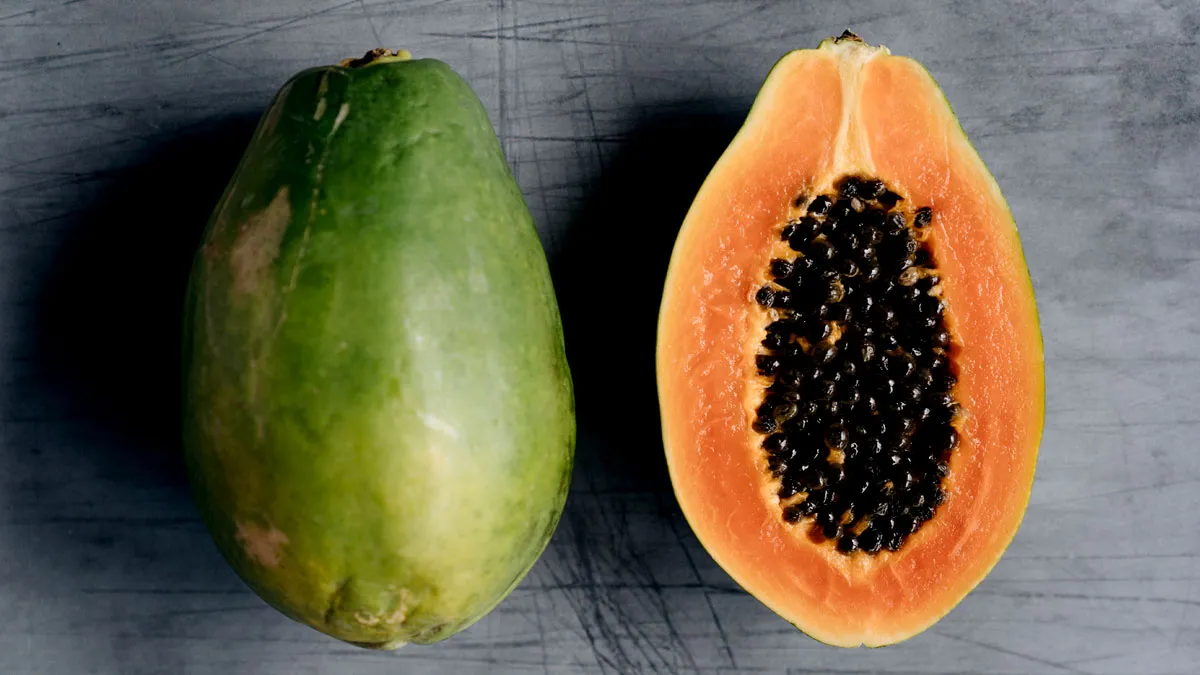
Papaya contains carotenoids, including beta-carotene and lycopene, which contribute to its orange-red flesh. When eaten in large amounts, some of these pigments are absorbed and excreted in urine, giving it a mild orange or yellow-orange hue.
This is a benign food-pigment effect. It does not indicate liver or kidney disease, and it does not colour the eyes or skin.
How Long It Lasts
The colour fades within a day or two after you stop eating large amounts of papaya. It is dose-dependent and more likely with daily consumption of large servings.
How to Tell It Apart from Blood
- Colour. Papaya urine is orange or yellow-orange, not red or pink.
- No clots. Carotenoid pigments do not clot. Blood can.
- No eye yellowing. Jaundice affects the whites of the eyes; papaya-related colour does not.
- Timing. The colour follows eating papaya. Unexplained orange urine should be evaluated.
When to Worry
Contact a doctor if orange urine persists after you stop eating papaya, or if it comes with yellowing of the eyes or skin, pale stools, or abdominal pain.
Note: Colors may vary slightly depending on your screen settings. Use this chart as a general guide.