Vitamin C and Urine Color in Children: A Parent's Guide
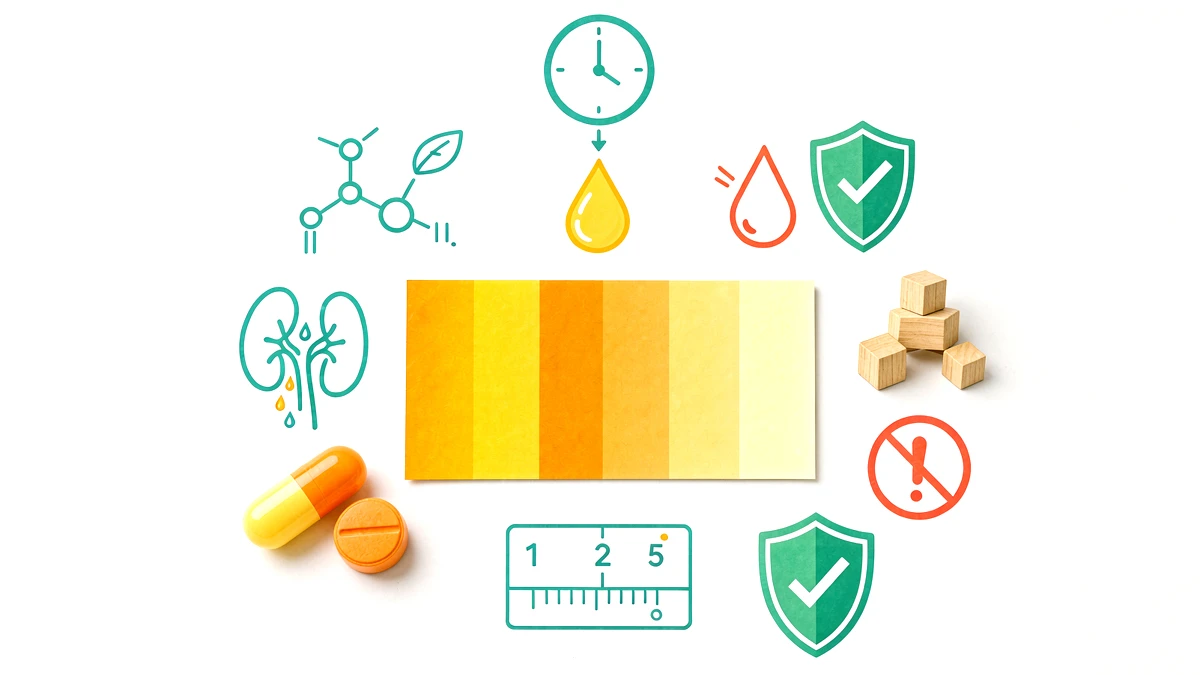
Quick Answer
Vitamin C can turn a child's urine orange-yellow, but the effect is less common and less predictable than the bright yellow caused by B vitamins. Vitamin C (ascorbic acid) is water-soluble, so the body excretes what it does not need. At high doses—typically above 1,000 mg per day—the excess can visibly tint urine toward yellow-orange. At the doses found in children's multivitamins and a normal diet, a noticeable color change is uncommon.
The more important question for parents is the dose. The recommended daily intake for children ranges from about 15 mg for ages 1–3 to 45 mg for ages 9–13, with an upper limit that ranges from 400 mg for young children to 1,200 mg for older children. Most children meet their needs from food, and routine high-dose supplementation is not recommended. The color becomes worth a pediatrician's look when it persists without a supplement explanation, turns red or brown, or comes with other symptoms. Use the vitamin C urine guide to compare the effect, and read on for what parents should know.
Why Vitamin C Can Change Urine Color
Vitamin C is a water-soluble vitamin. Unlike fat-soluble vitamins, it is not stored in large amounts in the body. The tissues take up what they need, and the kidneys excrete the rest. At high intakes, the concentration of vitamin C and its metabolites in urine rises, and the color can shift toward yellow or orange-yellow.
The effect is dose-dependent and inconsistent. Many children take vitamin C supplements or eat vitamin C–rich foods without any visible color change. The tint is most likely when:
- The dose is high—typically above 1,000 mg per day, which is far above the recommended intake for children.
- The child is dehydrated, so urine is concentrated and any pigment is more visible.
- The supplement is a standalone high-dose product rather than a children's multivitamin with a modest amount.
Unlike riboflavin, vitamin C does not have a strong natural fluorescence, so the color is usually a deeper yellow-orange rather than neon yellow. The orange urine guide explains where this shade sits on the full color spectrum.
How Much Vitamin C Is Safe for Children?
The safe range depends on age. These are the standard reference values:
- Ages 1–3: recommended intake 15 mg/day; tolerable upper limit 400 mg/day.
- Ages 4–8: recommended intake 25 mg/day; tolerable upper limit 650 mg/day.
- Ages 9–13: recommended intake 45 mg/day; tolerable upper limit 1,200 mg/day.
- Ages 14–18: recommended intake 65–75 mg/day; tolerable upper limit 1,800 mg/day.
Most children meet the recommended intake easily from food. A single orange, a cup of broccoli, or a bell pepper provides a substantial portion of the daily need. Routine high-dose vitamin C supplementation is not recommended for children who eat a balanced diet, and it is not proven to prevent colds or other illnesses in the general pediatric population.
The upper limit exists for a reason. Doses above it can cause diarrhea, nausea, and abdominal cramps, and high-dose vitamin C can increase urinary oxalate excretion, which matters for children with a history of kidney stones or a family history of stone disease. If you are considering a supplement above the recommended intake, talk to your pediatrician first.
How Long the Color Lasts
The timeline is predictable for a water-soluble vitamin.
- Within 1 to 3 hours: the color begins to appear as excess vitamin C is filtered into urine.
- 3 to 6 hours: the tint is usually most noticeable in this window, especially after a large dose.
- 6 to 12 hours: the color fades as the vitamin is cleared and the child drinks fluids.
- Up to 24 hours: a very large dose or dehydration can stretch the visible tint closer to a full day.
If the color clears within a day of stopping the supplement and the child feels well, the vitamin was the likely explanation. If it persists beyond 24 hours despite stopping the supplement and drinking normally, that is the point to consider other causes.
How to Tell Vitamin C Color From Something Else
Orange or yellow urine in a child has several possible explanations, and the context usually tells them apart.
Clues that point to vitamin C:
- The color appeared after a high-dose vitamin C supplement or a fortified drink.
- The urine is yellow-orange, without clots or cloudiness.
- The child feels well—no fever, pain, or burning.
- The color fades within a day of stopping the supplement.
Clues that point to something else:
- Dark yellow or amber urine that lightens with fluids is more likely dehydration.
- Bright, neon yellow urine is more likely from B vitamins, especially riboflavin.
- Orange urine after carrots, pumpkin, or sweet potato is a beta-carotene effect, not vitamin C.
- Orange urine with pale stools, yellowing eyes, or abdominal pain can signal a liver or bile duct problem.
- Red or pink urine with clots, pain, or fever can signal blood or infection.
- The color persists without a supplement explanation and does not clear with fluids.
If you are trying to match your child's pattern to a cause, the urine color by cause section groups explanations by food, medication, and medical conditions.
When to Call the Pediatrician
Contact a pediatrician or healthcare provider if any of the following applies:
- Orange or yellow-orange urine persists for more than 24 hours after stopping the vitamin C supplement.
- Dark yellow or amber urine does not lighten with fluids, especially with dizziness or very low urine output.
- Orange urine with pale stools, yellowing eyes, or abdominal pain.
- Red or pink urine that is not clearly from food or medication.
- Cloudy urine with pain, fever, burning, or urgency, which may point to a urinary tract infection.
- The child has severe diarrhea, nausea, or abdominal pain while taking high-dose vitamin C.
- The child has flank or lower back pain, which can signal a kidney stone.
- The child seems very tired, irritable, or unwell.
- You are unsure whether the color is from the vitamin or something else—trust your instinct and check in.
A simple urine test can detect blood, crystals, and other markers, and turn a color question into an answer. If you are unsure whether your child's shade is concerning, compare it against a urine color chart and bring the pattern—color, timing, supplement dose, and symptoms—to the pediatrician.
The Bottom Line
Vitamin C and a child's urine color are usually a minor and harmless story. High doses can tint urine orange-yellow, but the effect is less common and less predictable than the bright yellow from B vitamins. The more important issue is the dose: children have modest vitamin C needs, and most meet them from food. High-dose supplementation is not routinely recommended and can cause gastrointestinal upset and increase oxalate excretion in stone-prone children. If the color clears within a day of stopping the supplement and the child feels well, there is nothing to fix. If it persists, turns red or brown, or comes with pain, fever, or other symptoms, call the pediatrician.