White Dragon Fruit and Urine Color: Does It Change Anything?
Quick Answer
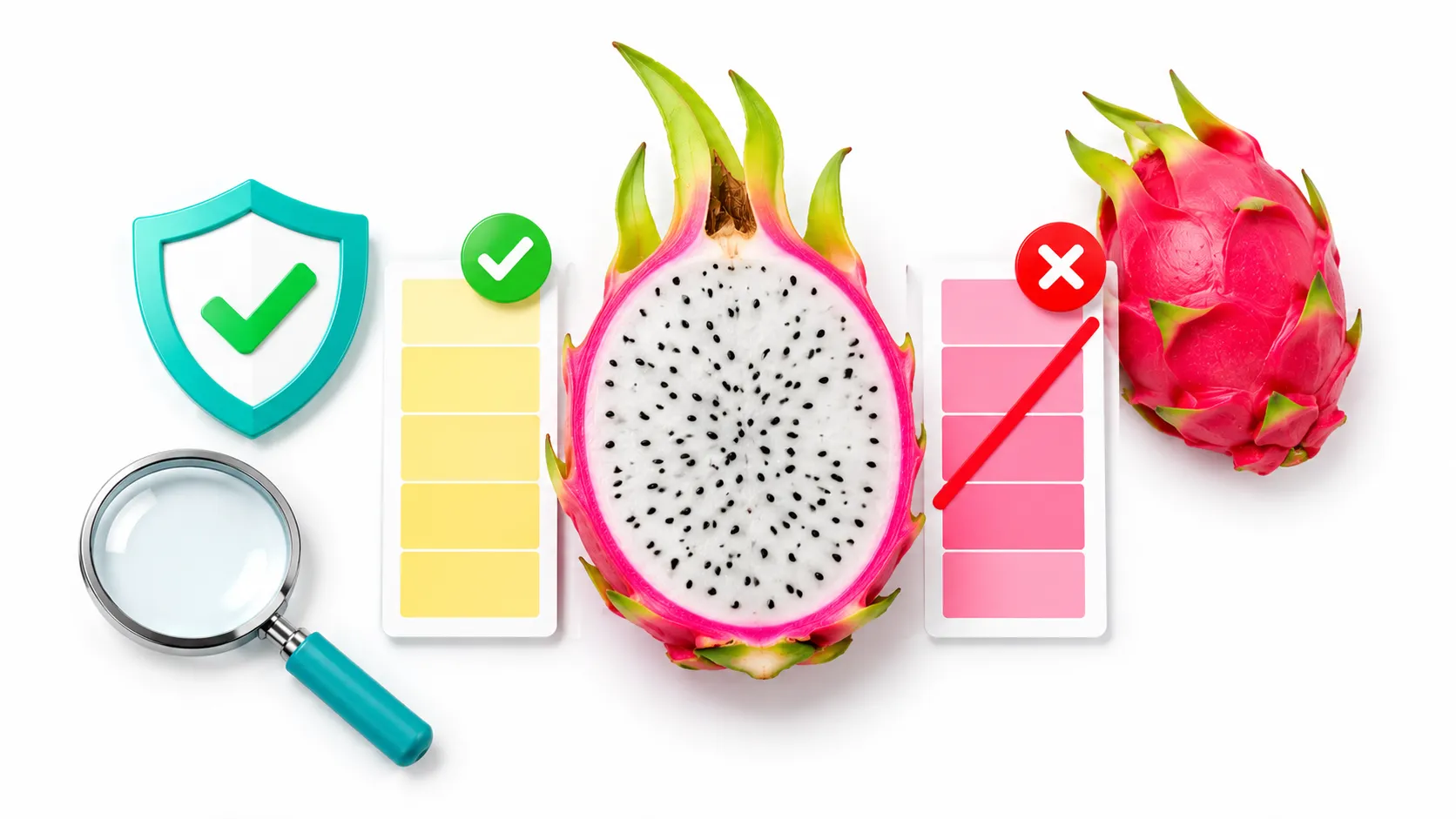
White dragon fruit is unlikely to change your urine color. The pigments that turn urine pink or red—betacyanins, including betanin—are concentrated in the red-fleshed variety. White-fleshed dragon fruit contains only trace amounts of these pigments, so it generally does not produce the color change that red dragon fruit is known for.
If you ate white dragon fruit and noticed pink or red urine, the fruit is probably not the explanation. Look for another source: red dragon fruit you may have eaten earlier, beets, blackberries, red food dye, or a medication that tints urine. And if the color persists without a clear food explanation, get it checked—blood in urine can look identical to food pigment. Use the dragon fruit urine guide to compare the red-fleshed variety, and read on for why white dragon fruit is different.
Why Red Dragon Fruit Changes Urine Color
The color change associated with dragon fruit comes from betacyanins, a family of water-soluble red-violet pigments. The best-known member is betanin, the same pigment found in beets. Betacyanins are what give red-fleshed dragon fruit its vivid magenta color.
When you eat red dragon fruit, a portion of those pigments survives digestion, enters the bloodstream, and is filtered by the kidneys into urine. The result is pink, red, or reddish-brown urine that appears within a few hours and clears within 24 to 48 hours. This is a harmless food-pigment effect, not blood.
Red dragon fruit is not the only source. Beets, blackberries, rhubarb, and artificial red dyes can produce a similar shade. The mechanism is the same across all of them: a water-soluble pigment that the body excretes rather than breaks down completely.
Why White Dragon Fruit Is Different
White-fleshed dragon fruit and red-fleshed dragon fruit are different varieties, and their pigment content is not the same. The white variety lacks the dense betacyanin load that gives the red variety its color—and, by extension, its ability to tint urine.
This is a difference of pigment concentration, not a subtle nuance. Red dragon fruit pulp is a concentrated source of betacyanins. White dragon fruit pulp contains only trace amounts, which are generally too low to produce a visible color change in urine. That is why the clinical and practical guidance is consistent: white dragon fruit generally does not affect urine color, while red dragon fruit can.
If you are trying to explain a pink or red stream and the only fruit you ate was white dragon fruit, the fruit is unlikely to be responsible. The red dragon fruit urine guide covers the pigment mechanism in the variety that does cause it.
What Else Could Be Turning Urine Pink or Red?
If white dragon fruit is not the explanation, consider these other common causes.
Foods and Dyes
- Beets and beet juice—the classic cause, through the same betanin pigment found in red dragon fruit.
- Blackberries, blueberries, and rhubarb—through anthocyanins or other pigments.
- Red food dyes in candies, drinks, and frostings.
- Red-fleshed dragon fruit you may have eaten earlier in the day or the day before.
Medications
- Rifampin, an antibiotic, commonly turns urine orange or red-orange.
- Phenazopyridine, a urinary pain reliever, produces bright orange or red-orange urine.
- Senna laxatives can tint urine yellow-brown to reddish in some people.
Blood in Urine
True hematuria—red blood cells in urine—can look exactly like food pigment. It can come from a urinary tract infection, a kidney stone, or, less often, a more serious urinary tract problem. Unlike food pigment, blood in urine does not clear on a predictable food timeline, and it may come with pain, fever, burning, or clots. The pink or red urine guide covers the full range of causes.
If the color is not clearly explained by a known food or medication, and it persists or recurs, a simple urinalysis can settle the question.
How Long Food Pigment Lasts
When a food pigment is responsible, the timeline is predictable:
- Within 2 to 8 hours of eating the culprit, the color appears.
- Peak concentration is usually in the first day.
- 24 to 48 hours later, the color fades as the pigment is cleared.
If pink or red urine persists beyond 48 to 72 hours and you have not eaten a known culprit again, the food explanation is unlikely to hold. That is the point to arrange a urinalysis. Drinking water and urinating regularly help clear the pigment faster, but they do not change the underlying timeline.
When to See a Doctor
Contact a healthcare provider if any of the following applies:
- Red or pink urine lasts more than two to three days and you have not eaten a known culprit again.
- You have pain, fever, chills, burning, or urgency when you urinate.
- You see blood clots or a smoky-brown tint, rather than a uniform pink tint.
- You feel dizzy, weak, or lightheaded, or you are passing much less urine than usual.
- You are pregnant and have red urine that is not explained by food.
- You have a history of kidney stones, urinary tract infections, or kidney disease and notice a new color change.
- Red urine recurs without a food explanation, even if each episode clears on its own.
A simple urinalysis can confirm whether blood is present or whether the color is pigment alone. If you are unsure whether your red urine is food-related, compare it against a urine color chart and bring the pattern—color, timing, and what you ate—to your doctor.
The Bottom Line
White dragon fruit is unlikely to change urine color because it lacks the concentrated betacyanin pigments found in the red-fleshed variety. The color change associated with dragon fruit comes from the red variety, and it is a harmless food effect that clears within a day or two. If you ate white dragon fruit and your urine turned pink, look for another explanation—red dragon fruit, beets, berries, food dye, or a medication. If the color persists without a clear cause, get a urinalysis. It is a simple test that can separate food pigment from blood.