B Vitamins and Yellow Urine in Children: A Parent's Guide
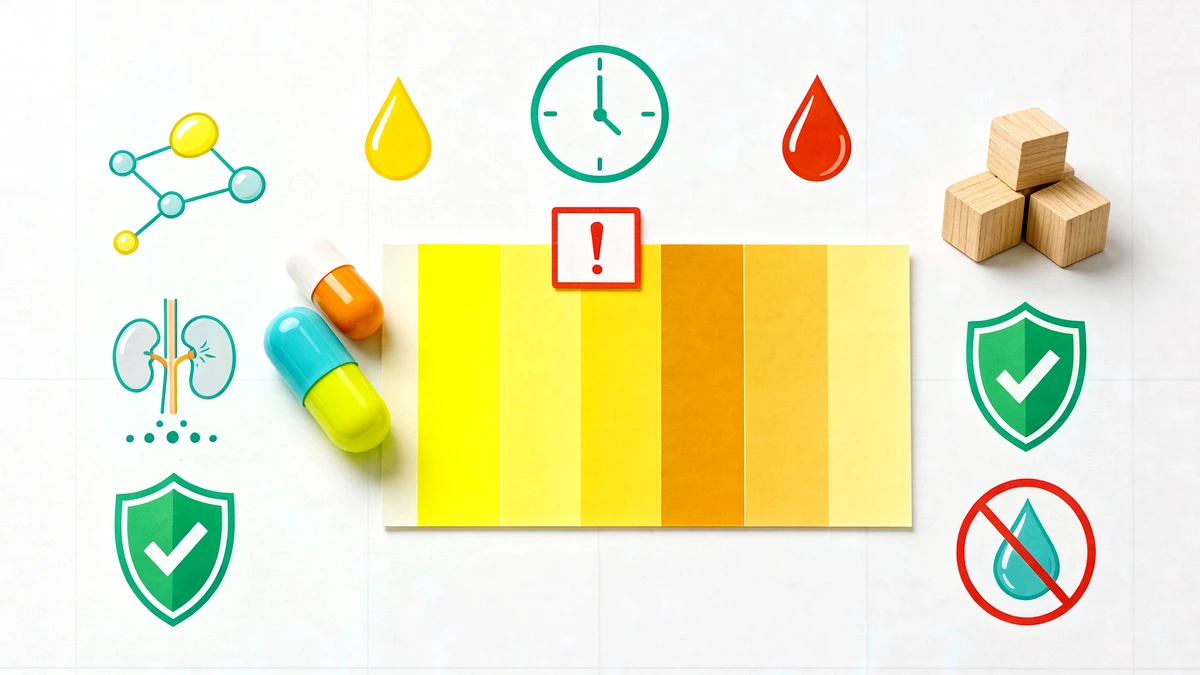
Quick Answer
B vitamins can turn a child's urine bright yellow, and in most cases it is harmless. The main culprit is riboflavin (vitamin B2), a water-soluble vitamin with a natural yellow-green fluorescence. When a child takes a B-complex, a multivitamin, or a fortified drink, the body absorbs what it needs and excretes the rest in urine. The result is a bright, almost neon yellow that can look alarming but is not a sign of dehydration or kidney damage.
Children are more likely to show this effect because supplement doses are often designed for adults, and a small body excretes the excess more visibly. The color appears within a few hours of the dose and fades within 6 to 12 hours. It becomes worth a pediatrician's look when the bright yellow persists all day despite no supplement, comes with dark amber urine that does not lighten with fluids, or appears alongside symptoms such as fatigue, thirst, or pain. Use the vitamin B urine guide to compare the effect, and read on for what parents should know.
Why B Vitamins Turn a Child's Urine Yellow
Riboflavin is a water-soluble vitamin. Unlike fat-soluble vitamins, it is not stored in large amounts in the body. The tissues take up what they need, and the kidneys excrete the rest. Because riboflavin has a natural yellow-green fluorescence, even a small excess can make urine glow under certain light.
Common sources that can turn a child's urine bright yellow include:
- Children's multivitamins and gummy vitamins that contain B-complex vitamins.
- B-complex supplements, which often contain high doses of riboflavin.
- Fortified cereals and energy drinks that add B vitamins.
- Adult prenatal vitamins accidentally taken by a child—these contain high riboflavin doses.
The color is a side effect of excretion, not a sign that the vitamin is harming the child's kidneys. It is also not a sign of dehydration. The dark yellow urine guide explains how this fluorescent yellow differs from the dark amber of concentration.
How Long the Yellow Color Lasts
The timeline is predictable for a water-soluble vitamin.
- Within 1 to 3 hours: the bright yellow begins to appear as excess riboflavin is filtered into urine.
- 3 to 6 hours: the color is usually most noticeable in this window.
- 6 to 12 hours: the tint fades as the vitamin is cleared and the child drinks fluids.
- Up to 24 hours: a very large dose or reduced fluid intake can stretch the color closer to a full day.
If the child takes a daily multivitamin, the color may be present most days because the dose is repeated. That is expected. If the supplement is stopped, the bright yellow should fade within a day. Drinking water dilutes the color and speeds its return to normal.
How to Tell Vitamin Yellow From Dehydration
Bright yellow urine from riboflavin and dark yellow urine from dehydration can look similar at a glance, but they behave differently.
Clues that point to B vitamins:
- The color is neon or fluorescent yellow, not deep amber or golden.
- The child took a multivitamin, B-complex, or fortified drink within the last several hours.
- The color fades over hours regardless of how much the child drinks, because it depends on clearing the vitamin rather than replacing fluid.
- The child feels well—no thirst, dizziness, or dry mouth.
Clues that point to dehydration:
- The color is dark yellow or amber, not bright or fluorescent.
- It lightens after the child drinks fluids, usually within an hour or two.
- The child is thirsty, tired, or has a dry mouth.
- They are urinating less often, or have fewer wet diapers.
A practical check is to look at the urine before the supplement is given. If it is pale yellow and turns bright yellow after the vitamin, riboflavin is the explanation. If it is dark yellow before the supplement and improves with water, dehydration is more likely.
Is Bright Yellow Urine From Vitamins Harmful?
For most children, no. The color is a harmless sign that the body is excreting excess water-soluble vitamin. It does not mean the child is overdosing, and it does not damage the kidneys.
The one situation that deserves attention is excessive dosing of certain B vitamins, especially vitamin B6 (pyridoxine). Very high doses of B6 over time can cause peripheral neuropathy—numbness, tingling, or pain in the hands and feet. The tolerable upper limit for B6 in children varies by age, but it is far below the doses that would be used in a standard children's multivitamin. The risk comes from high-dose B6 supplements taken for nausea, behavioral reasons, or other off-label purposes, not from a normal multivitamin.
Riboflavin itself has a very low toxicity profile because excess is excreted in urine. The bright yellow color is the visible evidence of that excretion, not a warning sign. If you are giving your child a standard age-appropriate multivitamin, the color is expected and does not require any change.
When to Call the Pediatrician
Contact a pediatrician or healthcare provider if any of the following applies:
- Bright yellow urine persists all day despite no supplement use and normal fluid intake.
- Dark yellow or amber urine does not lighten with fluids, especially with dizziness or very low urine output.
- Orange, brown, or tea-colored urine that is not explained by food or supplements.
- Red or pink urine that is not clearly from food or medication.
- Cloudy urine with pain, fever, burning, or urgency, which may point to a urinary tract infection.
- The child seems very tired, irritable, or unwell.
- Fewer wet diapers, no urination for many hours, or other signs of dehydration.
- You are giving a high-dose B6 supplement and the child develops numbness, tingling, or unsteady walking.
- You are unsure whether the color is from the vitamin or something else—trust your instinct and check in.
A simple urine test can detect infection, blood, and other markers, and turn a color question into an answer. If you are unsure whether your child's shade is concerning, compare it against a urine color chart and bring the pattern—color, timing, supplement use, and fluid intake—to the pediatrician.
The Bottom Line
B vitamins and bright yellow urine in children are usually a harmless match. Riboflavin is the main driver, and the color is a sign of excretion, not overdose or kidney damage. It appears within hours of the supplement and fades within a day. The exception worth knowing is high-dose B6, which can cause nerve symptoms over time—but standard children's multivitamins do not contain doses in that range. If the bright yellow persists without a supplement, turns dark amber or brown, or comes with other symptoms, call the pediatrician. Otherwise, expect the color, keep the supplement dose age-appropriate, and move on.