Beetroot Urine Color: Why Your Pee Turns Pink or Red
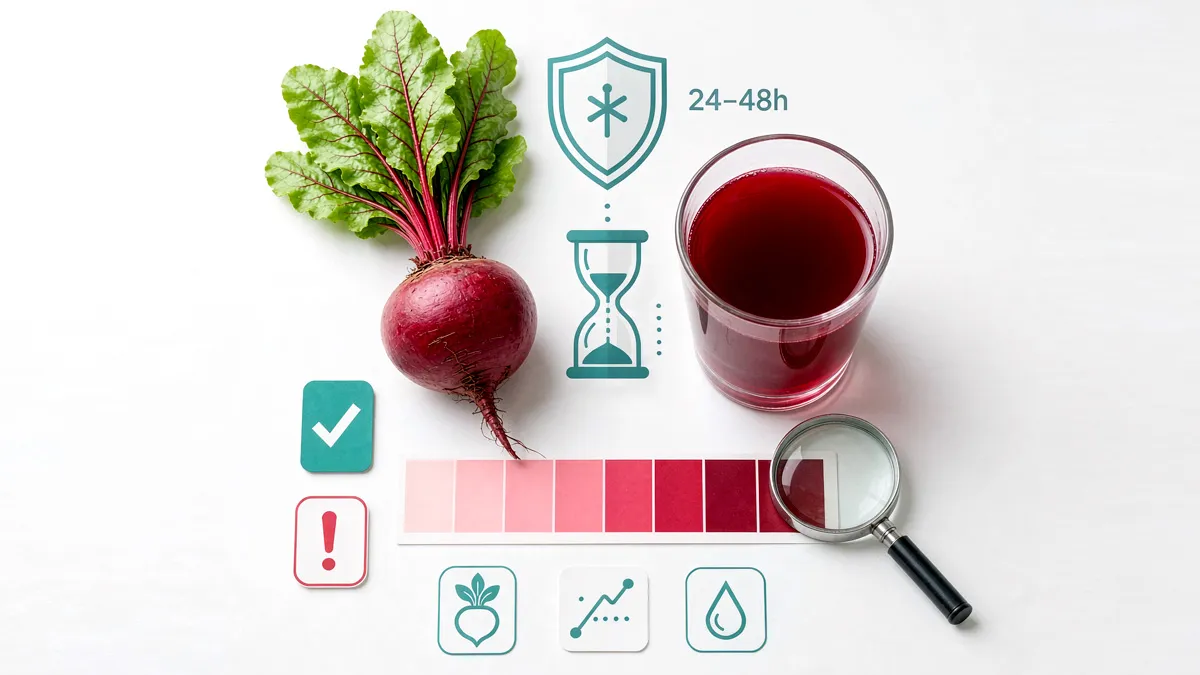
Quick Answer
Beetroot can turn your urine pink, red, or even slightly brown within a few hours of eating it. This is called beeturia, and for most healthy people it is harmless. The color comes from betanin, the same pigment that gives beets their deep red color. Your body absorbs some of that pigment, and your kidneys send it out in urine.
Beetroot urine usually clears within 24 to 48 hours. The key question is whether the redness is explained by beets and nothing else. If you have pain, fever, clots, or red urine that lasts beyond a couple of days, do not assume it is food. Use the beetroot urine cause page to compare your pattern, and read on for how to tell harmless beeturia from blood.
Why Beetroot Turns Urine Red
Beets contain betanin, a water-soluble pigment. Normally, betanin is broken down in the stomach and colon. In some people, more of it survives digestion, gets absorbed into the bloodstream, and is filtered out by the kidneys. The result is pink or red urine that can look alarming but is simply food pigment leaving the body.
Why some people get beeturia and others do not is not fully settled. Factors that may play a role include:
- Gut bacteria that vary from person to person and affect how betanin is broken down.
- Stomach acid levels, since lower acidity may allow more pigment to survive digestion.
- How much beetroot you ate, and whether it was raw, cooked, or juiced.
- Iron and oxalate interactions in the gut, which may influence pigment absorption.
Beeturia is more common after beet juice or large servings than after a small amount of cooked beet. It can also happen after eating other red or purple foods, which is why food history matters when you are trying to explain a red urine color.
How Long Beetroot Urine Lasts
For most people, beetroot urine appears within 2 to 8 hours of eating beets and fades within 24 to 48 hours. The exact timing depends on how much you ate, how well hydrated you are, and how quickly your gut moves food through. Drinking normally and urinating regularly helps clear the pigment.
If red or pink urine persists past 48 hours and you have not eaten beets again, stop attributing it to food. That is the point where a simple urinalysis is worth arranging.
How to Tell Beetroot Urine from Blood
Beetroot urine and blood in urine can both look pink or red, but they usually behave differently. Beetroot urine tends to be uniformly pink or red, without clots, and it clears as the pigment leaves your system. It does not come with burning, urgency, fever, or flank pain unless you have a separate problem.
Blood in urine, called hematuria, can look red, pink, or smoky-brown. It may come with pain, fever, chills, urgency, or clots, but it can also be painless. Because painless bleeding can be a sign of a serious urinary tract problem, any red urine that is not clearly explained by food and does not clear within two days deserves medical evaluation. The pink or red urine guide explains the full range of causes, including infection, stones, and medication effects.
When to See a Doctor
Contact a healthcare provider if any of the following applies:
- Red or pink urine lasts more than 48 hours and you have not eaten beets again.
- You have pain, fever, chills, burning, or urgency when you urinate.
- You see blood clots or smoky-brown urine.
- You feel dizzy, weak, or lightheaded, or you are passing much less urine than usual.
- You are pregnant and have red urine that is not explained by food.
- You have a history of kidney stones, urinary tract infections, or kidney disease and notice a new color change.
If you are unsure whether your red urine is food-related, the urine color by cause section groups explanations by food, medication, and medical conditions so you can narrow down what is most likely before your appointment.
The Bottom Line
Beetroot urine color is usually a harmless food effect, not a sign of disease. If you ate beets and your urine turned pink or red without pain, fever, or clots, watch for it to clear within a day or two. If it does not clear, or if any concerning symptom comes with it, get it checked. A urinalysis can quickly separate beeturia from blood.