Why Beet Juice Turns Urine Red: The Betalain Pigment
Quick Answer
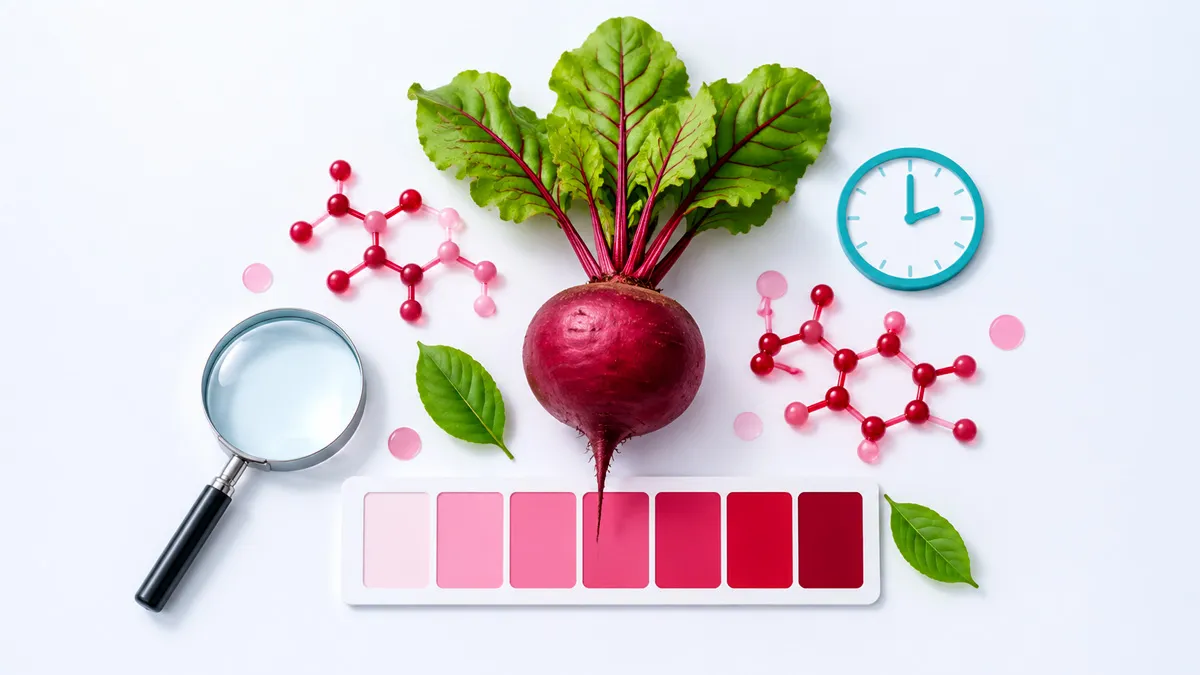
Beet juice turns urine red because of betalains, a family of water-soluble pigments that give beets their deep crimson color. The main one is betanin. Unlike many plant pigments, betalains can survive digestion in some people, pass into the bloodstream, and be filtered by the kidneys into urine largely intact. The result is pink, red, or reddish-brown urine—a harmless effect called beeturia.
Beeturia is not blood. It appears within a few hours of drinking beet juice, peaks over the next several hours, and clears within 24 to 48 hours. The concentration of beet juice matters: it takes many beets to make one glass, so the pigment dose is far higher than a serving of cooked beet. Use the beetroot urine guide to compare your pattern, and read on for the pigment science and when a red stream deserves a doctor’s look.
What Betalains Are
Betalains are nitrogen-containing pigments found in a small group of plants, most notably beets, chard, and amaranth. They are divided into two types: betacyanins, which are red-violet, and betaxanthins, which are yellow-orange. Beets owe their color mostly to betacyanins, with betanin as the dominant member.
Betalains are chemically distinct from anthocyanins, the pigments that color berries, red cabbage, and hibiscus. The two pigment families rarely occur in the same plant. That distinction matters because the body handles them differently, and betanin is unusually stable in urine compared with many other plant pigments.
Betalains are water-soluble, which is the key to beeturia. A fat-soluble pigment would be stored or metabolized; a water-soluble one can be filtered by the kidneys and appear in urine.
Why Beet Juice Produces More Color Than Whole Beets
Juicing concentrates the dose. A single glass of beet juice can contain the pigment of several whole beets, and juicing removes much of the fiber that would otherwise slow absorption and dilute the pigment load. That is why beet juice is more likely to produce noticeable beeturia than a small serving of cooked beet.
Beeturia is also more likely after raw beet than cooked beet, and the effect varies widely between people. Some people drink beet juice regularly and never see a color change; others notice pink urine after a modest serving.
Why Only Some People Get Beeturia
Why some people excrete betanin in visible amounts and others do not is not fully settled, but several factors are consistently implicated.
Gut Bacteria
Betanin is normally broken down in the colon by gut bacteria. The composition of a person’s gut microbiome varies widely, and differences in bacterial metabolism likely explain part of the variation in beeturia. Some people break betanin down efficiently; others leave more intact for absorption.
Stomach Acid
Betanin is more stable in a less acidic environment. People with lower stomach acid production, including those taking acid-reducing medications, may allow more betanin to survive the stomach and reach the small intestine for absorption. This is one proposed explanation for why beeturia appears more often in certain individuals.
Iron and Oxalate Interactions
Beets are rich in oxalates, and betanin can interact with iron and other compounds in the gut. Iron deficiency has been associated with a higher likelihood of beeturia in some reports, possibly because less iron is available to bind and degrade the pigment. This relationship is not fully understood, but it is one reason beeturia is sometimes noted alongside iron-related conditions.
Individual Absorption and Kidney Excretion
How much betanin is absorbed and how efficiently the kidneys clear it varies from person to person. Hydration also matters: concentrated urine makes any pigment more visible. The pink or red urine guide covers the full range of causes for red-colored urine.
How Long Beeturia Lasts
The timeline is predictable for a food pigment.
- Within 2 to 8 hours: the pink or red tint begins to appear in urine as betanin is absorbed and filtered.
- Peak concentration: the color is usually most noticeable in the first day after drinking beet juice.
- 24 to 48 hours: the color fades as the pigment is cleared, provided you are drinking normally and urinating regularly.
- Up to 72 hours: a very large or concentrated serving may leave a faint tint into the third day.
Drinking water and urinating regularly help clear the pigment faster. If beeturia persists beyond 48 to 72 hours after you stop drinking beet juice, the juice is unlikely to be the whole explanation. The dehydration guide explains how concentration affects how visible the pigment is.
How to Tell Beeturia From Blood
Beeturia and blood in urine can look similar, but they behave differently.
Clues that point to beeturia:
- The color appeared within hours of drinking beet juice and you had a notable amount.
- The urine is uniformly pink or red, without clots or a smoky-brown tint.
- You feel well—no burning, urgency, fever, or flank pain.
- The color clears within 24 to 48 hours once you stop the juice.
Clues that point to blood in urine:
- Red or pink urine appears without a food explanation, or persists beyond two to three days.
- You see clots or a smoky-brown tint.
- You have pain, fever, chills, burning, or urgency when you urinate.
- The color recurs without drinking beet juice again.
Blood in urine can be painless, which is why unexplained red urine deserves evaluation even when you feel well. If you are trying to match your pattern to a cause, the urine color by cause section groups explanations by food, medication, and medical conditions.
When to See a Doctor
Contact a healthcare provider if any of the following applies:
- Red or pink urine lasts more than two to three days and you have not had beet juice again.
- You have pain, fever, chills, burning, or urgency when you urinate.
- You see blood clots or smoky-brown urine.
- You feel dizzy, weak, or lightheaded, or you are passing much less urine than usual.
- You are pregnant and have red urine that is not explained by food.
- You have a history of kidney stones, urinary tract infections, or kidney disease and notice a new color change.
- Red urine recurs without a food explanation, even if each episode clears on its own.
A simple urinalysis can confirm whether blood is present or whether the color is pigment alone. If you are unsure whether your red urine is food-related, compare it against a urine color chart and bring the pattern—color, timing, and beet intake—to your doctor.
The Bottom Line
Beet juice turns urine red because of betalains—primarily betanin—which are water-soluble pigments that can survive digestion and be excreted largely intact in urine. Juice delivers a concentrated dose, which is why it produces more noticeable color than whole beets. Beeturia is harmless, appears within hours, and clears within 24 to 48 hours. It is not blood. If the color persists beyond two to three days, comes with pain, fever, or clots, or appears without a food explanation, get it checked. Otherwise, expect the color to fade and move on.