Blackberries and Red Urine: How Long the Color Lasts
Quick Answer
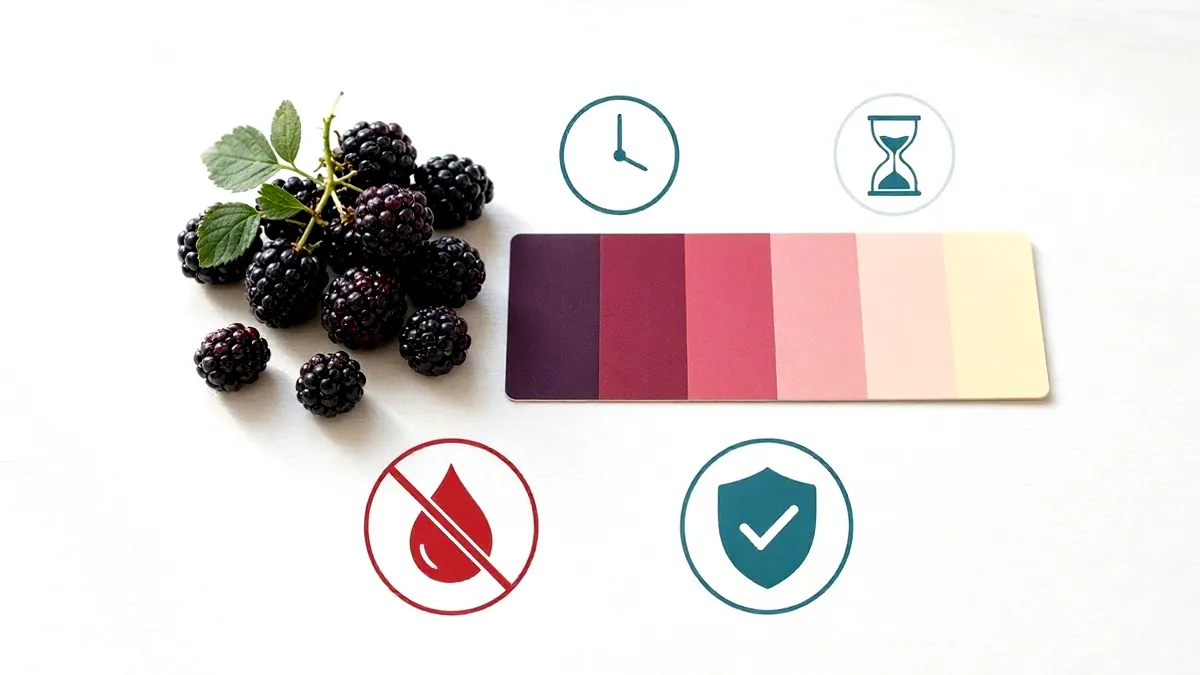
Blackberries can turn your urine pink, red, or slightly dark. This is usually harmless. The color comes from anthocyanins, the water-soluble pigments that give blackberries their deep purple-red color. Some of that pigment is absorbed, filtered by the kidneys, and passed into urine.
This is not blood. For most healthy people, the color appears within a few hours of eating blackberries and clears within 24 to 48 hours. The key question is whether the color is fully explained by the berries. If you have pain, fever, burning, clots, or red urine that lasts beyond two days, do not assume it is food. Use the blackberry urine cause page to compare your pattern, and read on for how long the color lasts and how to tell it from blood.
Why Blackberries Turn Urine Red
Blackberries are rich in anthocyanins, a family of red-purple pigments also found in blueberries, cherries, and other dark berries. These pigments are water-soluble, which means they can survive digestion in some people, enter the bloodstream, and be filtered out by the kidneys.
Why some people get red urine after blackberries and others do not is not fully settled. Likely factors include:
- How many blackberries you ate, and whether they were fresh, cooked, or in jam or juice.
- Gut bacteria that vary from person to person and affect how anthocyanins are broken down.
- Stomach acid levels, which may influence how much pigment survives digestion.
- Hydration, since concentrated urine makes any pigment more visible.
The mechanism is similar to beeturia, the harmless pink urine that follows beets. If you have noticed pink urine after beets before, you may be more likely to notice it after blackberries too.
How Long Does the Color Last?
For most people, pink or red urine after blackberries appears within 2 to 8 hours of eating and fades within 24 to 48 hours. The exact timing depends on how much you ate, how well hydrated you are, and how quickly your gut moves food through. Drinking normally and urinating regularly helps clear the pigment.
If red or pink urine persists past 48 hours and you have not eaten blackberries again, stop attributing it to food. That is the point where a simple urinalysis is worth arranging.
How to Tell It From Blood
Blackberry pigment and blood in urine can both look pink or red, but they usually behave differently.
Clues that point to blackberries rather than blood:
- The color appeared within hours of eating blackberries and you ate a notable amount.
- The urine is uniformly pink or red, without clots.
- There is no burning, urgency, fever, or flank pain unless you have a separate problem.
- The color clears within 24 to 48 hours once you stop eating the berries.
Clues that point to blood in urine:
- Red or pink urine appears without a food explanation, or persists beyond two days.
- You see clots or a smoky-brown tint.
- You have pain, fever, chills, burning, or urgency when you urinate.
- The color recurs without eating blackberries again.
Blood in urine can be painless, which is why unexplained red urine deserves evaluation even when you feel well. The pink or red urine guide covers the full range of causes, including infection, stones, and food pigments.
Other Foods and Medications That Can Do the Same
Blackberries are not the only culprit. Several other foods and drugs can tint urine red or pink, and the same timeline usually applies:
- Beets, through the betanin pigment.
- Red dragon fruit, through betacyanins.
- Rhubarb, blueberries, and pomegranate in large amounts.
- Artificial food dyes in processed foods and drinks.
- Phenazopyridine and rifampin, which produce orange or red-orange urine.
If you ate more than one of these, the combined pigment load may make the color more noticeable. Food and drug colors usually look uniform, lack clots, and clear on a predictable timeline.
When to See a Doctor
Contact a healthcare provider if any of the following applies:
- Red or pink urine lasts more than 48 hours and you have not eaten blackberries again.
- You have pain, fever, chills, burning, or urgency when you urinate.
- You see blood clots or smoky-brown urine.
- You feel dizzy, weak, or lightheaded, or you are passing much less urine than usual.
- You are pregnant and have red urine that is not explained by food.
- You have a history of kidney stones, urinary tract infections, or kidney disease and notice a new color change.
- Red urine recurs without a food explanation, even if each episode clears on its own.
If you are unsure whether your red urine is food-related, the urine color by cause section groups explanations by food, medication, and medical conditions so you can narrow down what is most likely before your appointment.
The Bottom Line
Red urine after blackberries is usually a harmless anthocyanin effect, not blood. If you ate blackberries and your urine turned pink or red without pain, fever, or clots, watch for it to clear within a day or two. If it does not clear, or if any concerning symptom comes with it, get it checked. A urinalysis can quickly separate food pigment from blood.