Blackberries and Urine Color in Children: A Harmless Match
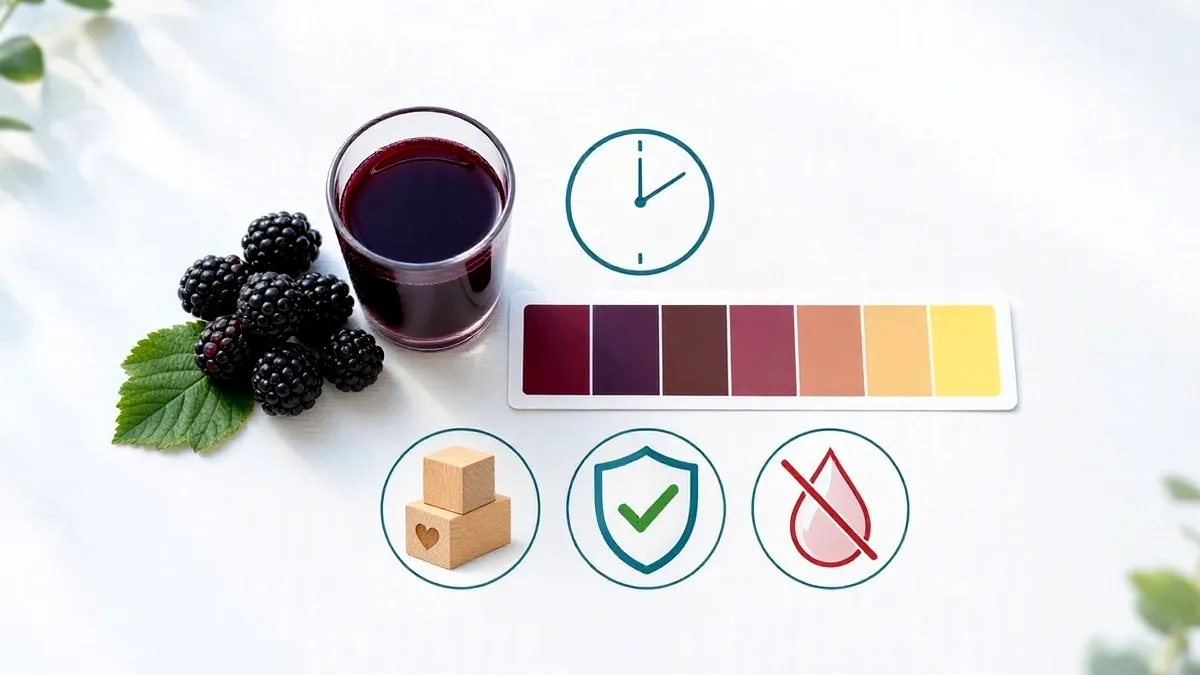
Quick Answer
Blackberries can turn a child’s urine pink, red, or darker than usual for about 24 to 48 hours. This is usually harmless. The color comes from anthocyanins, the water-soluble pigments that give blackberries their deep purple-red color. Children are more likely to show food-related urine color changes because they often eat brightly colored foods and drinks relative to their body size.
This is not blood, and it does not mean your child has a urinary tract infection or kidney problem. The key question is whether the color is fully explained by the berries. If dark or red urine lasts beyond two to three days, comes with pain, fever, burning, or clots, or appears without eating blackberries, do not assume it is food. Use the blackberry urine guide to compare your pattern, and read on for what to expect and when to call the pediatrician.
Why Blackberries Change a Child’s Urine Color
Blackberries are rich in anthocyanins, a family of red-purple pigments also found in blueberries, cherries, and other dark berries. These pigments are water-soluble, which means a portion can survive digestion, enter the bloodstream, and be filtered by the kidneys into urine.
Children are particularly likely to notice this effect for a few reasons:
- They eat a lot of fruit relative to their size. A handful of blackberries is a larger dose for a small body than for an adult.
- Berry-flavored juices and smoothies concentrate the pigment, just as beet juice does.
- They may not drink enough water, so concentrated urine makes any pigment more visible.
Why some children get dark urine after blackberries and others do not is not fully settled. Gut bacteria, stomach acid levels, and individual metabolism all likely play a role. The mechanism is the same as beeturia, the harmless pink urine that follows beets.
What Color to Expect
Blackberry pigment does not always produce a dramatic color change. In children, the effect can look like:
- A darker yellow or amber shade, as if the child were mildly dehydrated.
- A faint pink or reddish tint, especially after a large serving or blackberry juice.
- A purple-brown hue in some children, particularly when urine is concentrated.
Unlike beets or red dragon fruit, blackberries rarely turn urine bright red. The more common effect is a deeper, darker shade that sits between normal yellow and a reddish tint. That subtlety is one reason parents sometimes mistake it for dehydration or blood.
How Long the Color Lasts
The timeline is fairly predictable:
- Within 2 to 8 hours: the pigment begins to appear in urine as anthocyanins are absorbed and filtered.
- 24 to 48 hours: the color fades as the pigment is cleared, provided your child is drinking normally and urinating regularly.
- Up to 72 hours: a small number of children, especially after a very large serving or concentrated juice, may still show a faint tint into the third day.
Encouraging your child to drink water and urinate regularly helps clear the pigment faster. If the color persists past 48 to 72 hours and your child has not eaten blackberries again, that is the point to consider other causes. The children’s urine guide covers the full range of color changes in kids.
How to Tell It From Blood or Infection
Blackberry pigment and blood in urine can both look pink or dark, but they usually behave differently in children.
Clues that point to blackberries:
- The color appeared within hours of eating blackberries or drinking blackberry juice.
- Your child feels well, is playing normally, and has no fever.
- The urine is uniformly tinted, without clots.
- The color clears within 24 to 48 hours once the berries are stopped.
Clues that point to blood or infection:
- Red or pink urine appears without a food explanation, or persists beyond two to three days.
- Your child has pain or burning when urinating, or cries during urination.
- New bedwetting or daytime accidents in a toilet-trained child.
- Fever, tummy pain, or back pain.
- You see clots or a smoky-brown tint.
- Your child seems very tired, irritable, or unwell.
Young children may not be able to describe burning or urgency, so behavior changes matter. A child who is well, playful, and has no other symptoms is much less likely to have an infection. If you are trying to match your child’s pattern to a cause, the urine color by cause section groups explanations by food, medication, and medical conditions.
When to Call the Pediatrician
Contact a pediatrician or healthcare provider if any of the following applies:
- Dark or red urine lasts more than two to three days and your child has not eaten blackberries again.
- Pain, burning, fever, tummy pain, or back pain alongside a color change.
- Visible blood or clots in the urine.
- New bedwetting or daytime accidents in a toilet-trained child.
- Fewer wet diapers, no urination for many hours, or other signs of dehydration.
- Foamy, cloudy urine with swelling in the legs or face.
- Your child seems very tired, irritable, or unwell.
- You are unsure whether the color is food-related—trust your instinct and check in.
A simple urine test can detect blood, white blood cells, crystals, and other markers, and turn a color question into an answer. If you are unsure whether your child’s shade is concerning, compare it against a urine color chart and bring the pattern—color, timing, symptoms, and what your child ate—to the pediatrician.
The Bottom Line
Blackberries and a child’s urine color are usually a harmless match. The anthocyanins in blackberries can turn urine darker or slightly pink for about 24 to 48 hours, and the effect clears on its own. It is not blood, and it does not mean your child is dehydrated or infected. Take it seriously when the color persists beyond two to three days, comes with pain, fever, or clots, or appears without a food explanation. If that describes your situation, call the pediatrician. If not, offer water, watch for the color to clear, and move on.