Blackberry Smoothies and Red Urine: What to Expect
Quick Answer
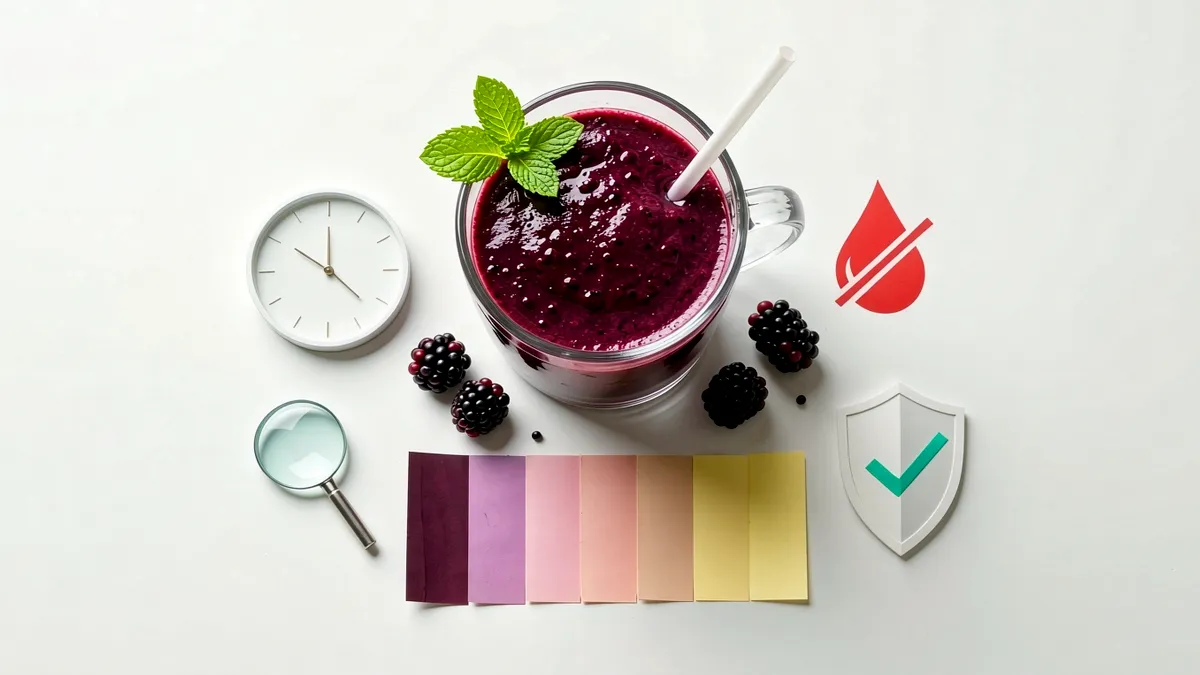
Blackberry smoothies can turn urine pink, red, or darker than usual, and in most cases it is harmless. The color comes from anthocyanins, the water-soluble pigments that give blackberries their deep purple-red color. A smoothie often contains more berries than a handful eaten whole, so the pigment dose is higher and the color can be more noticeable. It usually appears within a few hours and clears within 24 to 48 hours.
This is food pigment, not blood. The pattern to expect is a uniform tint without clots, no burning or urgency, and a return to normal color within a day or two. If the color persists beyond two to three days, comes with pain, fever, or clots, or appears without blackberries, do not assume it is the smoothie. Use the blackberry urine guide to compare your pattern, and read on for what to expect and when to get a urine test.
Why a Blackberry Smoothie Turns Urine Red
Blackberries are rich in anthocyanins, a family of red-purple pigments that are water-soluble. A portion of those pigments can survive digestion, enter the bloodstream, and be filtered by the kidneys into urine. When the pigment mixes with the normal yellow of urine, the result can look pink, red, or purple-brown.
A smoothie changes the dose in a practical way. It is easy to blend a large handful or more of berries into one drink, and blending makes the fruit easy to consume quickly. That means more anthocyanins reach the gut in a shorter time than if you ate a few berries one by one. The result is a more noticeable color for some people.
Why some people see a strong color and others see nothing is not fully settled. Gut bacteria, stomach acid, hydration, and individual metabolism all likely play a role. Concentrated urine makes any pigment more visible, so the same smoothie can produce a lighter shade on a well-hydrated day and a deeper shade when you have drunk less water. The dehydration guide explains how concentration affects color.
What to Expect: Color and Timing
The color from a blackberry smoothie is usually pink, red, or a darker purple-brown, not bright red like beets. It tends to be uniform, without clots or a smoky tint.
- Within 2 to 8 hours: the pigment begins to appear in urine as anthocyanins are absorbed and filtered.
- Peak concentration: the color is usually most noticeable in the first day after drinking the smoothie.
- 24 to 48 hours: the color fades as the pigment is cleared, provided you are drinking normally and urinating regularly.
- Up to 72 hours: a very large smoothie or a concentrated berry blend may leave a faint tint into the third day.
If the smoothie also contains beets, blackberry juice concentrate, or other deeply pigmented fruit, the color may be stronger and last slightly longer. If it contains dairy or protein powder, those ingredients do not change the pigment effect. The pink or red urine guide covers the full range of food and medical causes.
How to Tell It From Blood
Blackberry pigment and blood in urine can both look pink or red, but they usually behave differently.
Clues that point to the smoothie:
- The color appeared within hours of drinking a blackberry smoothie and you had a notable amount.
- The urine is uniformly tinted, without clots.
- You feel well—no burning, urgency, fever, or flank pain.
- The color clears within 24 to 48 hours once you stop the smoothie.
Clues that point to blood in urine:
- Red or pink urine appears without a food explanation, or persists beyond two to three days.
- You see clots or a smoky-brown tint.
- You have pain, fever, chills, burning, or urgency when you urinate.
- The color recurs without drinking the smoothie again.
Blood in urine can be painless, which is why unexplained red urine deserves evaluation even when you feel well. If you are unsure, a simple urine dipstick can separate food pigment from blood. A negative dipstick strongly suggests a pigment; a positive dipstick with red blood cells on microscopy means blood is present and needs a cause.
When to See a Doctor
Contact a healthcare provider if any of the following applies:
- Red or pink urine lasts more than two to three days and you have not had a blackberry smoothie again.
- You have pain, fever, chills, burning, or urgency when you urinate.
- You see blood clots or smoky-brown urine.
- You feel dizzy, weak, or lightheaded, or you are passing much less urine than usual.
- You are pregnant and have red urine that is not explained by food.
- You have a history of kidney stones, urinary tract infections, or kidney disease and notice a new color change.
- Red urine recurs without a food explanation, even if each episode clears on its own.
A simple urinalysis can confirm whether blood is present or whether the color is pigment alone. If you are unsure whether your red urine is food-related, compare it against a urine color chart and bring the pattern—color, timing, and what you drank—to your doctor.
The Bottom Line
Blackberry smoothies can turn urine pink, red, or darker for about 24 to 48 hours because they deliver a concentrated dose of anthocyanins. It is a harmless food effect, not blood, and it clears on its own. If you drank a blackberry smoothie and your urine turned pink without pain, fever, or clots, watch for it to clear within a day or two. If it does not clear, or if any concerning symptom comes with it, get a urine test. It is a quick way to separate food pigment from blood.