Blueberries vs. Blackberries: Which Berry Darkens Urine?
Quick Answer
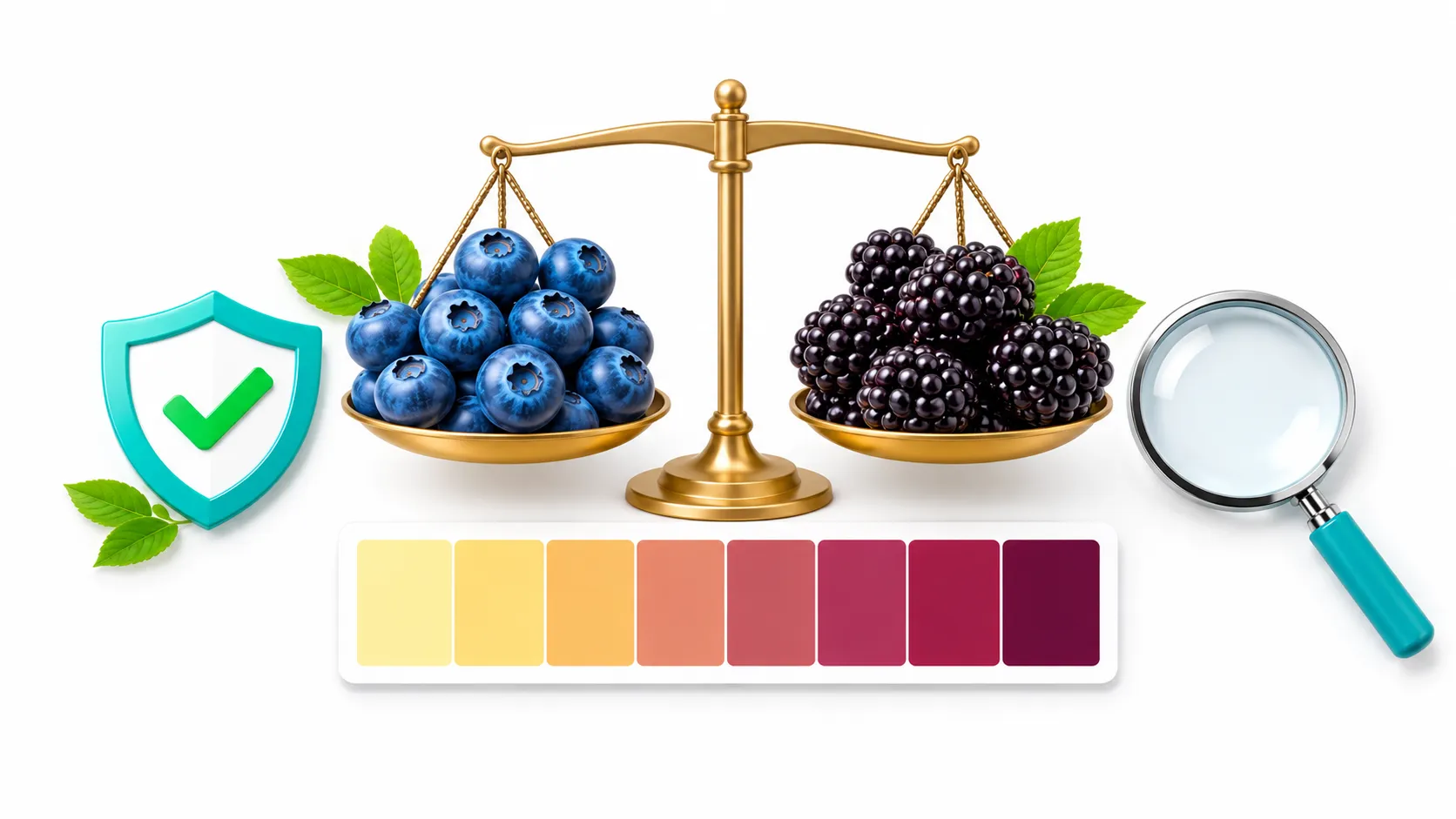
Blackberries usually darken urine more than blueberries. Both berries contain anthocyanins, the water-soluble pigments that give them their dark color. But blackberries generally carry a denser pigment load and a deeper purple-red hue, so they are more likely to produce a noticeable dark, pink, or red-purple tint. Blueberries often produce a subtler effect—slightly darker yellow, amber, or a faint red-purple shade—and a small handful may produce no visible change at all.
There is no universal rule, because the color depends on how much you ate, how well hydrated you are, and how your body handles the pigments. But when the color change is obvious, blackberries are the more reliable culprit. Neither berry is dangerous. The color is food pigment, not blood, and it clears within 24 to 48 hours. Use the blackberry urine guide and the blueberry urine guide to compare your pattern, and read on for why blackberries tend to win and when a dark stream deserves a doctor’s look.
Why Both Berries Can Change Urine Color
Blackberries and blueberries share the same basic mechanism. They are rich in anthocyanins, a family of red-purple pigments that are water-soluble. A portion of those pigments can survive digestion, enter the bloodstream, and be filtered by the kidneys into urine.
Why some people notice a color change and others do not is not fully settled. Likely factors include:
- How much fruit was eaten, and whether it was fresh, frozen, or juiced.
- Gut bacteria that vary from person to person and affect how anthocyanins are broken down.
- Hydration, since concentrated urine makes any pigment more visible.
- Individual metabolism, which affects how quickly the pigments are cleared.
The mechanism is the same as beeturia, the harmless pink urine that follows beets. The pink or red urine guide covers the full range of food and medical causes.
Which Berry Darkens Urine More?
Head to head, blackberries tend to produce a stronger and more noticeable color change. The reasons are straightforward.
Pigment concentration. Blackberries are darker and more densely pigmented than most blueberries. A serving of blackberries generally delivers a higher anthocyanin load, which means more pigment reaches the kidneys and more color appears in urine. Blueberries contain anthocyanins too, but the concentration is often lower, especially in cultivated varieties.
Depth of color. Blackberry pigment is a deep purple-red. When it mixes with urine, it can produce a darker, more obvious shade—sometimes approaching a red-purple or brownish tint. Blueberry pigment is bluer and often lighter, so the resulting urine color is usually subtler: a darker yellow, a faint pink, or a slight purple-brown hue.
Juice versus whole fruit. Juice concentrates the pigment for both berries, but blackberry juice or syrup tends to produce a more dramatic color than blueberry juice. If you are comparing the two, a glass of blackberry juice is more likely to turn urine visibly dark than the same volume of blueberry juice.
That does not mean blueberries cannot change urine color. They can, especially after a large serving or concentrated juice. It means blackberries are the more reliable culprit when the color change is obvious. If you ate both, the blackberry is the more likely driver.
How Long the Color Lasts
Both berries follow a similar timeline, though blackberries may produce a more noticeable color for longer.
- Within 2 to 8 hours: the pigment begins to appear in urine as anthocyanins are absorbed and filtered.
- 24 to 48 hours: the color fades as the pigment is cleared, provided you are drinking normally and urinating regularly.
- Up to 72 hours: a very large serving or concentrated juice may leave a faint tint into the third day.
Drinking water and urinating regularly help clear both pigments faster. If the color persists beyond 48 to 72 hours and you have not eaten either berry again, the berries are unlikely to be the whole explanation. That is the point to arrange a urinalysis.
How to Tell Berry Color From Blood
Berry pigment and blood in urine can both look pink or dark, but they behave differently.
Clues that point to berries:
- The color appeared within hours of eating blackberries or blueberries.
- The urine is uniformly tinted, without clots.
- You feel well—no burning, urgency, fever, or flank pain.
- The color clears within 24 to 48 hours once you stop the berries.
Clues that point to blood in urine:
- Red or pink urine appears without a food explanation, or persists beyond two to three days.
- You see clots or a smoky-brown tint.
- You have pain, fever, chills, burning, or urgency when you urinate.
- The color recurs without eating the berries again.
Blood in urine can be painless, which is why unexplained red or dark urine deserves evaluation even when you feel well. If you are trying to match your pattern to a cause, the pink or red urine guide covers the full range of causes, including infection, stones, and food pigments.
When to See a Doctor
Contact a healthcare provider if any of the following applies:
- Dark, red, or purple urine lasts more than two to three days and you have not eaten blackberries or blueberries again.
- You have pain, fever, chills, burning, or urgency when you urinate.
- You see blood clots or smoky-brown urine.
- You feel dizzy, weak, or lightheaded, or you are passing much less urine than usual.
- You are pregnant and have red or dark urine that is not explained by food.
- You have a history of kidney stones, urinary tract infections, or kidney disease and notice a new color change.
- Dark urine recurs without a food explanation, even if each episode clears on its own.
A simple urinalysis can confirm whether blood is present or whether the color is pigment alone. If you are unsure whether your dark urine is food-related, compare it against a urine color chart and bring the pattern—color, timing, and what you ate—to your doctor.
The Bottom Line
Blackberries usually darken urine more than blueberries because they carry a denser anthocyanin load and a deeper pigment. Both are harmless food effects that clear within 24 to 48 hours. If you ate either berry and your urine turned darker without pain, fever, or clots, watch for it to clear within a day or two. If it does not clear, or if any concerning symptom comes with it, get it checked. A urinalysis can quickly separate food pigment from blood.