How Long Do Blueberries Keep Urine Dark? A Timeline
Quick Answer
Blueberries usually keep urine darker or slightly red-purple for about 24 to 48 hours after you eat them. The color comes from anthocyanins, the water-soluble pigments that give blueberries their deep blue-purple color. A large serving or blueberry juice delivers more pigment, so the tint can be more noticeable and last closer to two full days. A small handful of berries often produces no visible change at all.
This is not blood and not dehydration. It is a harmless food-pigment effect, and it clears on a predictable timeline. The key question is whether the color is fully explained by the berries. If dark or red-purple urine lasts beyond two to three days, comes with pain, fever, burning, or clots, or appears without eating blueberries, do not assume it is food. Use the blueberry urine guide to compare your pattern, and read on for the exact timeline and how to tell pigment from other causes.
Why Blueberries Darken Urine
Blueberries are rich in anthocyanins, a family of red-purple pigments also found in blackberries, cherries, and other dark berries. These pigments are water-soluble, which means a portion can survive digestion, enter the bloodstream, and be filtered by the kidneys into urine.
Why some people notice dark urine after blueberries and others do not is not fully settled. Likely factors include:
- How many blueberries you ate, and whether they were fresh, frozen, or in juice or jam.
- Gut bacteria that vary from person to person and affect how anthocyanins are broken down.
- Hydration, since concentrated urine makes any pigment more visible.
- Individual metabolism, which affects how quickly the pigments are cleared.
The mechanism is similar to beeturia, the harmless pink urine that follows beets. If you have noticed dark or pink urine after beets or blackberries before, you may be more likely to notice it after blueberries too. The blackberry urine guide covers the same anthocyanin effect from a related fruit.
How Long the Color Lasts
The timeline is fairly predictable:
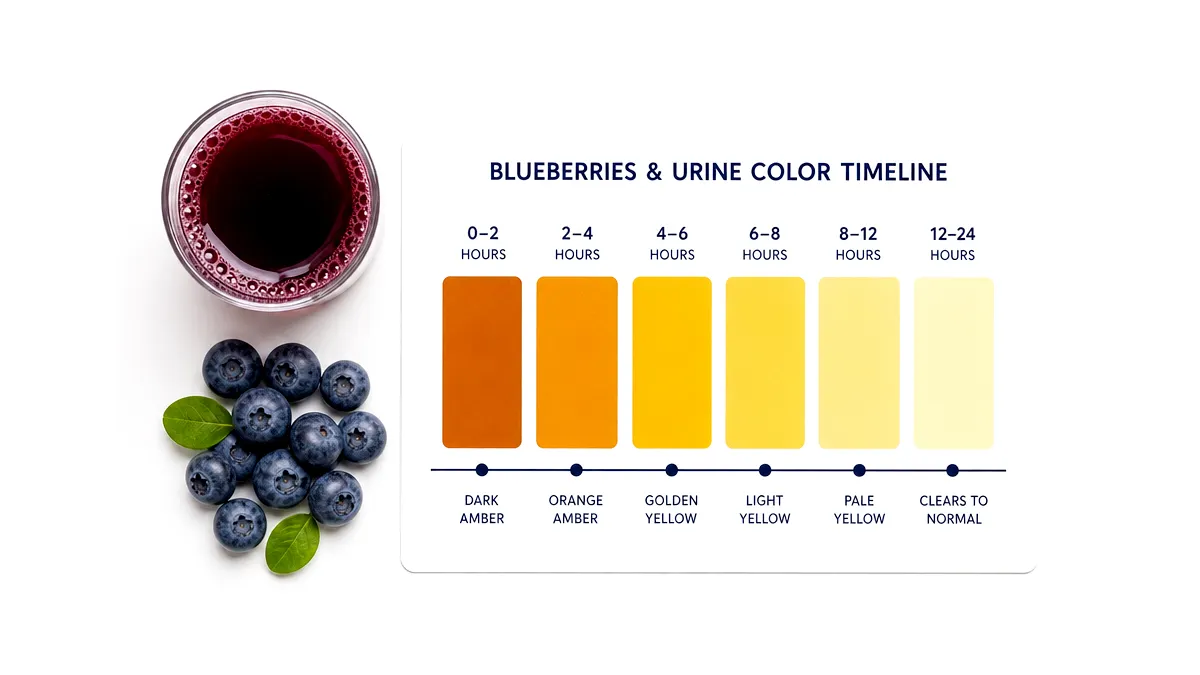
- Within 2 to 8 hours: the pigment begins to appear in urine as anthocyanins are absorbed and filtered.
- Peak concentration: the darker or red-purple tint is usually most noticeable in the first day after eating.
- 24 to 48 hours: the color fades as the pigment is cleared, provided you are drinking normally and urinating regularly.
- Up to 72 hours: a small number of people, especially after a very large serving or concentrated juice, may still see a faint tint into the third day.
If you stop eating blueberries and drink normal amounts of water, the color should be gone or nearly gone within two days. If it is still clearly dark or red-purple after three days, that is the point to consider other causes. The dehydration guide explains how concentration affects how visible the pigment is.
What Color to Expect
Blueberry pigment does not always produce a dramatic color change. The effect is usually subtle and can look like:
- A darker yellow or amber shade, as if urine were more concentrated than usual.
- A faint pink or reddish tint, especially after a large serving or blueberry juice.
- A purple-brown hue in some people, particularly when urine is concentrated from low fluid intake.
Unlike beets or red dragon fruit, blueberries rarely turn urine bright red. The more common effect is a deeper, darker shade that sits between normal yellow and a reddish-brown tint. That subtlety is one reason people sometimes mistake it for dehydration or blood.
How to Tell It From Blood or Dehydration
Blueberry pigment, dehydration, and blood in urine can all look darker than normal, but they usually behave differently.
Clues that point to blueberries:
- The color appeared within hours of eating blueberries and you had a notable amount.
- The urine is uniformly tinted, without clots.
- There is no burning, urgency, fever, or flank pain unless you have a separate problem.
- The color clears within 24 to 48 hours once you stop eating the berries.
- Drinking water lightens it gradually but does not eliminate it immediately, because the pigment is already in the urine.
Clues that point to dehydration:
- The color is dark yellow or amber, not red-purple or brown.
- It lightens after you drink fluids, usually within an hour or two.
- You feel thirsty, headachy, or lightheaded.
Clues that point to blood in urine:
- Red or pink urine appears without a food explanation, or persists beyond two to three days.
- You see clots or a smoky-brown tint.
- You have pain, fever, chills, burning, or urgency when you urinate.
- The color recurs without eating blueberries again.
Blood in urine can be painless, which is why unexplained dark or red urine deserves evaluation even when you feel well. If you are trying to match your pattern to a cause, the urine color by cause section groups explanations by food, medication, and medical conditions.
When to See a Doctor
Contact a healthcare provider if any of the following applies:
- Dark, red, or purple urine lasts more than two to three days and you have not eaten blueberries again.
- You have pain, fever, chills, burning, or urgency when you urinate.
- You see blood clots or smoky-brown urine.
- You feel dizzy, weak, or lightheaded, or you are passing much less urine than usual.
- You are pregnant and have dark or red urine that is not explained by food.
- You have a history of kidney stones, urinary tract infections, or kidney disease and notice a new color change.
- Dark urine recurs without a food explanation, even if each episode clears on its own.
A simple urinalysis can confirm whether blood is present or whether the color is pigment alone. If you are unsure whether your dark urine is food-related, compare it against a urine color chart and bring the pattern—color, timing, and what you ate—to your doctor.
The Bottom Line
Blueberries keep urine dark or slightly red-purple for about 24 to 48 hours in most people, and occasionally up to three days after a very large serving or juice. The color comes from anthocyanins, a harmless food pigment, not from blood or dehydration. If you ate blueberries and your urine turned darker without pain, fever, or clots, watch for it to clear within a day or two. If it does not clear, or if any concerning symptom comes with it, get it checked. A urinalysis can quickly separate food pigment from other causes.