Clear Urine Without Drinking Water: What It Means
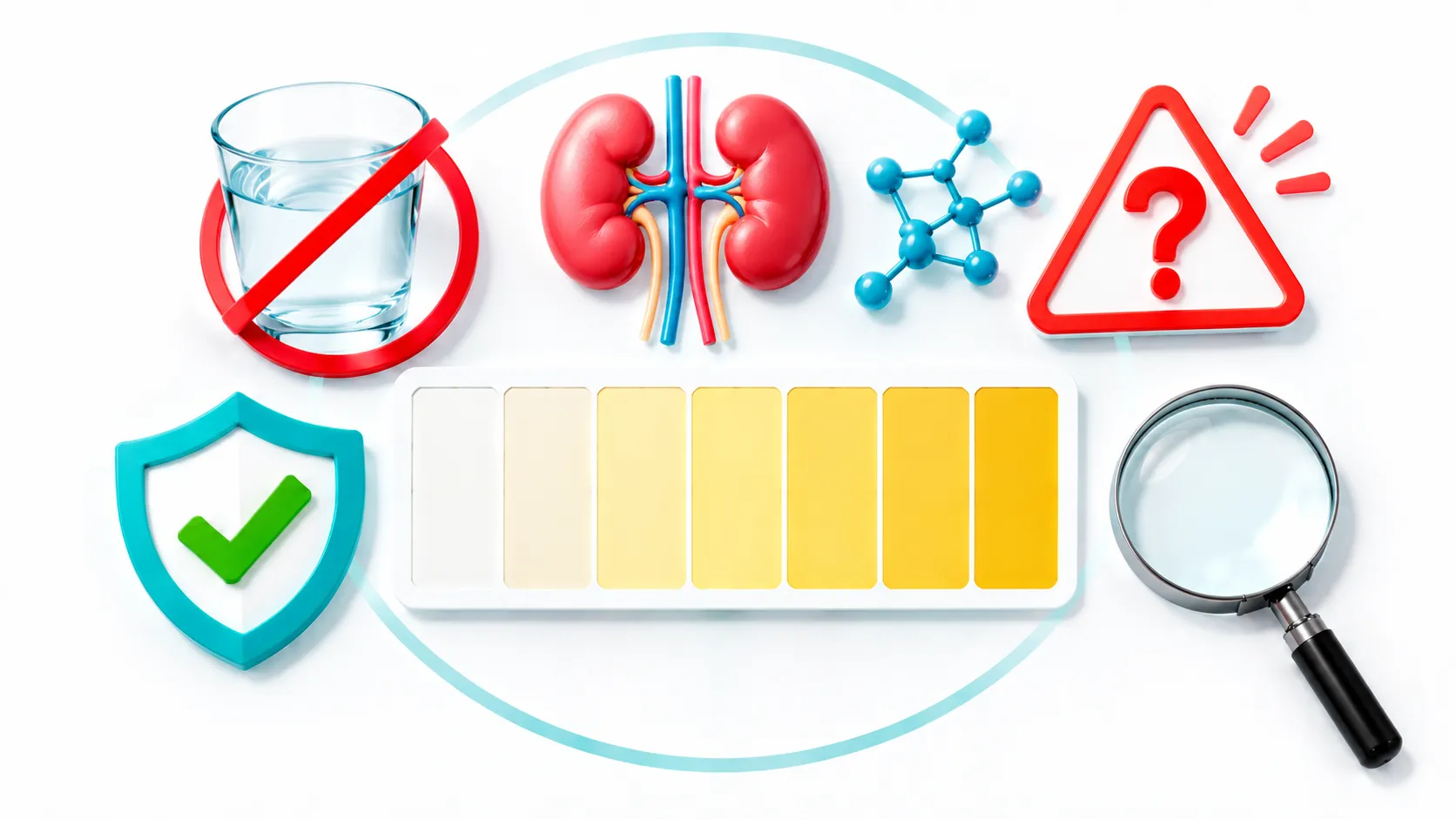
Quick Answer
If you truly have not taken in any fluid—including water, coffee, tea, soup, fruit, or other water-rich foods—clear urine is not the expected response. Ordinary dehydration concentrates urine and turns it dark yellow or amber. Clear urine in that setting suggests the kidneys are releasing water they should be holding onto, which points to a breakdown in the hormone that controls urine concentration.
The most important explanations are diabetes insipidus (a problem with antidiuretic hormone, or ADH), high blood sugar causing osmotic diuresis, and kidney concentrating problems. Before assuming any of these, rule out the simple possibilities: you may have consumed more fluid than you realize, or a medication may be increasing urine output. If clear urine persists alongside constant thirst, large urine volumes, or waking at night to urinate, that is the pattern to get tested. Use the clear urine guide to compare your pattern, and read on for why this happens and when to see a doctor.
Why Clear Urine Without Fluids Is Unusual
Urine gets its yellow tint from urochrome, a pigment diluted by water. When fluid intake drops, the body releases antidiuretic hormone (ADH, also called vasopressin). ADH signals the kidney’s collecting ducts to reabsorb water back into the bloodstream. With more water reabsorbed, the same amount of pigment ends up in a smaller volume of urine—so the color deepens.
That is the normal response: dehydration produces concentrated, dark urine. Clear urine in a dehydrated person means the kidneys are failing to concentrate urine despite a real need to conserve water. The body is losing water it should be holding onto. That is the paradox worth understanding.
The Main Explanations
1. Diabetes Insipidus (ADH Deficiency or Resistance)
Diabetes insipidus is a rare condition in which the body either does not make enough ADH (central DI) or the kidneys do not respond to it (nephrogenic DI). Without a working ADH signal, the kidneys cannot reabsorb water in the collecting ducts. They release large volumes of dilute, clear urine—sometimes several liters per day—even as the body becomes dehydrated. The person feels intensely thirsty and urinates frequently, including at night. This is the classic explanation for clear urine when you have not been drinking.
2. High Blood Sugar and Osmotic Diuresis
In uncontrolled diabetes mellitus, blood glucose rises above the kidney’s reabsorption threshold. Glucose spills into the urine and acts as an osmotic agent, pulling water with it into the tubules. The result is a large volume of urine that can look clear or pale, even while the person is losing fluid. Constant thirst, heavy urination, and clear urine together are a reason to check blood sugar—not a sign of good hydration.
3. Kidney Concentrating Problems
Some kidney conditions and medications impair the kidney’s ability to concentrate urine. The renal tubules may fail to respond to ADH, or the medullary concentration gradient may be disrupted. Older adults also show an age-related decline in concentrating ability. In these situations, dehydration may produce less concentrated urine than expected—sometimes appearing clearer than it should.
4. Hidden Fluid Intake or Medications
Before assuming a medical cause, consider the simple possibilities. Water-rich foods—soup, fruit, yogurt, vegetables—count toward fluid intake. Coffee, tea, and soft drinks are mostly water. Diuretics increase urine output and can keep urine pale even when overall fluid balance is low. Alcohol increases urine output and can leave you drier by morning. If any of these apply, the clear urine may be explained by intake or medication rather than a concentrating defect.
How Long It Lasts and What to Track
The timeline depends on the cause. If clear urine is from a one-off large intake of fluid or a diuretic dose, it resolves within hours. If it is from diabetes insipidus or high blood sugar, it persists and is accompanied by ongoing thirst and large urine volumes.
Track these together:
- Urine volume: more than 3 liters per day is unusual and worth mentioning.
- Thirst: constant, intense thirst that does not ease with drinking.
- Nighttime urination: waking multiple times to urinate.
- Signs of dehydration despite drinking: dry mouth, dizziness on standing, fatigue.
- Weight loss or poor growth in children.
If clear urine persists and these signs are present, a water deprivation test and urine osmolality measurement are the standard next steps. A urine osmolality that fails to rise appropriately after water restriction is the hallmark of a concentrating defect.
When to See a Doctor
Contact a healthcare provider if any of the following applies:
- Clear urine persists despite little or no fluid intake, especially with large-volume urination.
- Constant thirst and urinating far more than usual, including at night.
- Signs of dehydration despite drinking: dizziness, dry mouth, fatigue, lightheadedness on standing.
- Clear urine persists for days without a matching fluid intake, especially if you feel unwell.
- A child has clear, large-volume urine, excessive thirst, or poor weight gain.
- New or worsening symptoms of diabetes: thirst, frequent urination, unexplained weight loss, blurred vision.
- You take lithium or certain other medications that can cause nephrogenic DI, and notice excessive clear urine.
A simple urinalysis, blood glucose, and electrolytes are the first steps. If a concentrating defect is suspected, your clinician may order a water deprivation test with urine osmolality measurements. The dehydration guide explains how fluid balance works, and the urine color by cause section groups explanations by food, medication, and medical conditions.
The Bottom Line
Clear urine when you have not been drinking is not the normal dehydration response. Ordinary dehydration concentrates urine and turns it dark. Clear urine in that setting suggests the kidneys are not holding onto water as they should—most importantly from diabetes insipidus, high blood sugar, or a kidney concentrating problem. Before assuming a medical cause, rule out hidden fluid intake, water-rich foods, and medications that increase urine output. If clear urine persists with constant thirst, large volumes, or nighttime urination, get tested. A urine osmolality and blood glucose can turn a confusing color into a clear answer.