Papaya vs. Pumpkin: Which Orange Food Colors Urine More?
Quick Answer
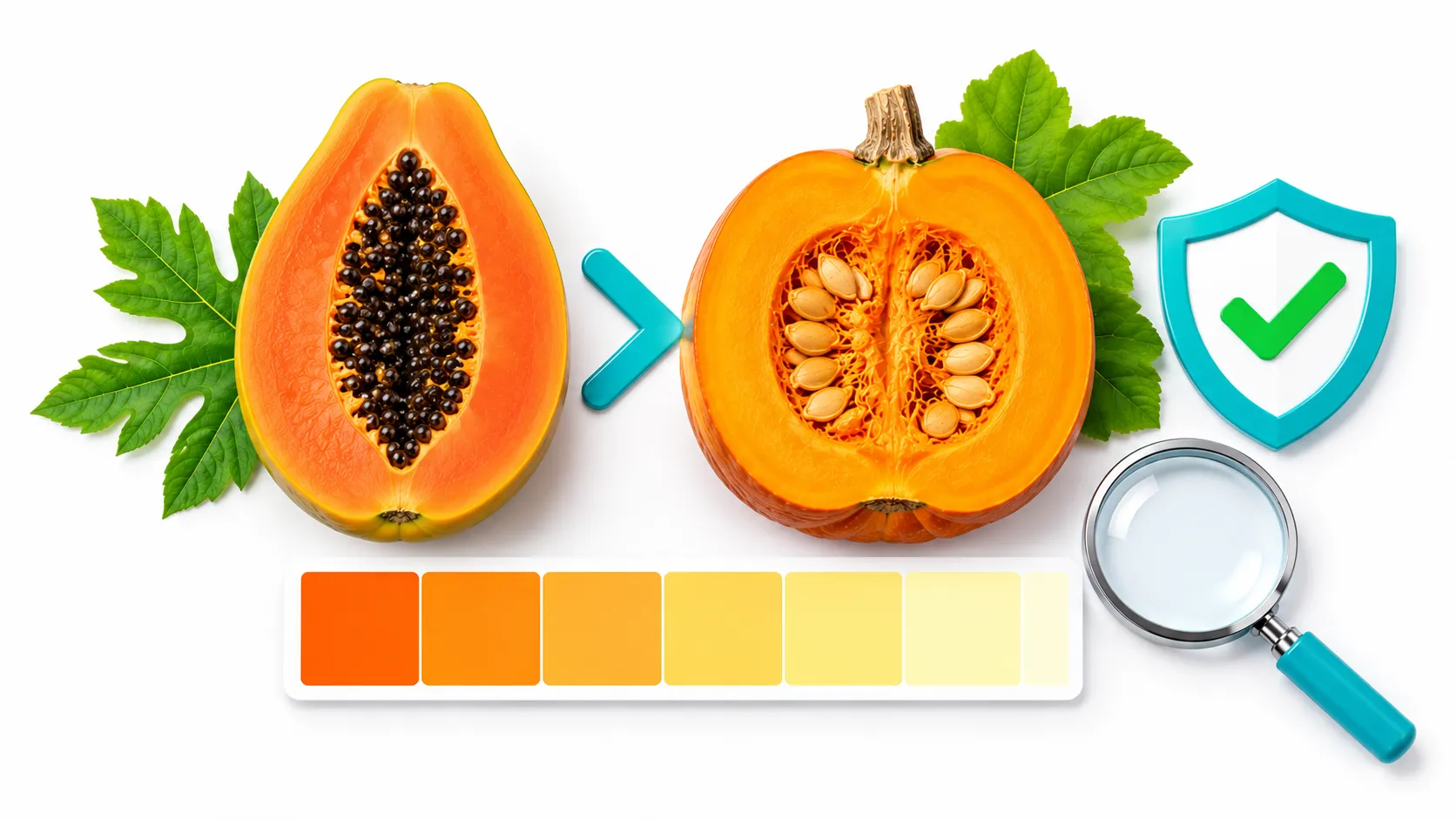
Pumpkin flesh usually colors urine more than papaya, but the difference is one of degree, not of risk. Both foods contain beta-carotene and related carotenoid pigments that can be excreted in urine and turn it yellow-orange. Pumpkin flesh—especially puree, soup, or juice—tends to deliver a higher beta-carotene load per serving than a typical serving of papaya. That makes pumpkin the more reliable trigger for a visible orange tint.
Papaya can still turn urine orange, especially after a large serving or papaya juice, and some people notice it more than others. Neither food causes blood, liver damage, or dehydration. The color is a harmless food-pigment effect that appears within hours and clears within 24 to 48 hours. The practical question is whether the color is fully explained by what you ate, and whether it comes with symptoms that point elsewhere. Use the pumpkin urine guide and the papaya urine guide to compare your pattern, and read on for why pumpkin usually wins.
Why Both Foods Can Turn Urine Orange
Pumpkin and papaya both contain carotenoids, the pigments responsible for their orange flesh. The main one is beta-carotene, which the body converts into vitamin A. When you take in more than the body can convert or store, a portion is absorbed into the bloodstream and filtered by the kidneys into urine. The result is a yellow-orange tint that looks like concentrated urine but is not caused by dehydration.
The effect depends on the dose, the form of the food, and the person. Juice and puree concentrate the pigment and remove some of the fiber that would otherwise slow absorption. A large serving is more likely to produce visible color than a small one. Hydration matters too: concentrated urine makes any pigment more visible.
Papaya adds another wrinkle. Ripe papaya contains beta-carotene along with other carotenoids, including lycopene and beta-cryptoxanthin. These pigments can contribute to urine color, but they are present in different proportions than in pumpkin. The result is still an orange or yellow-orange tint, not a red one. The orange urine guide covers the full range of causes for this shade.
Which One Colors Urine More?
Head to head, pumpkin flesh is the more reliable and more concentrated source of beta-carotene per serving. That is the main reason it is more often linked to visible orange urine.
Pumpkin flesh:
- High beta-carotene concentration, especially in cooked puree, soup, and juice.
- Large servings are easy to consume—a bowl of pumpkin soup or a cup of puree delivers a substantial pigment load.
- Cooking and pureeing increase availability, so more beta-carotene can be absorbed.
- More consistent effect when a large serving is eaten.
Papaya:
- Moderate beta-carotene content, with other carotenoids contributing to the mix.
- Ripeness matters—riper papaya tends to have more pigment.
- Juice and smoothies concentrate the dose, making color more likely than a few pieces of fruit.
- Less consistent effect than a large serving of pumpkin.
That does not mean papaya cannot do it. A large serving or papaya juice can turn urine orange, especially in a well-hydrated person who notices subtle shades. But if you are comparing a typical serving of each, pumpkin is the more likely culprit. Individual variability is real: some people notice color after a modest serving of either food, and others notice nothing after a large serving.
How Long the Color Lasts
Both foods follow a similar timeline, though pumpkin may produce a more noticeable color for longer.
- Within 2 to 8 hours: the orange tint begins to appear as carotenoids are absorbed and filtered.
- 24 to 48 hours: the color fades as the pigments are cleared, provided you are drinking normally and urinating regularly.
- Up to 72 hours: a very large serving or concentrated juice or puree may leave a faint tint into the third day.
Drinking water and urinating regularly help clear the pigment faster. If you are dehydrated, the color may be more noticeable and seem to last longer, because concentrated urine makes any pigment more visible. If orange urine persists beyond 48 to 72 hours after you stop eating the food, the food is unlikely to be the whole explanation.
How to Tell Food Color From Something Else
Food-related orange urine and other causes can look similar, but they behave differently.
Clues that point to pumpkin or papaya:
- The color appeared within hours of eating the food and you had a notable amount.
- The urine is uniformly orange or yellow-orange, without clots.
- You feel well—no pain, fever, burning, or abdominal pain.
- The color clears within 24 to 48 hours once you stop the food.
Clues that point to dehydration:
- The color is dark yellow or amber, not bright orange.
- It lightens after you drink fluids, usually within an hour or two.
- You feel thirsty, headachy, or lightheaded.
Clues that point to something else:
- Orange urine with pale stools, yellowing eyes, or abdominal pain can signal a liver or bile duct problem.
- Red or pink urine with clots, pain, fever, or burning can signal blood or infection.
- Dark brown or tea-colored urine that does not clear with fluids.
- The color recurs without a food explanation and persists.
If the color is explained by pumpkin or papaya and clears on the expected timeline, there is nothing to fix. If it does not, or if it comes with symptoms, a urine test is the right next step. The dehydration guide explains how concentration affects color, so you can rule that out first.
When to See a Doctor
Contact a healthcare provider if any of the following applies:
- Orange urine lasts more than 48 hours and you have not eaten pumpkin or papaya again.
- You have pale stools, yellowing eyes or skin, or abdominal pain, which can signal a liver or bile duct problem.
- You have pain, fever, chills, burning, or urgency when you urinate.
- You see blood clots or smoky-brown urine.
- You feel dizzy, weak, or lightheaded, or you are passing much less urine than usual.
- You are pregnant and have orange urine that is not explained by food.
- You have a history of kidney stones, urinary tract infections, or liver disease and notice a new color change.
- Orange urine recurs without a food explanation, even if each episode clears on its own.
A simple urinalysis can separate food pigment from blood and other causes. If you are unsure whether your shade is concerning, compare it against a urine color chart and bring the pattern—color, timing, and what you ate—to your doctor.
The Bottom Line
Pumpkin flesh usually colors urine more than papaya because it delivers a higher beta-carotene load per serving, especially as puree, soup, or juice. Papaya can also turn urine orange, but the effect is less consistent and depends more on ripeness, serving size, and individual metabolism. Both are harmless food effects that clear within 24 to 48 hours. If the color tracks what you ate and you feel well, there is nothing to fix. If it persists, comes with pain, fever, pale stools, or clots, or appears without a food explanation, get a urine test. It is a quick way to separate food pigment from something that needs attention.