How Long Does Hibiscus Tea Keep Urine Colored?
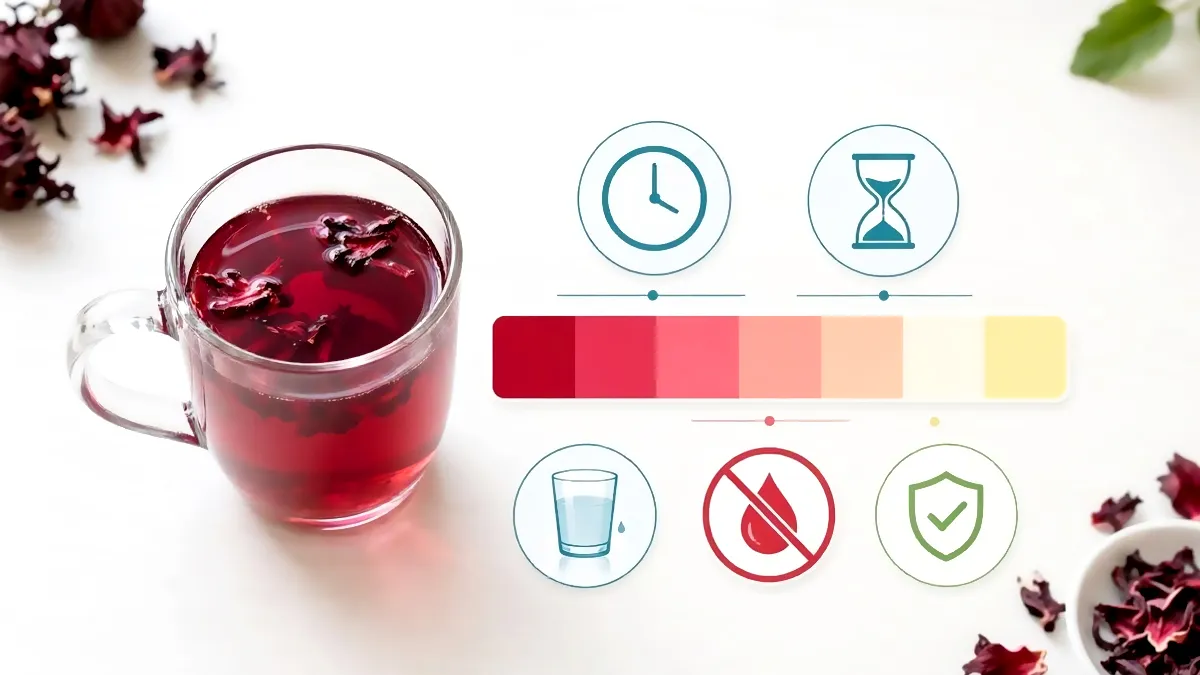
Quick Answer
Hibiscus tea usually keeps urine colored for a few hours to about a day. The pink, red, or reddish-brown tint comes from anthocyanins, the water-soluble pigments that give hibiscus its deep ruby color. Some of those pigments are absorbed and excreted in urine, and the color fades as they are cleared from your system.
The exact duration depends on how much tea you drank, how concentrated it was, and your individual metabolism. A single cup is unlikely to produce a noticeable change. Several strong cups, or hibiscus extract, can produce a tint that lasts closer to 24 to 48 hours. The color is a harmless food-pigment effect, not blood. Use the hibiscus urine guide to compare what to expect, and read on for the full timeline and when to check in with a doctor.
Why Hibiscus Tea Turns Urine Colored
Hibiscus tea is made from the dried calyces of the hibiscus flower, which are rich in anthocyanins, including cyanidin-3-sambubioside and delphinidin-3-sambubioside[reference:0]. These pigments are water-soluble, which means a portion can survive digestion, enter the bloodstream, and be filtered by the kidneys into urine.
Why some people notice a pink or red tint after hibiscus tea and others do not is not fully settled. Likely factors include:
- How strong the tea is, and how many cups you drank.
- Gut bacteria that vary from person to person and affect how anthocyanins are broken down.
- Hydration, since concentrated urine makes any pigment more visible.
- Individual metabolism, which affects how quickly the pigments are cleared.
The mechanism is similar to beeturia, the harmless pink urine that follows beets. The pink or red urine guide covers the full range of food and medical causes.
The Timeline: From Peak Color to Clear
The timeline follows the pharmacokinetics of anthocyanins from hibiscus.
When the Color Appears and Peaks
After drinking hibiscus tea, anthocyanins are absorbed and begin to appear in urine relatively quickly. A pharmacokinetic study of hibiscus extract found that maximum urinary excretion rates occurred at 1.5 to 2.0 hours after intake[reference:1]. That is when the color is usually most noticeable.
Within the first 7 hours, the urinary excretion of the main hibiscus anthocyanins is largely complete[reference:2]. In practice, this means the strongest tint is often seen within the first few hours after drinking the tea.
How Long It Takes to Fade
The elimination half-life of hibiscus anthocyanins is relatively short. Reported values for the main anthocyanins from hibiscus extract have geometric means of 2.18, 3.34, and 2.63 hours[reference:3]. For anthocyanins from related sources, plasma elimination half-lives of parent compounds have been measured at roughly 3.88 to 4.12 hours[reference:4].
Because of this short half-life, most of the visible color clears within a few hours to about a day after a typical serving. Drinking water and urinating regularly speed the process. If you drink several strong cups through the day, the color may be more persistent but should still fade within 24 to 48 hours.
Why Some Traces Can Linger Longer
Anthocyanins are extensively metabolized, and some metabolites can persist in urine longer than the parent compounds. One study found that anthocyanin metabolites were still detectable in human urine even after 5 days with no dietary anthocyanins, suggesting enterohepatic recycling and a prolonged residence time for some breakdown products[reference:5]. That does not mean visible color lasts five days—visible color depends on concentration—but it helps explain why a faint tint can occasionally linger longer than expected in some people.
How to Tell Hibiscus Color From Blood
Hibiscus pigment and blood in urine can both look pink or red, but they behave differently.
Clues that point to hibiscus tea:
- The color appeared within hours of drinking hibiscus tea and you had a notable amount.
- The urine is uniformly pink or red, without clots or a smoky-brown tint.
- There is no burning, urgency, fever, or flank pain unless you have a separate problem.
- The color clears within a few hours to a day after you stop drinking the tea.
Clues that point to blood in urine:
- Red or pink urine appears without a drink explanation, or persists beyond a day or two.
- You see clots or a smoky-brown tint.
- You have pain, fever, chills, burning, or urgency when you urinate.
- The color recurs without drinking hibiscus tea again.
Blood in urine can be painless, which is why unexplained red urine deserves evaluation even when you feel well. If you are trying to match your pattern to a cause, the urine color by cause section groups explanations by food, medication, and medical conditions.
When to See a Doctor
Contact a healthcare provider if any of the following applies:
- Pink or red urine lasts more than 48 hours after stopping hibiscus tea.
- You have pain, fever, chills, burning, or urgency when you urinate.
- You see blood clots or smoky-brown urine, rather than a uniform pink tint.
- You feel dizzy, weak, or lightheaded, or you are passing very little urine.
- You are pregnant and have red urine that is not explained by food or drink.
- You take a prescription diuretic or have kidney or heart conditions and notice a change in urine color or output.
- Red urine recurs without a drink explanation, even if each episode clears on its own.
A simple urinalysis can confirm whether blood is present or whether the color is pigment alone. If you are unsure whether your red urine is drink-related, compare it against a urine color chart and bring the pattern—color, timing, and hibiscus intake—to your doctor.
The Bottom Line
Hibiscus tea keeps urine colored for a few hours to about a day in most people. Anthocyanin excretion peaks around 1.5 to 2 hours, and the pigments are largely cleared within 7 hours, with an elimination half-life of roughly 2 to 4 hours[reference:6]. Several strong cups can stretch the visible tint closer to 24 to 48 hours. It is a harmless food-pigment effect, not blood. If the color persists beyond two days, comes with pain, fever, or clots, or appears without a drink explanation, get it checked. Otherwise, enjoy the tea, drink water alongside it, and watch for the color to clear.