Hibiscus Tea as a Diuretic: How It Changes Urine
Quick Answer
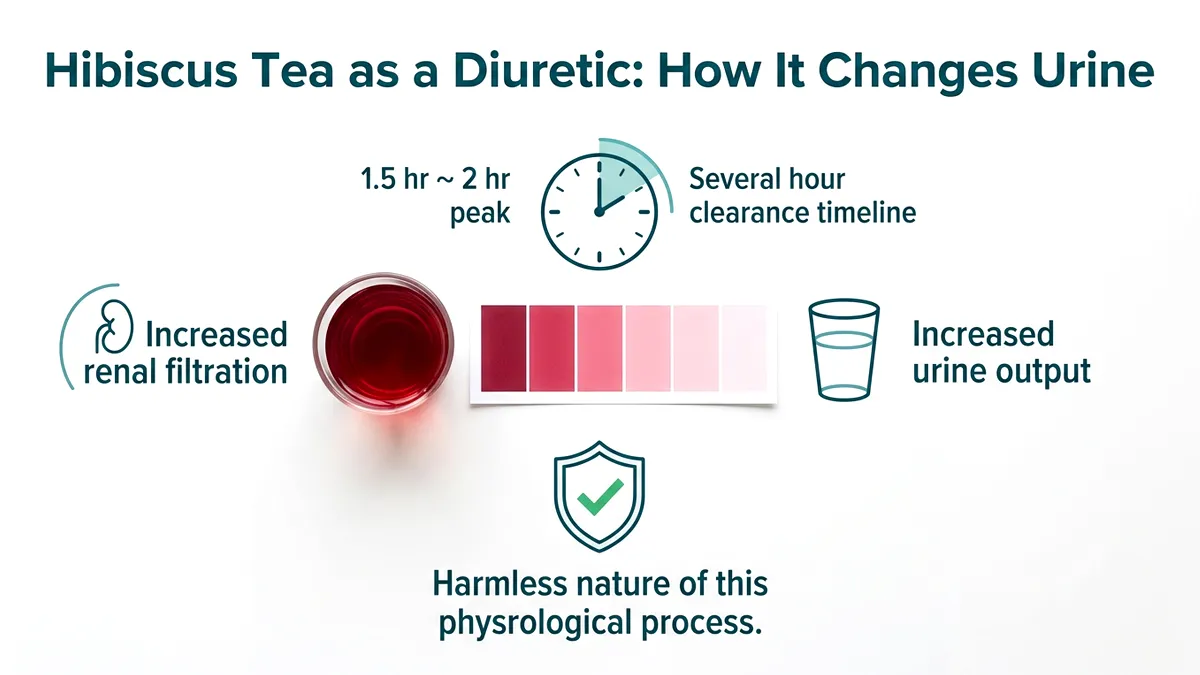
Hibiscus tea has a mild but measurable diuretic effect. It increases urine volume by improving kidney filtration and by influencing aldosterone, a hormone that regulates sodium and water balance. At the same time, the anthocyanins that give hibiscus its deep red color are partly excreted in urine, which can tint it pink or red.
For most healthy adults, these effects are gentle and harmless. You may notice more frequent urination and a pinkish hue to your urine after drinking hibiscus tea, both of which fade within hours. The key is not to panic about the color—it is food pigment, not blood—and to keep drinking water alongside the tea so the diuretic effect does not leave you dehydrated. Use the hibiscus urine guide to compare what to expect, and read on for how the diuretic effect works and when to call a doctor.
How Hibiscus Tea Acts as a Diuretic
Hibiscus (Hibiscus sabdariffa) has a long history of use as a diuretic in traditional medicine, and modern research has started to explain why. Two mechanisms appear to be at work.
1. Improved Kidney Filtration
Hibiscus contains quercetin and related flavonoids. These compounds affect the vascular endothelium—the lining of blood vessels—causing nitric oxide release. In the kidney, that leads to renal vasorelaxation, which increases the kidney’s filtration rate. A study using an in situ kidney model found that hibiscus extract increased renal filtration by about 48%[reference:0]. More filtered fluid means more urine.
2. Modulation of Aldosterone
Hibiscus also appears to influence aldosterone, a hormone that tells the kidneys to retain sodium and water. By modulating aldosterone activity, hibiscus promotes natriuresis (sodium excretion) while tending to spare potassium—a combination that increases urine volume without excessive potassium loss[reference:1]. This is part of why hibiscus is described as having diuretic, natriuretic, and potassium-sparing effects.
In a randomized controlled trial of adults with mild to moderate hypertension, hibiscus extract significantly increased urine volume compared with placebo—and did so to a greater degree than the prescription drug lisinopril[reference:2]. That does not mean hibiscus is a replacement for prescribed diuretics, but it confirms that the effect is real, not just anecdotal.
How Hibiscus Tea Changes Urine Color
The same pigments that make hibiscus tea red can show up in urine. Hibiscus is rich in anthocyanins, including cyanidin-3-sambubioside and delphinidin-3-sambubioside. A pharmacokinetic study in healthy volunteers found that after drinking hibiscus extract, intact anthocyanins were excreted in urine, with maximum excretion rates at 1.5 to 2 hours after intake[reference:3].
What that means in practice:
- Pink or red tint: The anthocyanins can give urine a faint pink, red, or reddish-brown hue, similar to what happens after beets or berries.
- The diuretic effect can make the color less obvious: Because hibiscus increases urine volume, the pigment is diluted, so the tint may be subtler than you would expect from a strongly colored tea.
- Concentrated urine shows more color: If you are dehydrated, the same amount of pigment is more visible.
The color is food pigment, not blood. It behaves on a predictable timeline and clears as the anthocyanins are excreted. The pink or red urine guide covers the full range of causes, including food pigments and infection.
How Long Do the Effects Last?
Both the diuretic effect and the color change are short-lived.
- Urine volume: The increase in urine output typically begins within a few hours of drinking hibiscus tea and settles as the fluid load is processed. If you drink several cups through the day, the effect is more sustained but still gentle.
- Urine color: Anthocyanin excretion peaks around 1.5 to 2 hours after intake, and the half-life of the main anthocyanins is roughly 2 to 3 hours[reference:4]. In practice, a pink tint usually fades within a few hours to a day, depending on how much tea you drank and how well hydrated you are.
If pink or red urine persists beyond 24 to 48 hours after you stop drinking hibiscus tea, the tea is unlikely to be the whole explanation. That is the point to consider other causes and check in with a clinician.
Staying Hydrated While Drinking Hibiscus Tea
Because hibiscus is a diuretic, it is possible to lose more fluid than you take in if you drink a lot of tea without also drinking water. A practical approach:
- Pair each cup of hibiscus tea with a glass of water. This offsets the diuretic effect and keeps your total fluid intake balanced.
- Check your urine after your first drink of the morning. If it is dark amber despite drinking tea, you need more water, not more tea. The dehydration guide explains how quickly hydration color should recover.
- Do not chase completely clear urine. Pale yellow is the target, not colorless.
- If you take a prescription diuretic or have kidney or heart conditions, ask your clinician about hibiscus tea before making it a daily habit. It can add to the effect of your medication.
When to See a Doctor
Contact a healthcare provider if any of the following applies:
- Pink or red urine lasts more than 48 hours after stopping hibiscus tea.
- You have pain, fever, chills, burning, or urgency when you urinate.
- You see blood clots or smoky-brown urine, rather than a uniform pink tint.
- You feel dizzy, weak, lightheaded, or confused, or you are passing very little urine—signs that the diuretic effect has left you dehydrated or that something else is going on.
- You have swelling in the legs or face, or a sudden change in urine output.
- You are pregnant and have an unusual urine color or a change in urination that is not explained by the tea.
- You take a diuretic, blood pressure medication, or lithium, and notice a change in urine volume or color after starting hibiscus tea.
If you are unsure whether your shade is concerning, the urine color by cause section groups explanations by food, medication, and medical conditions so you can narrow down what is most likely before your appointment.
The Bottom Line
Hibiscus tea has a real but gentle diuretic effect, driven by improved kidney filtration and modulation of aldosterone. It can also tint urine pink or red through anthocyanins that are excreted within hours of drinking. Both effects are short-lived and harmless for most healthy adults. Pair the tea with water to stay balanced, expect the color to fade within a day, and take it seriously only when red urine persists, comes with pain or fever, or is accompanied by dizziness or very low urine output. If that describes your situation, get it checked. If not, enjoy the tea and watch for pale yellow.