Hibiscus Tea and Pink Urine: Harmless or a Warning?
Quick Answer
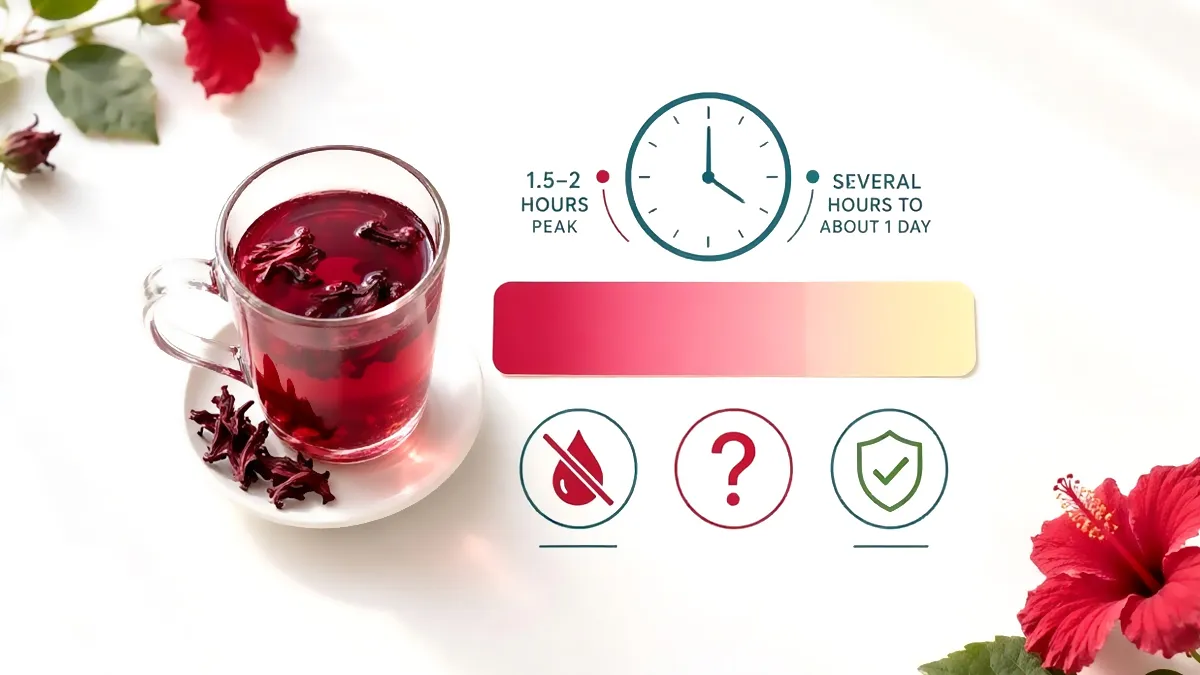
Pink urine after hibiscus tea is usually harmless. The color comes from anthocyanins, the water-soluble pigments that give hibiscus its deep red color. Some of those pigments are absorbed and excreted in urine, where they can tint it pink, red, or reddish-brown. For most healthy people, the color appears within a few hours of drinking the tea and clears within a few hours to a day.
The exception worth knowing is blood in urine. It can look identical to hibiscus pigment, so the context matters: does the color appear only after drinking hibiscus tea and clear within a day, or does it persist, recur without the tea, or come with pain, fever, or burning? If the color is not fully explained by the tea, or if it comes with other symptoms, get it checked. Use the hibiscus urine guide to compare your pattern, and read on for how to tell pigment from blood.
Why Hibiscus Tea Turns Urine Pink
Hibiscus tea is made from the dried calyces of the hibiscus flower, which are rich in anthocyanins, including cyanidin-3-sambubioside and delphinidin-3-sambubioside. These pigments are water-soluble, which means a portion can survive digestion, enter the bloodstream, and be filtered by the kidneys into urine.
A pharmacokinetic study in healthy volunteers found that after drinking hibiscus extract, intact anthocyanins were excreted in urine, with maximum excretion rates at 1.5 to 2 hours after intake. That is why the color typically appears within a few hours of drinking the tea.
Why some people notice pink urine after hibiscus and others do not is not fully settled. Likely factors include:
- How strong the tea is, and how many cups you drank.
- Gut bacteria that vary from person to person and affect how anthocyanins are broken down.
- Hydration, since concentrated urine makes any pigment more visible.
- Individual metabolism, which affects how quickly the pigments are cleared.
The mechanism is similar to beeturia, the harmless pink urine that follows beets. If you have noticed pink urine after beets or berries before, you may be more likely to notice it after hibiscus tea too.
How Long the Color Lasts
The timeline is short. Anthocyanin excretion peaks around 1.5 to 2 hours after drinking hibiscus tea, and the half-life of the main anthocyanins is roughly 2 to 3 hours. In practice, a pink tint usually fades within a few hours to a day, depending on how much tea you drank and how well hydrated you are.
If you drink several cups through the day, the color may be more persistent but still mild. Drinking water dilutes the pigment and speeds its return to normal. If pink or red urine persists beyond 24 to 48 hours after you stop drinking hibiscus tea, the tea is unlikely to be the whole explanation. That is the point to consider other causes and check in with a clinician.
How to Tell It From Blood
Hibiscus pigment and blood in urine can both look pink or red, but they usually behave differently.
Clues that point to hibiscus tea:
- The color appeared within hours of drinking hibiscus tea and you had a notable amount.
- The urine is uniformly pink or red, without clots or a smoky-brown tint.
- There is no burning, urgency, fever, or flank pain unless you have a separate problem.
- The color clears within a few hours to a day after you stop drinking the tea.
- Drinking water lightens it gradually but does not eliminate it immediately, because the pigment is already in the urine.
Clues that point to blood in urine:
- Red or pink urine appears without a drink explanation, or persists beyond a day or two.
- You see clots or a smoky-brown tint.
- You have pain, fever, chills, burning, or urgency when you urinate.
- The color recurs without drinking hibiscus tea again.
Blood in urine can be painless, which is why unexplained red urine deserves evaluation even when you feel well. If you are trying to match your pattern to a cause, the pink or red urine guide covers the full range of causes, including infection, stones, and food pigments.
When to See a Doctor
Contact a healthcare provider if any of the following applies:
- Pink or red urine lasts more than 48 hours after stopping hibiscus tea.
- You have pain, fever, chills, burning, or urgency when you urinate.
- You see blood clots or smoky-brown urine, rather than a uniform pink tint.
- You feel dizzy, weak, or lightheaded, or you are passing very little urine—especially if you have been drinking a lot of hibiscus tea and not enough water.
- You are pregnant and have red urine that is not explained by food or drink.
- You take a prescription diuretic or have kidney or heart conditions and notice a change in urine color or output.
- Red urine recurs without a drink explanation, even if each episode clears on its own.
A simple urinalysis can confirm whether blood is present or whether the color is pigment alone. If you are unsure whether your red urine is drink-related, compare it against a urine color chart and bring the pattern—color, timing, and hibiscus intake—to your doctor.
The Bottom Line
Pink urine after hibiscus tea is usually harmless. The anthocyanins in the tea are excreted in urine and can tint it pink or red for a few hours to a day. It is not blood, and it does not mean your kidneys are damaged. Take it seriously when the color persists beyond a day or two, comes with pain, fever, or clots, or appears without a drink explanation. If that describes your situation, get it checked. If not, enjoy the tea, drink water alongside it, and watch for the color to clear.