How Long Does Rhubarb Keep Urine Red or Brown? A Timeline
Quick Answer
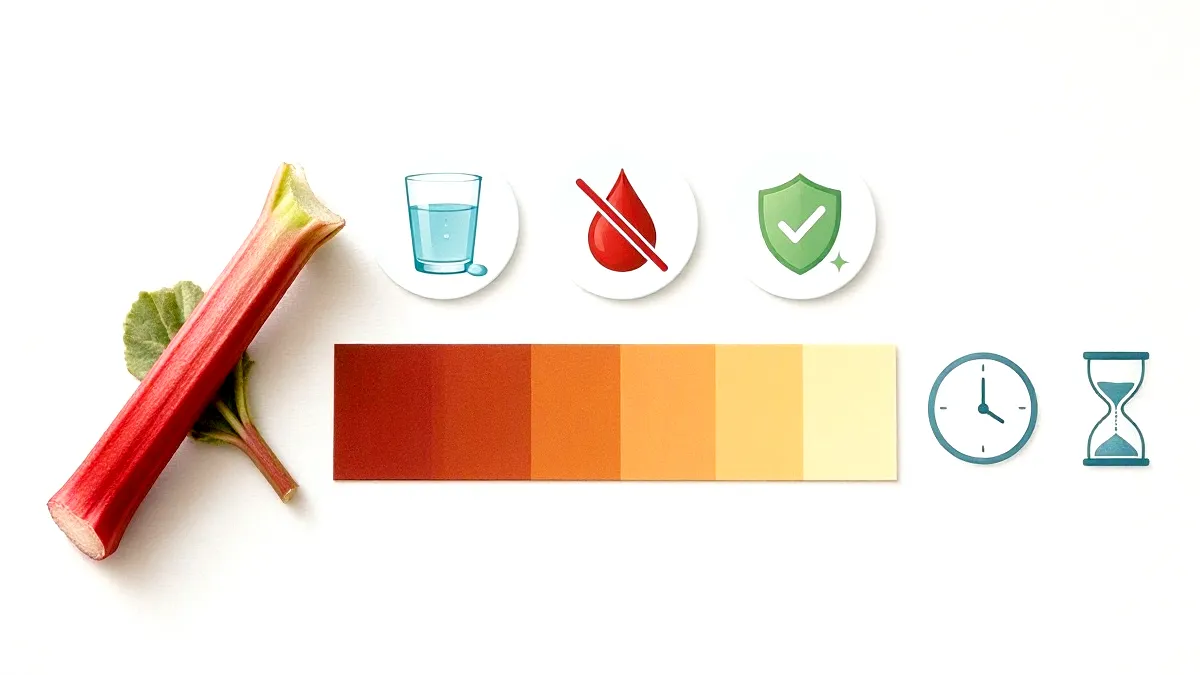
Rhubarb usually keeps urine red-brown or tea-colored for about 24 to 48 hours after you eat it. The color comes from two things: pigments in the red stalks and oxalates, natural compounds that can form crystals and darken urine. A large serving or raw rhubarb can produce a more noticeable tint; a small amount of cooked rhubarb often produces no visible change at all.
This is not blood and not liver disease. It is a harmless food effect that clears on a predictable timeline. The key question is whether the color is fully explained by the rhubarb. If red-brown urine lasts beyond two to three days, comes with pain, fever, burning, or flank pain, or appears without eating rhubarb, do not assume it is food. Use the rhubarb urine guide to compare your pattern, and read on for the exact timeline and how to tell pigment from other causes.
Why Rhubarb Turns Urine Red or Brown
Rhubarb affects urine color through two separate mechanisms: pigments and oxalates.
1. Pigments
Red rhubarb stalks contain anthocyanins, the same water-soluble pigments found in berries and hibiscus. Some of that pigment can survive digestion, enter the bloodstream, and be filtered into urine, giving it a reddish or pinkish tint. This is similar to how beets cause harmless pink urine.
2. Oxalates
Rhubarb is one of the richest dietary sources of oxalates (oxalic acid), especially in the leaves. Oxalates can bind with calcium and form crystals. In urine, these crystals can make it look slightly cloudy or give it a darker, tea-colored or reddish-brown hue. In people who are prone to kidney stones, high oxalate intake can increase the risk of stone formation over time.
Why some people notice red-brown urine after rhubarb and others do not is not fully settled. Likely factors include how much rhubarb was eaten, whether it was raw or cooked, individual gut bacteria, and hydration status. The brown urine guide covers the full range of causes for tea-colored and dark brown urine, including food effects, dehydration, and liver problems.
How Long the Color Lasts
The timeline is fairly predictable:
- Within 2 to 8 hours: the color begins to appear in urine as pigments and oxalate crystals are absorbed and filtered.
- Peak concentration: the red-brown or tea-colored tint is usually most noticeable in the first day after eating.
- 24 to 48 hours: the color fades as the compounds are cleared, provided you are drinking normally and urinating regularly.
- Up to 72 hours: a small number of people, especially after a very large serving or raw rhubarb, may still see a faint tint into the third day.
Drinking water and urinating regularly helps clear the pigment and dilute the oxalates. If you are dehydrated, the color may be more noticeable and seem to last longer, because concentrated urine makes any pigment more visible. The dehydration guide explains how concentration affects urine color.
If red-brown urine persists past 48 to 72 hours and you have not eaten rhubarb again, stop attributing it to food. That is the point where a simple urinalysis is worth arranging.
How to Tell It From Blood or Dehydration
Rhubarb-related red-brown urine, dehydration, and blood in urine can look similar, but they usually behave differently.
Clues that point to rhubarb:
- The color appeared within hours of eating rhubarb and you had a notable amount.
- The urine is uniformly tinted, without clots.
- There is no burning, urgency, fever, or flank pain unless you have a separate problem.
- The color clears within 24 to 48 hours once you stop eating rhubarb.
- Drinking water does not immediately lighten it, because the pigment is already in the urine rather than concentrated waste.
Clues that point to dehydration:
- The color is dark yellow or amber, not red-brown or tea-colored.
- It lightens after you drink fluids, usually within an hour or two.
- You feel thirsty, headachy, or lightheaded.
Clues that point to blood in urine:
- Red or brown urine appears without a food explanation, or persists beyond two to three days.
- You see clots or a smoky-brown tint.
- You have pain, fever, chills, burning, or urgency when you urinate.
- The color recurs without eating rhubarb again.
Clues that point to a kidney stone:
- Severe flank or lower back pain that comes in waves.
- Blood in the urine alongside the pain.
- Nausea or vomiting with the pain.
- A history of kidney stones and a large rhubarb serving.
Blood in urine can be painless, which is why unexplained red-brown urine deserves evaluation even when you feel well. If you are trying to match your pattern to a cause, the urine color by cause section groups explanations by food, medication, and medical conditions.
When to See a Doctor
Contact a healthcare provider if any of the following applies:
- Red-brown urine lasts more than 48 hours and you have not eaten rhubarb again.
- You have severe flank or lower back pain, which can signal a kidney stone.
- You have pain, fever, chills, burning, or urgency when you urinate.
- You see blood clots or smoky-brown urine.
- You feel dizzy, weak, or lightheaded, or you are passing much less urine than usual.
- You notice pale stools, yellowing eyes or skin, or abdominal pain, which can signal a liver or bile duct problem.
- You are pregnant and have red-brown urine that is not explained by food.
- You have a history of kidney stones or kidney disease and notice a new color change.
- The color recurs without a food explanation, even if each episode clears on its own.
A simple urinalysis can confirm whether blood, crystals, or other markers are present, and distinguish a food effect from something that needs attention. If you are unsure whether your shade is concerning, compare it against a urine color chart and bring the pattern—color, timing, and rhubarb intake—to your doctor.
The Bottom Line
Rhubarb keeps urine red-brown or tea-colored for about 24 to 48 hours in most people, and occasionally up to three days after a large or raw serving. The color comes from pigments and oxalates, not from blood or liver disease. If you ate rhubarb and your urine turned red-brown without pain, fever, or clots, watch for it to clear within a day or two. If it does not clear, or if any concerning symptom comes with it—especially flank pain—get it checked. A urinalysis can quickly separate food pigment and crystals from blood and other causes.