Rhubarb and Urine Color in Children: A Parent’s Guide
Quick Answer
Rhubarb can turn a child’s urine red-brown, tea-colored, or slightly pink, and it is usually harmless. The color comes from two things in rhubarb: pigments in the red stalks and oxalates, natural compounds that can form crystals and darken urine. A small serving of cooked rhubarb often produces no visible change; a large serving or raw rhubarb is more likely to be noticeable.
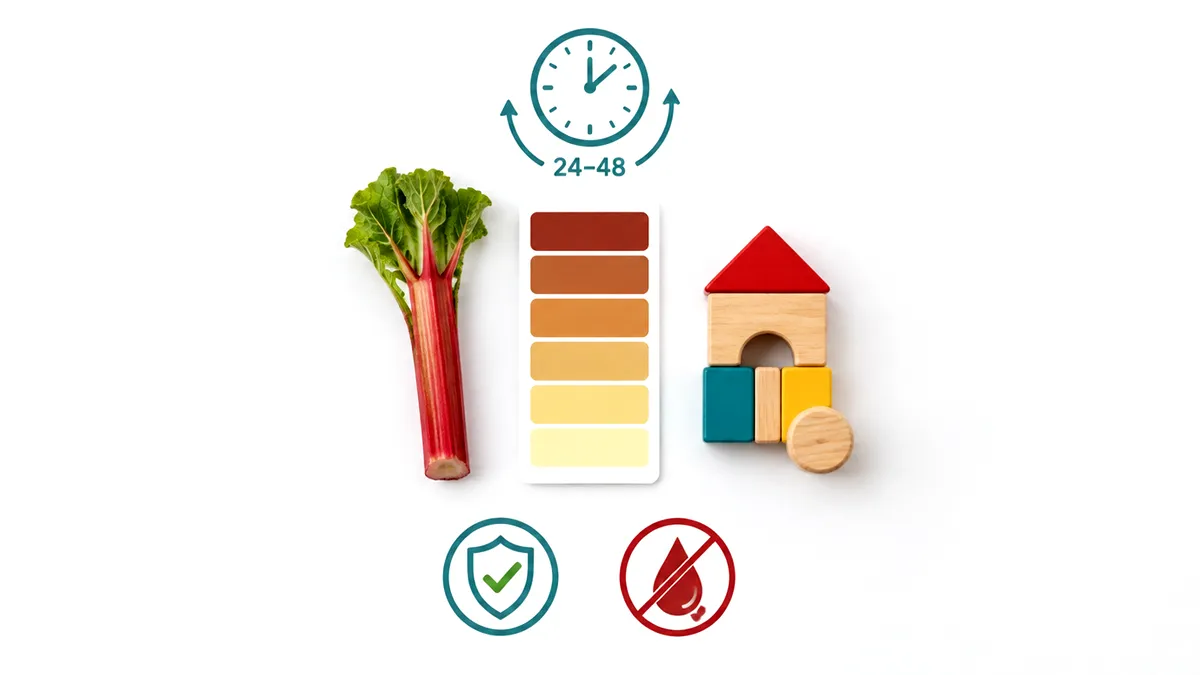
This is a food effect, not blood. In most children, the color appears within a few hours of eating rhubarb and clears within 24 to 48 hours. The question that matters is whether the color is fully explained by the rhubarb and whether your child feels well. If red-brown urine comes with pain, fever, burning, or flank pain, or lasts beyond two to three days without rhubarb, do not assume it is food. Use the rhubarb urine guide to compare your pattern, and read on for what to expect and when to call the pediatrician.
Why Rhubarb Changes a Child’s Urine Color
Rhubarb affects urine color through two separate mechanisms: pigments and oxalates.
1. Pigments
Red rhubarb stalks contain anthocyanins, the same water-soluble pigments found in berries and hibiscus. Some of that pigment can survive digestion, enter the bloodstream, and be filtered into urine, giving it a reddish or pinkish tint. This is similar to how beets cause harmless pink urine.
2. Oxalates
Rhubarb is one of the richest dietary sources of oxalates (oxalic acid), especially in the leaves. Oxalates can bind with calcium and form crystals. In urine, these crystals can make it look slightly cloudy or give it a darker, tea-colored or reddish-brown hue. In children who are prone to kidney stones, high oxalate intake can increase the risk of stone formation over time.
Why some children show a color change and others do not is not fully settled. Likely factors include how much rhubarb was eaten, whether it was raw or cooked, individual gut bacteria, and hydration. The brown urine guide covers the full range of causes for tea-colored urine.
What Color to Expect
Rhubarb does not usually turn a child’s urine bright red. The effect is more often:
- Reddish-brown or tea-colored urine, from the combination of pigments and oxalate crystals.
- A faint pink or red tint, especially after a large serving or rhubarb juice.
- Darker than normal urine that may look like mild dehydration.
Because rhubarb’s effect is more muted than beets, it is easier to mistake for something else—especially dehydration or blood. That subtlety is one reason it is worth knowing the timeline.
How Long the Color Lasts
The timeline is fairly predictable for a food effect.
- Within 2 to 8 hours: the color begins to appear in urine as pigments and oxalate crystals are absorbed and filtered.
- 24 to 48 hours: the color fades as the compounds are cleared, provided your child is drinking and urinating normally.
- Up to 72 hours: a very large serving or raw rhubarb may leave a faint tint into the third day.
Encouraging your child to drink water helps clear the pigment and dilute the oxalates. If the color persists beyond 48 to 72 hours and your child has not eaten rhubarb again, that is the point to consider other causes. The children’s urine guide covers the full range of color changes in kids.
How to Tell It From Blood or Dehydration
Rhubarb-related color, dehydration, and blood in urine can look similar, but they usually behave differently in children.
Clues that point to rhubarb:
- The color appeared within hours of eating rhubarb and your child had a notable amount.
- Your child feels well, is playing normally, and has no fever.
- The urine is uniformly tinted, without clots.
- The color clears within 24 to 48 hours once the rhubarb is stopped.
Clues that point to dehydration:
- The color is dark yellow or amber, not red-brown or tea-colored.
- It lightens after your child drinks fluids, usually within an hour or two.
- Your child is thirsty, tired, or has a dry mouth.
- They are urinating less often, or have fewer wet diapers.
Clues that point to blood or a kidney stone:
- Red or brown urine appears without a food explanation, or persists beyond two to three days.
- Severe flank or lower back pain that comes in waves.
- Pain or burning when urinating, or crying during urination.
- Fever, vomiting, or feeling very unwell.
- You see clots or a smoky-brown tint.
- New bedwetting or daytime accidents in a toilet-trained child.
If you are trying to match your child’s pattern to a cause, the urine color by cause section groups explanations by food, medication, and medical conditions.
Rhubarb Safety for Children
Rhubarb stalks are safe for most children in normal food amounts, but there are important cautions.
- Never let a child eat rhubarb leaves. The leaves contain much higher oxalate levels and are toxic.
- Cook rhubarb rather than serving it raw. Cooking reduces some of the oxalate content and is the usual way rhubarb is eaten.
- Keep servings moderate. Large amounts of high-oxalate food are not ideal for children with a history of kidney stones or kidney disease.
- Offer water with rhubarb dishes to help dilute oxalates in urine.
- Talk to your pediatrician if your child has kidney problems or a family history of kidney stones before making rhubarb a regular food.
This is not a reason to avoid rhubarb entirely for most children. It is a reason to be aware of the oxalate content and to take flank pain seriously if it appears after a large serving.
When to Call the Pediatrician
Contact a pediatrician or healthcare provider if any of the following applies:
- Red-brown or tea-colored urine lasts more than two to three days and your child has not eaten rhubarb again.
- Severe flank or lower back pain, which can signal a kidney stone.
- Pain, burning, fever, tummy pain, or back pain alongside a color change.
- Visible blood or clots in the urine.
- New bedwetting or daytime accidents in a toilet-trained child.
- Fewer wet diapers, no urination for many hours, or other signs of dehydration.
- Foamy, cloudy urine with swelling in the legs or face.
- Your child seems very tired, irritable, or unwell.
- You are unsure whether the color is food-related—trust your instinct and check in.
A simple urine test can detect blood, crystals, white blood cells, and other markers, and turn a color question into an answer. If you are unsure whether your child’s shade is concerning, compare it against a urine color chart and bring the pattern—color, timing, symptoms, and what your child ate—to the pediatrician.
The Bottom Line
Rhubarb and a child’s urine color are usually a harmless match. The pigments and oxalates in rhubarb can turn urine red-brown or tea-colored for about 24 to 48 hours, and the effect clears on its own. It is not blood, and it does not mean your child is dehydrated. Take it seriously when the color persists beyond two to three days, comes with severe flank pain, fever, or clots, or appears without a food explanation. If that describes your situation, call the pediatrician. If not, offer water, watch for the color to clear, and keep rhubarb servings moderate—and never let a child eat the leaves.