Rhubarb and Red-Brown Urine: Oxalates and Pigments
Quick Answer
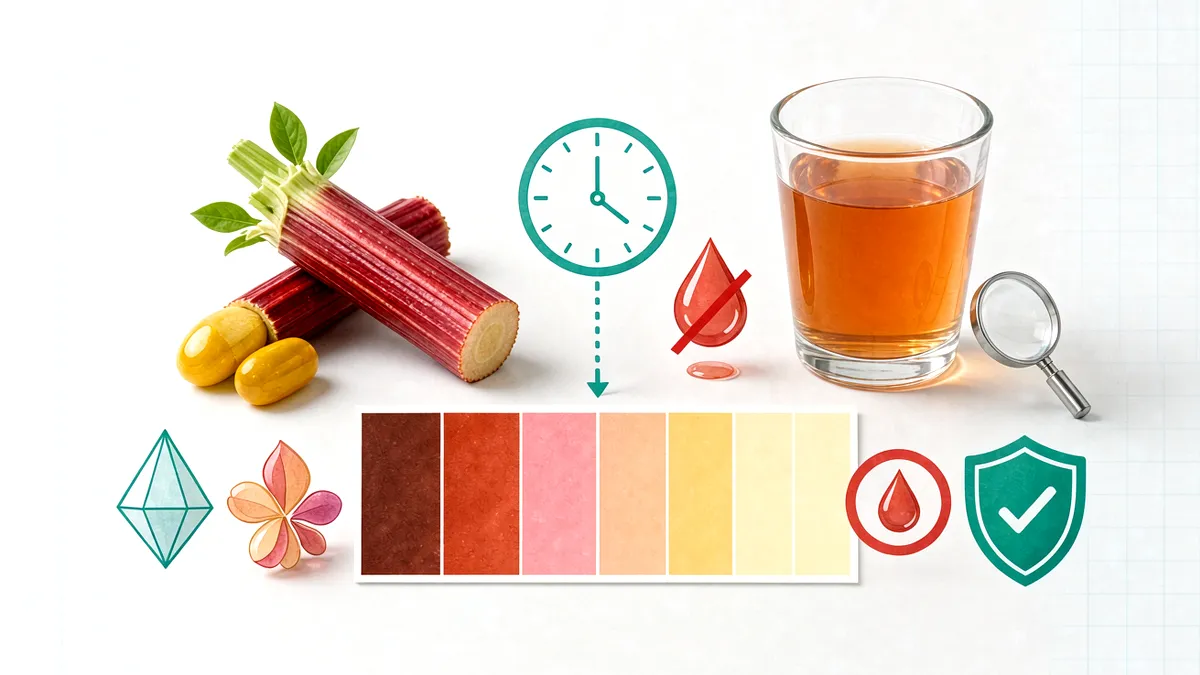
Rhubarb can turn urine red, pink, or reddish-brown. This is usually harmless and comes from two things: pigments in the stalks and oxalates, natural compounds that can form crystals and slightly alter urine color and clarity.
For most healthy people, the color appears within a few hours of eating rhubarb and clears within 24 to 48 hours. The key question is whether the color is fully explained by the rhubarb. If you have pain, fever, burning, clots, or red-brown urine that lasts beyond two days, do not assume it is food. Use the rhubarb urine cause page to compare your pattern, and read on for how long the color lasts and when to get checked.
Why Rhubarb Changes Urine Color
Rhubarb affects urine color through two separate mechanisms: pigments and oxalates.
1. Pigments
Red rhubarb stalks contain anthocyanins, the same water-soluble pigments found in berries and hibiscus. Some of that pigment can survive digestion, enter the bloodstream, and be filtered into urine, giving it a pink or red tint. This is similar to how beets cause harmless pink urine.
2. Oxalates
Rhubarb is one of the richest dietary sources of oxalates (oxalic acid), especially in the leaves. Oxalates can bind with calcium and form crystals. In urine, these crystals can make it look slightly cloudy or give it a darker, reddish-brown hue. In people who are prone to kidney stones, high oxalate intake can increase the risk of stone formation over time.
Why some people notice a color change after rhubarb and others do not is not fully settled. Likely factors include how much rhubarb was eaten, whether it was raw or cooked, individual gut bacteria, and hydration status. The rhubarb urine guide covers the pigment and oxalate effects in more detail.
What Color to Expect
Rhubarb does not usually produce bright red urine like beets or red dragon fruit. The effect is more often:
- Reddish-brown or tea-colored urine, from the combination of pigments and oxalate crystals.
- A faint pink or red tint, especially after a large serving or rhubarb juice.
- Darker than normal urine that may look like mild dehydration.
Because rhubarb’s effect is more muted than beets, it is easier to mistake for something else—especially dehydration or blood. That subtlety is one reason it is worth knowing the timeline.
How Long Does the Color Last?
For most people, the color change appears within 2 to 8 hours of eating rhubarb and fades within 24 to 48 hours. The exact timing depends on how much you ate, whether it was raw or cooked, how well hydrated you are, and how quickly your gut moves food through.
If red-brown urine persists past 48 hours and you have not eaten rhubarb again, stop attributing it to food. That is the point where a simple urinalysis is worth arranging.
How to Tell It From Blood or Dehydration
Rhubarb color, dehydration, and blood in urine can all look reddish-brown, but they usually behave differently.
Clues that point to rhubarb rather than blood:
- The color appeared within hours of eating rhubarb and you ate a notable amount.
- The urine is uniformly tinted, without clots.
- There is no burning, urgency, fever, or flank pain unless you have a separate problem.
- The color clears within 24 to 48 hours once you stop eating rhubarb.
- Drinking water does not immediately lighten it, because the pigment is already in the urine rather than concentrated waste.
Clues that point to blood in urine:
- Red or brown urine appears without a food explanation, or persists beyond two days.
- You see clots or a smoky-brown tint.
- You have pain, fever, chills, burning, or urgency when you urinate.
- The color recurs without eating rhubarb again.
Blood in urine can be painless, which is why unexplained red-brown urine deserves evaluation even when you feel well. The brown urine guide covers the full range of causes, including liver and kidney explanations.
Oxalates and Kidney Stone Risk
Most people eat rhubarb without any consequence beyond a temporary color change. But rhubarb is high in oxalates, and that matters for people who form calcium oxalate kidney stones.
- Large amounts of rhubarb, especially raw or in juice, can raise urinary oxalate and increase stone risk in susceptible people.
- Rhubarb leaves are not eaten because they contain much higher oxalate levels and are toxic.
- If you have a history of kidney stones, talk to your clinician about how much high-oxalate food is safe for you.
- Staying well hydrated helps dilute oxalate in urine and reduces crystal formation.
This is not a reason to avoid rhubarb entirely for most people. It is a reason to be aware of the oxalate content if you are stone-prone.
When to See a Doctor
Contact a healthcare provider if any of the following applies:
- Red-brown urine lasts more than 48 hours and you have not eaten rhubarb again.
- You have pain, fever, chills, burning, or urgency when you urinate.
- You see blood clots or smoky-brown urine.
- You have flank or lower back pain, which can signal a kidney stone.
- You feel dizzy, weak, or lightheaded, or you are passing much less urine than usual.
- You are pregnant and have red-brown urine that is not explained by food.
- You have a history of kidney stones or kidney disease and notice a new color change.
- Red-brown urine recurs without a food explanation, even if each episode clears on its own.
If you are unsure whether your urine color is food-related, the urine color by cause section groups explanations by food, medication, and medical conditions so you can narrow down what is most likely before your appointment.
The Bottom Line
Red-brown urine after rhubarb is usually a harmless effect of pigments and oxalates, not blood. If you ate rhubarb and your urine turned red-brown without pain, fever, or clots, watch for it to clear within a day or two. If it does not clear, or if any concerning symptom comes with it—especially flank pain—get it checked. A urinalysis can quickly separate food pigment and crystals from blood.