Pumpkin Seeds and Urine Color: Seeds vs. Flesh
Quick Answer
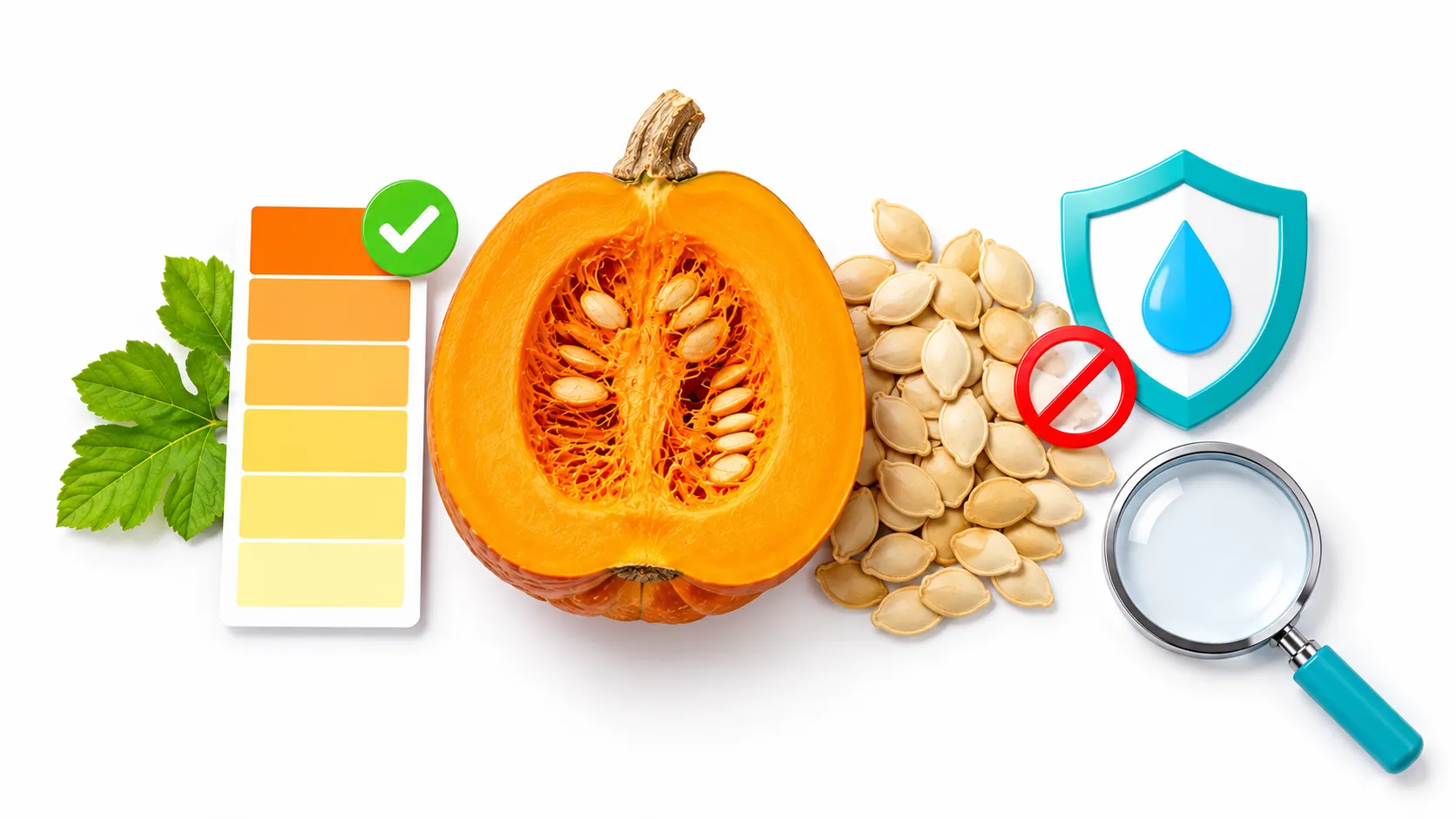
Pumpkin flesh and pumpkin seeds affect urine color in fundamentally different ways. The flesh is rich in beta-carotene, the orange pigment that can be excreted in urine and turn it yellow-orange for a day or two. The seeds contain beta-carotene too, but at much lower concentrations, and their more notable relationship with the urinary tract is not about color at all—it is about flow, frequency, and stone prevention.
In practice, eating pumpkin flesh or drinking pumpkin juice is far more likely to visibly change urine color than eating pumpkin seeds. The seeds are a concentrated source of zinc, magnesium, and phytosterols, and they have a long history of use for urinary symptoms such as bed-wetting and frequent urination. Their effect on urine is functional, not pigmentary. If you eat a large handful of seeds and notice a color change, the seeds are an unlikely culprit—look to other foods, supplements, or hydration first. Use the pumpkin urine guide to compare the flesh effect, and read on for why the two parts of the pumpkin behave so differently.
Why Pumpkin Flesh Turns Urine Orange
Pumpkin flesh is one of the richest dietary sources of beta-carotene, the carotenoid pigment responsible for its orange color. When you eat more beta-carotene than your body can convert to vitamin A or store, a portion is absorbed into the bloodstream and filtered by the kidneys into urine, producing a yellow-orange tint. This is the same mechanism behind carrot urine and sweet potato urine.
The effect is most noticeable after a large serving of pumpkin puree, pumpkin soup, or pumpkin juice. Cooking does not destroy beta-carotene, and pureeing or juicing makes the pigment more available for absorption. The color appears within a few hours and clears within 24 to 48 hours. It is a harmless food effect, not a sign of liver disease or dehydration.
The pumpkin urine guide covers the flesh effect in detail, including how to tell it from other causes of orange urine.
Why Pumpkin Seeds Are Different
Pumpkin seeds do contain beta-carotene, but the concentration is far lower than in the flesh. One analysis found beta-carotene concentrations in pumpkin seeds ranging from roughly 0.02 to 0.42 mg per 100 grams in varieties grown in East Africa, and another reported seed beta-carotene levels in the range of a few micrograms to low milligrams per 100 grams depending on the cultivar. For comparison, pumpkin flesh and peel contain substantially higher carotenoid concentrations.
That difference in concentration is why seeds are much less likely to produce a visible color change. A typical serving of seeds—a small handful, perhaps 30 grams—delivers only a fraction of the beta-carotene in a comparable serving of pumpkin flesh. The pigment load is simply not high enough, in most cases, to tint urine noticeably.
What the seeds do contain in abundance is a different set of compounds:
- Zinc—one of the most concentrated plant sources, roughly 17% of the daily value per quarter cup.
- Magnesium—about 46% of the daily value per quarter cup.
- Phytosterols, including beta-sitosterol, which are thought to contribute to prostate and urinary health.
- Cucurbitin, an amino acid with traditional anti-parasitic uses.
- Healthy fats and protein—seeds are roughly 25–51% protein and 30–50% oil.
These compounds are the reason pumpkin seeds are associated with urinary health, but they are not pigments. They do not tint urine orange.
What Pumpkin Seeds Actually Do for the Urinary Tract
The relationship between pumpkin seeds and the urinary tract is functional, not visual. Traditional and modern uses point in the same direction.
Urinary Flow and Frequency
Pumpkin seed has been used traditionally as a diuretic and as a pediatric urinary aid for bed-wetting. The Cherokee people used the seed to treat bed-wetting, and the Menominee used it to facilitate the passage of urine. Modern research has explored pumpkin seed extract for overactive bladder and benign prostatic hyperplasia (BPH), with some studies suggesting improvements in urinary flow and reductions in nighttime urination. The mechanism is thought to involve relaxation of bladder smooth muscle and inhibition of the aromatase enzyme, rather than any effect on urine pigment.
Kidney Stone Prevention
Pumpkin seeds have been studied for their effect on calcium oxalate stones, the most common type of kidney stone. Research in children found that pumpkin seeds reduced calcium-oxalate crystal occurrence in urine and increased levels of substances that inhibit stone formation, such as pyrophosphate and glycosaminoglycans. This is a protective effect, not a color effect—it changes the chemistry of urine in a way that makes stones less likely to form.
A Note on Hydration
Because pumpkin seeds have a mild diuretic effect, eating a large amount without drinking enough water could theoretically concentrate urine and make it look darker—but that would be a hydration effect, not a pigment effect. If you eat seeds and notice darker urine, the more likely explanation is that you need more water, not that the seeds contain a color-changing compound. The dehydration guide explains how concentration affects color.
How to Tell What Is Changing Your Urine Color
If you eat pumpkin in some form and notice a color change, the part of the pumpkin matters.
Clues that point to pumpkin flesh:
- The color appeared within hours of eating pumpkin puree, soup, or juice.
- The urine is uniformly orange or yellow-orange, without clots.
- You feel well—no pain, fever, or urinary symptoms.
- The color clears within 24 to 48 hours once you stop the flesh.
Clues that point elsewhere (seeds are an unlikely cause):
- The color is dark yellow or amber, not orange—more likely dehydration.
- The color appeared after a new medication or supplement, not after seeds.
- The color is red or pink—consider beets, berries, dyes, or blood.
- The color persists beyond a few days despite stopping the suspected food.
If you ate pumpkin seeds and your urine is orange, look first at other beta-carotene sources (carrots, sweet potato, pumpkin flesh) and at supplements. The seeds themselves are a poor explanation for a visible orange tint. The orange urine guide covers the full range of causes.
When to See a Doctor
Contact a healthcare provider if any of the following applies:
- Orange urine persists for more than 48 hours after stopping pumpkin flesh or other beta-carotene sources.
- Pale stools, yellowing eyes or skin, or abdominal pain accompanies the color change—possible liver or bile duct problem.
- You have pain, fever, chills, burning, or urgency when you urinate.
- You see blood clots or smoky-brown urine.
- You feel dizzy, weak, or lightheaded, or you are passing much less urine than usual.
- Dark brown or tea-colored urine appears and does not clear with fluids.
- You are pregnant and have orange urine that is not explained by food.
- You have a history of kidney stones or urinary tract infections and notice a new color change.
A simple urinalysis can check for bilirubin, blood, and other markers, and turn a color question into an answer. If you are unsure whether your shade is concerning, compare it against a urine color chart and bring the pattern—color, timing, and what you ate—to your doctor.
The Bottom Line
Pumpkin flesh turns urine orange through beta-carotene; pumpkin seeds do not, at least not reliably or noticeably. The seeds contain beta-carotene at much lower concentrations, and their relationship with the urinary tract is functional—supporting flow, reducing stone risk, and easing urinary symptoms—not pigmentary. If you eat pumpkin seeds and notice a color change, the seeds are an unlikely explanation. Look to pumpkin flesh, other carotenoid-rich foods, supplements, or hydration. If the color is unexplained or comes with other symptoms, get a urine test. It is a simple way to separate food pigment from something that needs attention.