Fava Beans and Dark Urine: Favism, Not Just Color?
Quick Answer
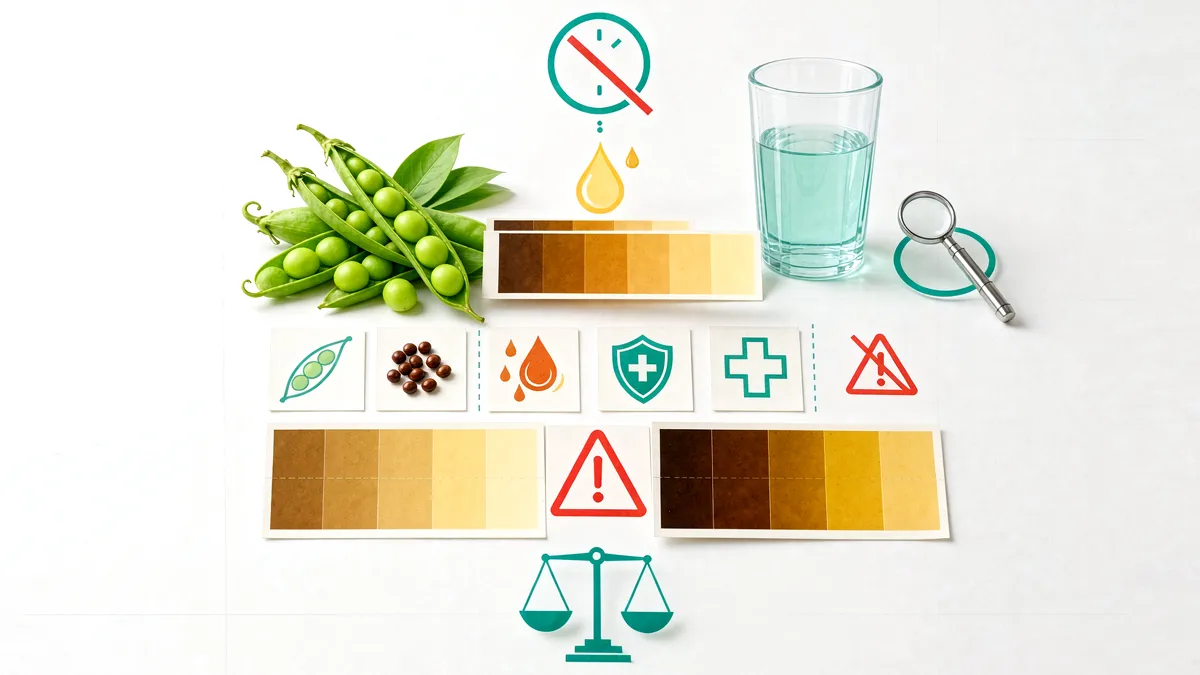
Fava beans can darken urine for two very different reasons. In most healthy people, the change is a harmless food effect that clears within a day or two. In people with G6PD deficiency, eating fava beans can trigger favism—a rapid breakdown of red blood cells that releases hemoglobin into urine and turns it dark brown or cola-colored. That is a medical emergency, not a food-color effect.
The key difference is not the shade alone. It is the context: favism comes with sudden fatigue, jaundice, shortness of breath, a racing heart, or back pain, and it can develop within hours to a day or two of eating fava beans. Use the fava bean urine guide to compare your pattern, and read on for how to tell harmless food color from favism.
Why Fava Beans Can Darken Urine
Urine gets its yellow tint from urochrome, a pigment produced when your body breaks down old red blood cells. Water dilutes that pigment. Fava beans can affect urine color through two separate routes.
1. Dietary Compounds
Fava beans contain natural compounds that can pass through the body and slightly darken urine in some people. This effect is usually mild, produces a darker yellow or brownish tint rather than a dramatic red or cola color, and clears within a day or two. It is not dangerous on its own.
2. Favism and Hemolysis
The serious route is favism. Fava beans contain vicine and convicine, compounds that can trigger oxidative stress in red blood cells. In people with G6PD deficiency—an inherited enzyme deficiency—red blood cells are especially vulnerable to that stress. They break down rapidly, releasing hemoglobin into the bloodstream, which the kidneys filter into urine. The result is hemoglobinuria: dark brown, cola-colored, or tea-colored urine.
G6PD deficiency is more common in people of Mediterranean, African, Middle Eastern, and Southeast Asian ancestry, but it can occur in anyone. Many people with the deficiency do not know they have it until a trigger—fava beans, certain infections, or specific medications—causes an episode. The brown urine guide covers the full range of causes for cola-colored urine, including hemoglobin and myoglobin.
When It’s Favism, Not Just Food Color
Favism is not a subtle color change. It is an acute hemolytic episode, and the symptoms travel together. Watch for:
- Dark brown or cola-colored urine that appears within hours to two days of eating fava beans.
- Sudden fatigue or weakness that feels out of proportion to your day.
- Yellowing of the eyes or skin (jaundice), from red blood cell breakdown.
- Shortness of breath, a racing heart, or dizziness, from anemia.
- Back or abdominal pain, which can accompany hemolysis.
- Pale skin or palms, or feeling cold and unwell.
Severe cases can lead to acute kidney injury and need urgent treatment. That is why dark urine after fava beans plus any of these symptoms is not a wait-and-see situation. The pink or red urine guide explains the broader range of causes for blood-colored urine, but favism is the fava-specific one to know.
How Long Does the Color Last?
Harmless food-related darkening after fava beans usually appears within a few hours and fades within 24 to 48 hours as the compounds clear. It does not come with jaundice, shortness of breath, or a racing heart.
Favism follows a different timeline. Dark urine can appear within hours to two days of eating fava beans and may persist or worsen as hemolysis continues. It does not correct simply by drinking water, because the color comes from hemoglobin, not concentration. If dark brown urine lasts beyond 48 hours or comes with any of the symptoms above, seek medical care.
When to See a Doctor
Seek urgent care or go to the emergency department if any of the following applies:
- Dark brown or cola-colored urine after eating fava beans, especially with jaundice, fatigue, shortness of breath, or a racing heart.
- You have known G6PD deficiency and ate fava beans, even if symptoms seem mild at first.
- You feel dizzy, very weak, confused, or are passing very little urine.
- You develop yellowing eyes or skin or back or abdominal pain alongside dark urine.
- A child develops dark urine after eating fava beans—children with G6PD deficiency can become severely anemic quickly.
- Dark urine persists more than 48 hours without a clear food explanation.
Contact your primary care provider if dark urine clears but you want to know whether G6PD deficiency or another cause is behind it. A simple urinalysis and blood tests can check for hemoglobin, anemia, and kidney function. If you are unsure whether your shade is concerning, the urine color by cause section groups explanations by food, medication, and medical conditions so you can bring a clearer picture to your appointment.
The Bottom Line
Dark urine after fava beans is usually a harmless food effect, but it can also be favism—a G6PD-triggered breakdown of red blood cells that turns urine dark brown and needs urgent care. The color alone does not tell you which one you are dealing with. Look for the company it keeps: jaundice, sudden fatigue, shortness of breath, a racing heart, or back pain mean favism until proven otherwise. If those signs are present, get help immediately. If the color is mild, clears within a day or two, and you feel well, it is likely food-related—but mention it to your doctor if you have a family history of G6PD deficiency.