Fava Beans and Dark Urine in Children: When to Worry
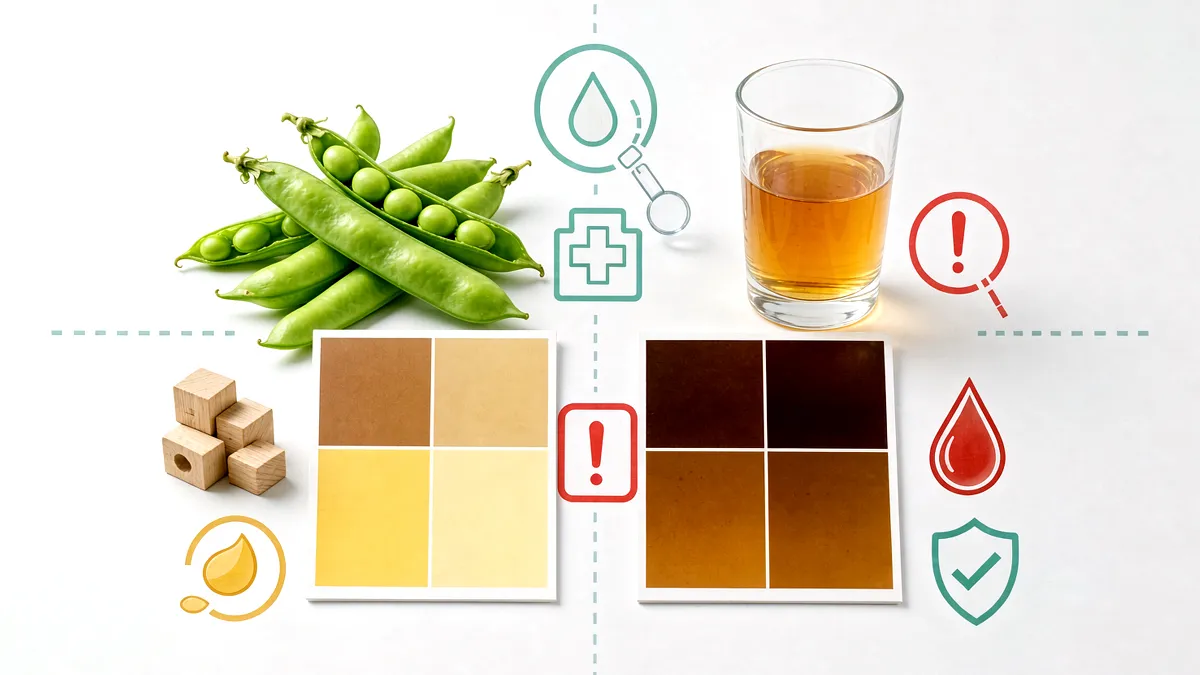
Quick Answer
Fava beans can darken a child's urine for two very different reasons, and telling them apart is critical. In most children, the color is a harmless food-pigment effect that clears within a day or two. But in children with G6PD deficiency—an inherited enzyme condition—eating fava beans can trigger favism: a sudden, severe breakdown of red blood cells that releases hemoglobin into urine and can become a medical emergency.
The color to worry about is dark brown, cola-colored, or "soy-sauce" urine that appears hours to days after eating fava beans and comes with paleness, jaundice, fatigue, or a racing heart. That is not a food tint—it is a hemolytic crisis until proven otherwise. Use the fava bean urine guide to compare your pattern, and read on for the timeline that separates a harmless shade from a red flag.
Why Fava Beans Can Darken a Child's Urine
Fava beans (broad beans) affect urine color through two distinct routes.
Route 1: Harmless Food Pigment
Like beets and berries, fava beans contain natural pigments that can pass through the body and slightly darken urine in some children. This produces a darker yellow or brownish tint rather than a dramatic cola color. It does not come with paleness, jaundice, or fatigue, and it clears on its own within a day or two.
Route 2: Favism and Hemolysis
The serious route is favism. Fava beans contain vicine and convicine, compounds that generate oxidative stress in red blood cells. In a child with G6PD deficiency, red cells cannot neutralize that stress, and they break apart rapidly—acute hemolytic anemia. Hemoglobin is released into the bloodstream and filtered into urine, producing hemoglobinuria: dark brown, tea-colored, or black urine[reference:0].
Favism is more common and more life-threatening in children than in adults, particularly in boys[reference:1]. That is why a child's dark urine after fava beans deserves a lower threshold for concern than the same finding in an adult.
The Timeline That Matters
The timing of the color change is one of the most useful clues.
Harmless pigment: appears within hours of eating and fades within 24 to 48 hours. The child feels well throughout.
Favism: symptoms typically begin 6 to 24 hours after the fava bean meal, though the range can extend from 1 to 3 days, and in some reports up to 5 days[reference:2][reference:3]. The color does not simply lighten with water, because it comes from hemoglobin, not concentration.
In reported pediatric cases, children have presented with dark urine and malaise three days after eating broad beans, or with jaundice and dark urine 24 hours after first ingestion[reference:4]. The variability is why any dark urine in the days after fava bean exposure needs to be taken seriously.
The Warning Signs That Travel With Favism
Dark urine alone is not the whole picture. Favism is an acute illness, and the symptoms cluster together. In children, the classic findings are:
- Pallor—sudden paleness, especially of the lips, palms, or mucous membranes[reference:5].
- Jaundice—yellowing of the skin or the whites of the eyes, often one of the most common findings[reference:6].
- Dark urine—described as tea-colored, cola-colored, or soy-sauce urine.
- Sudden fatigue, weakness, or lethargy—a child who was active becomes listless or drowsy[reference:8].
- Abdominal pain, nausea, or vomiting[reference:9].
- A racing heart or shortness of breath, from anemia[reference:10].
- Fever, which can accompany the hemolytic episode.
A child who ate fava beans and then developed pallor, jaundice, dark urine, and lethargy is in a hemolytic crisis. That combination is not a wait-and-see situation.
When to Seek Urgent Care
Seek emergency care if a child develops any of the following after eating fava beans:
- Dark brown, cola-colored, or black urine.
- Pallor or jaundice—pale skin, yellow eyes, or yellow skin.
- Sudden, severe fatigue, weakness, or unusual drowsiness.
- Shortness of breath, a racing heart, or fainting.
- Very little urine output, or no urination for many hours.
- Fever with any of the above symptoms.
- A baby who is breastfed by a mother who ate fava beans and develops jaundice or dark urine—favism has been reported in exclusively breastfed infants[reference:11].
Severe favism can progress to acute kidney injury and profound anemia, and some children require blood transfusion[reference:12]. Early treatment is what prevents those outcomes.
Prevention: Know the G6PD Status
Favism is preventable. If a child has known G6PD deficiency, fava beans should be avoided entirely—including fresh, dried, canned, frozen, and products made with fava bean flour. The children's urine guide covers the broader context of color changes in kids.
If a child has never been tested but has had a reaction to fava beans, ask the pediatrician about G6PD testing. Knowing the status allows the family to avoid future triggers, which also include certain antimalarial drugs, mothballs, and some antibiotics[reference:13]. Parents of G6PD-deficient children should tell schools and caregivers about the condition and provide written information.
For children without G6PD deficiency, fava beans are a healthy food, and the harmless pigment effect is not a reason to avoid them.
The Bottom Line
Fava beans and dark urine in children can be a harmless food effect—or a hemolytic emergency. The harmless version clears within a day or two and the child feels well. The dangerous version produces dark brown or cola-colored urine with pallor, jaundice, fatigue, or a racing heart, typically hours to days after the beans. That pattern is favism until proven otherwise and needs urgent medical care. If a child with G6PD deficiency eats fava beans, watch closely for the warning signs and seek help immediately if they appear. When in doubt, do not wait for the color to clear—a blood test can settle the question, and early treatment protects the child's kidneys and life.