Favism Symptoms: Dark Urine, Fatigue, and the G6PD Warning
Quick Answer
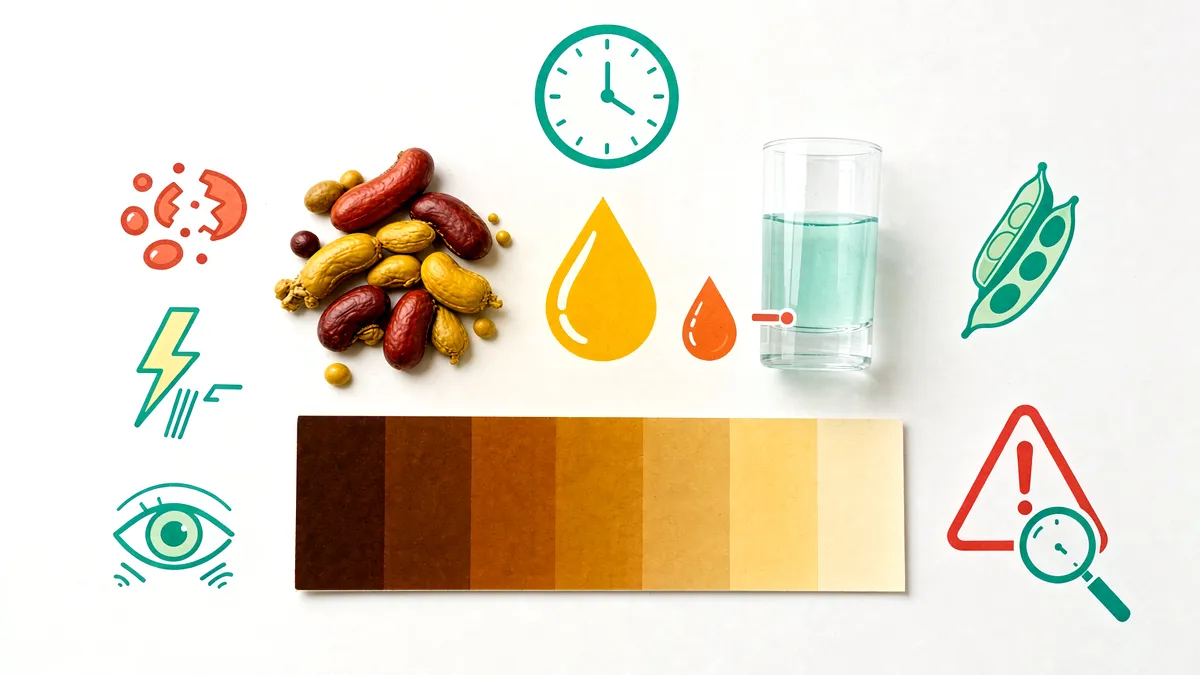
Favism is a sudden, potentially serious reaction to eating fava beans (broad beans) in people with G6PD deficiency. It causes a rapid breakdown of red blood cells, known as acute hemolytic anemia. The hallmark symptoms are dark urine (often described as cola- or tea-colored), sudden fatigue and weakness, and jaundice (yellowing of the eyes or skin)[reference:0][reference:1].
These symptoms typically appear within 6 to 24 hours of eating fava beans, though the range can extend from a few hours to a couple of days[reference:2]. Favism is a medical emergency. If you or someone you know develops dark urine and feels suddenly unwell after eating fava beans, seek medical care immediately. Use the fava bean urine guide to understand the mechanism, and read on for the full symptom picture and what to do.
The Core Symptoms of Favism
Favism is not a subtle reaction. It is an acute illness, and the symptoms travel together. The classic triad is dark urine, fatigue, and jaundice.
Dark Urine (Hemoglobinuria)
This is often the most alarming and noticeable sign. When red blood cells break apart inside the bloodstream (intravascular hemolysis), they release hemoglobin. The kidneys filter this excess hemoglobin into urine, turning it dark brown, cola-colored, or tea-colored—sometimes even black[reference:3][reference:4]. In Chinese medical literature, this is vividly called "soy sauce urine" (酱油尿)[reference:5]. The color does not lighten with drinking water, because the pigment comes from hemoglobin, not concentration.
Sudden Fatigue and Weakness
The destruction of red blood cells leads to a rapid drop in hemoglobin, causing acute anemia. This produces sudden, severe tiredness, weakness, and a feeling of being generally unwell. You may look noticeably pale. In more severe cases, the anemia can cause shortness of breath and a racing heart as the body struggles to deliver enough oxygen[reference:6][reference:7].
Jaundice
As hemoglobin is broken down, a yellow pigment called bilirubin is produced. When bilirubin levels rise quickly, it causes jaundice—a yellowing of the whites of the eyes and the skin[reference:8]. This is a direct consequence of the red blood cell destruction.
Other Associated Symptoms
Beyond the core triad, people with favism commonly experience:
- Back or abdominal pain, which can be severe[reference:9][reference:10].
- Fever, often appearing with the other symptoms[reference:11].
- Nausea, vomiting, and headache, especially in severe intravascular hemolysis[reference:12].
- Prostration—a profound sense of physical collapse[reference:13].
If you are trying to match your pattern to a cause, the brown urine guide covers the full range of explanations for cola-colored urine, including hemoglobin and other pigments.
Why Favism Happens: The G6PD Connection
Favism is not an allergy to fava beans. It is a reaction that occurs almost exclusively in people with G6PD deficiency, an inherited enzyme deficiency.
G6PD (glucose-6-phosphate dehydrogenase) is an enzyme that protects red blood cells from oxidative damage[reference:14]. Fava beans contain potent oxidizing compounds (vicine and convicine). In a person with G6PD deficiency, the red blood cells cannot neutralize this oxidative stress. The cells are destroyed prematurely, leading to the cascade of symptoms described above[reference:15].
G6PD deficiency is the most common inherited enzyme deficiency in the world. It is most prevalent in people of African, Mediterranean, Middle Eastern, and Southeast Asian descent, but it can affect anyone[reference:16]. Many people with G6PD deficiency are unaware of their status until a trigger like fava beans causes a crisis.
How Quickly Does Favism Develop?
The timeline is relatively short. Symptoms typically begin within 6 to 24 hours of eating fava beans[reference:17]. Some sources describe an onset within 12 hours[reference:18], while others note a range of 24 to 36 hours or even up to a few days in some cases[reference:19]. The severity of the reaction does not necessarily correlate with the amount of beans eaten—even a small portion can trigger a crisis in a susceptible person[reference:20].
Because the onset can be rapid, anyone with known G6PD deficiency should be vigilant for symptoms in the first day after accidental exposure.
How to Tell Favism From a Harmless Food Color Change
Fava beans can also cause a harmless darkening of urine simply from plant pigments. The crucial difference is the company the color keeps.
Harmless food pigment:
- You feel well.
- There is no jaundice, severe fatigue, or shortness of breath.
- The color is uniform and clears within a day or two.
Favism (hemolysis):
- You feel suddenly and severely unwell—fatigued, weak, or prostrate.
- You develop jaundice (yellow eyes or skin).
- You may have back pain, fever, or a racing heart.
- The dark urine appears alongside these systemic symptoms, not in isolation.
If dark urine comes with any of the systemic symptoms of favism, treat it as a medical emergency. Do not wait for the color to clear on its own. The pink or red urine guide covers other causes of blood-colored urine, but in the context of fava beans, hemolysis is the primary concern.
When to Seek Urgent Medical Care
Favism can progress to severe anemia, acute kidney injury, and shock if not treated promptly. Seek emergency care or go to the nearest emergency department if you or someone else develops any of the following after eating fava beans:
- Dark brown, cola-colored, or black urine.
- Yellowing of the eyes or skin (jaundice).
- Sudden, severe fatigue, weakness, or fainting.
- Shortness of breath or a racing heart.
- Severe back or abdominal pain.
- Fever with any of the above symptoms.
- A child who becomes pale, lethargic, or unwell after eating fava beans.
If you have known G6PD deficiency, tell the medical team immediately. Treatment may include intravenous fluids, monitoring of kidney function, and in severe cases, a blood transfusion[reference:21]. Early intervention is critical for protecting the kidneys and restoring oxygen-carrying capacity.
The Bottom Line
Favism is a serious hemolytic crisis triggered by fava beans in people with G6PD deficiency. The warning signs are dark urine, sudden fatigue, and jaundice, often accompanied by back pain and fever. These symptoms typically appear within a day of eating the beans. Do not mistake this for a harmless food-color effect—if dark urine comes with feeling acutely unwell, seek emergency care. If you are unsure of your G6PD status and have had a reaction, ask your doctor about testing so you can avoid future triggers.