How Long Does Fava Bean Dark Urine Last? A Timeline
Quick Answer
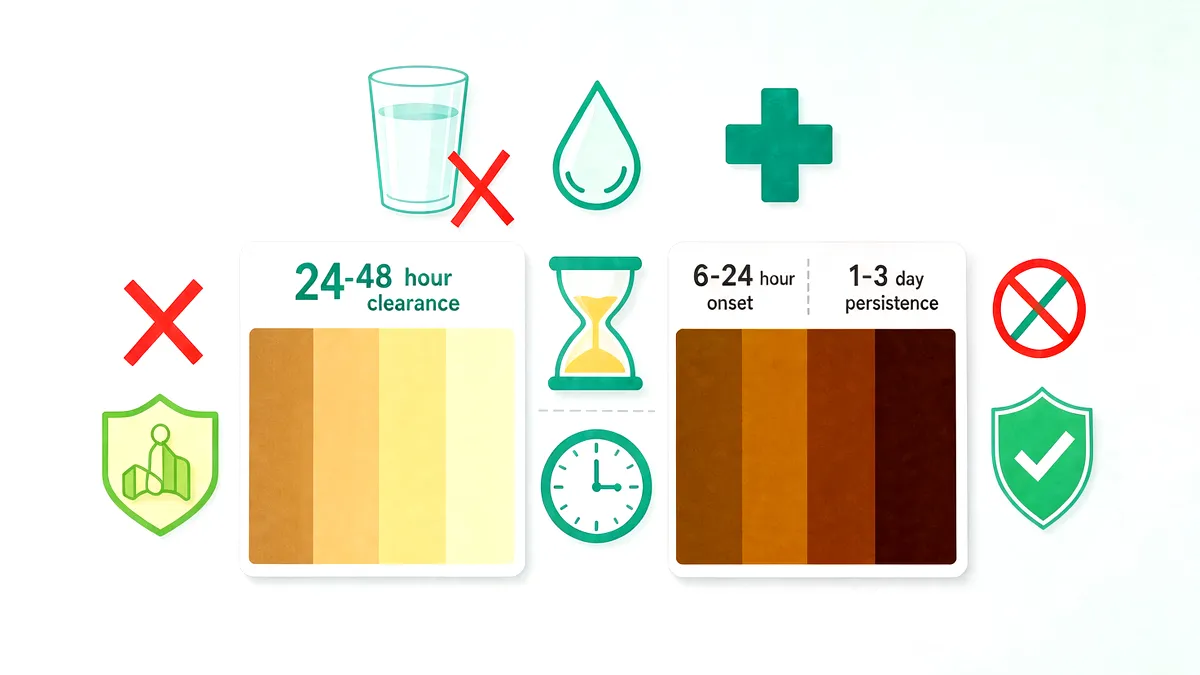
Fava bean dark urine has two very different timelines, and the difference matters. In most healthy people, the color is a harmless food-pigment effect that appears within hours of eating fava beans and clears within 24 to 48 hours. In people with G6PD deficiency, eating fava beans can trigger favism—a rapid breakdown of red blood cells that turns urine dark brown or cola-colored and does not clear with fluids. That color typically appears within 6 to 24 hours of eating the beans and can persist or worsen over one to three days without treatment.
The color alone does not tell you which one you are facing. The key is the company the color keeps: harmless food pigment comes without jaundice, severe fatigue, or a racing heart; favism comes with them. Use the fava bean urine guide to compare your pattern, and read on for both timelines and when to seek urgent care.
The Harmless Timeline: Food Pigment
Fava beans contain natural compounds that can pass through the body and slightly darken urine in some people. This is a food effect, not a disease. It usually produces a darker yellow or brownish tint rather than a dramatic cola color.
The timeline for harmless food pigment is predictable:
- Within 2 to 8 hours: the color begins to appear as the compounds are absorbed and filtered.
- 24 to 48 hours: the color fades as the compounds are cleared, provided you are drinking normally and urinating regularly.
- Up to 72 hours: a small number of people, especially after a large serving, may still see a faint tint into the third day.
This timeline assumes you feel well. If the color appears alongside sudden fatigue, jaundice, or shortness of breath, you are not in the harmless timeline—you are in the favism timeline, and you need care. The brown urine guide covers the full range of causes for dark brown urine.
The Dangerous Timeline: Favism and Hemolysis
Favism is an acute hemolytic reaction to fava beans in people with G6PD deficiency. Fava beans contain vicine and convicine, compounds that generate oxidative stress. In a person with G6PD deficiency, red blood cells cannot neutralize that stress, and they break apart rapidly. Hemoglobin is released into the bloodstream and filtered into urine, turning it dark brown, cola-colored, or black.
The favism timeline is shorter and more aggressive than the food-pigment timeline:
- Within 6 to 24 hours: dark urine and other symptoms typically begin, though the range can extend from a few hours to a couple of days.
- One to three days: the color can persist or worsen as hemolysis continues. It does not correct simply by drinking water, because the color comes from hemoglobin, not concentration.
- Without treatment: severe cases can progress to acute kidney injury, severe anemia, and shock.
Symptoms that travel with favism include sudden fatigue and weakness, jaundice (yellowing of the eyes or skin), shortness of breath, a racing heart, back or abdominal pain, and fever. If this cluster appears after eating fava beans, it is a medical emergency. The pink or red urine guide covers other causes of blood-colored urine, but in the fava context, hemolysis is the primary concern.
How to Tell the Two Apart
Use these questions to sort harmless food pigment from possible favism:
- Do you feel well? Food pigment does not come with jaundice, severe fatigue, or shortness of breath. Favism does.
- Is your skin or the whites of your eyes turning yellow? Jaundice points toward hemolysis, not simple pigment.
- Are you suddenly weak or short of breath? Anemia from red blood cell destruction causes these symptoms.
- Did the color appear within the first day of eating fava beans? Favism typically begins within 6 to 24 hours.
- Does the color lighten with fluids? Food pigment may fade gradually; favism color does not correct with water.
- Do you have known G6PD deficiency, or are you from a population where it is common? That raises the risk substantially.
If the answer to any of the favism questions is yes, do not wait for the color to clear on its own. Seek care. If the color is mild, you feel well, and it fades within two days, a food effect is more likely—but still mention it to your prescriber if you have a family history of G6PD deficiency. The urine color by cause section groups explanations by food, medication, and medical conditions.
When to Seek Urgent Medical Care
Seek urgent care or go to the emergency department if any of the following applies after eating fava beans:
- Dark brown, cola-colored, or black urine, especially with jaundice, fatigue, shortness of breath, or a racing heart.
- Yellowing of the eyes or skin (jaundice).
- Sudden, severe fatigue, weakness, or fainting.
- Shortness of breath or a racing heart.
- Severe back or abdominal pain.
- Fever with any of the above symptoms.
- Very little urine output, or no urination for many hours.
- A child who becomes pale, lethargic, or unwell after eating fava beans.
If you have known G6PD deficiency, tell the medical team immediately. Treatment may include intravenous fluids, monitoring of kidney function, and in severe cases, a blood transfusion. Early intervention is critical for protecting the kidneys and restoring oxygen-carrying capacity.
How to Prevent Favism
If you have known G6PD deficiency, the most effective prevention is to avoid fava beans entirely—including fresh, dried, canned, and frozen forms, and products that contain fava bean flour. Read labels carefully, because fava bean protein can appear in unexpected foods.
If you do not know your G6PD status and have had a reaction to fava beans, ask your doctor about testing. Knowing your status allows you to avoid future triggers, which also include certain antimalarial drugs and other oxidative medications.
For people without G6PD deficiency, fava beans are a healthy food and the harmless pigment effect is not a reason to avoid them.
The Bottom Line
Fava bean dark urine lasts 24 to 48 hours when it is a harmless food-pigment effect, and it clears on its own. It lasts one to three days and can worsen when it is favism—a G6PD-triggered hemolytic crisis that needs urgent care. The difference is not the shade alone; it is the company the color keeps. Jaundice, sudden fatigue, shortness of breath, back pain, and fever mean favism until proven otherwise. If those signs are present, get help immediately. If the color is mild, you feel well, and it fades within two days, it is likely food-related—but mention it to your doctor if you have a family history of G6PD deficiency.